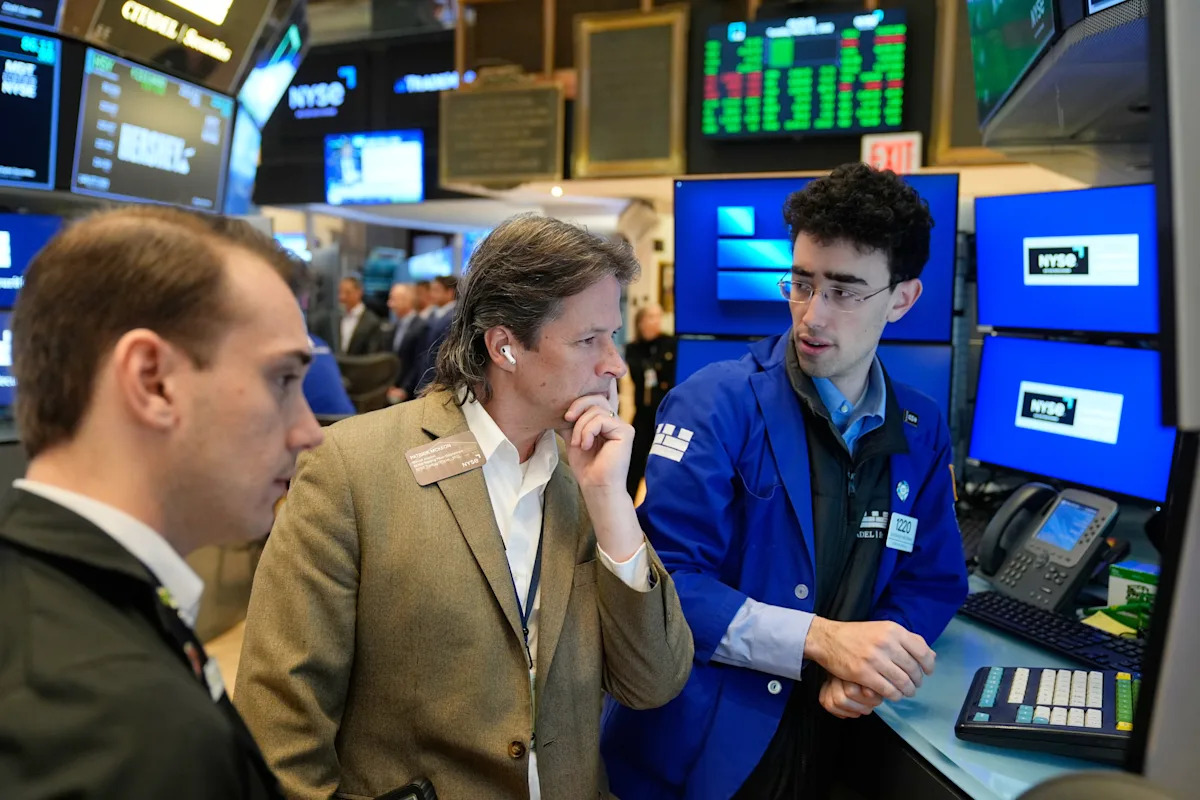
Fiserv's Stock Declines Amid Sales Slowdown and Legal Challenges

Fiserv Inc's stock fell by 3.00% and hit a 20-day low, reflecting investor concerns amid a challenging market environment.
The Fiserv Small Business Index reported a sales slowdown, with a 1-point decline in January 2026, indicating shifts in consumer spending priorities. Additionally, Bragar Eagel & Squire is investigating potential claims against Fiserv related to misleading statements made during a class action lawsuit, which has raised concerns about the company's governance and investor confidence. These factors contribute to a negative outlook for Fiserv, as the company faces both market pressures and legal scrutiny.
The combination of declining sales and ongoing legal issues suggests that Fiserv may need to implement significant changes to regain investor trust and stabilize its stock performance.
Trade with 70% Backtested Accuracy
Analyst Views on FISV

About FISV
About the author


Burry Expands Positions in GameStop and Alibaba Stocks


- Investment Strategy Shift: Burry's decision to buy puts on Nvidia instead of shorting directly aims to limit maximum loss and time decay, indicating his cautious stance on the semiconductor sector while reflecting sensitivity to market volatility.
- Analyst Optimism: According to Koyfin, 57 out of 60 analysts covering Nvidia have rated it ‘Buy’ or higher, with projected revenue for fiscal 2027 expected to reach approximately $78 billion, surpassing market estimates of $71.6 billion, showcasing confidence in the company's long-term growth.
- Market Sentiment Shift: Retail sentiment around Nvidia shares has improved from ‘extremely bearish’ to ‘bearish’ over the past 24 hours, suggesting a gradual change in investor perception that could influence future trading activity.
- New Investment Positions: Burry has also expanded his investments in GameStop and Chinese companies, including JD.com and Alibaba, with the latter representing over 6% of his portfolio in American Depositary Receipts, indicating his optimistic outlook on potential rebounds for these stocks.

Avalara and Clover Integration Simplifies Tax Compliance
- Automated Tax Compliance: The integration of Avalara with Clover embeds a sales tax compliance tool directly into the Clover platform, enabling merchants to automatically set aside sales tax daily and track obligations in real-time, thereby simplifying complex tax management for small businesses.
- Cash Flow Protection: By separating tax funds from operating revenue, Avalara's solution ensures that merchant cash flow remains unaffected, with tax funds securely held in DAVO's account, guaranteeing timely and full tax filing and remittance, thus reducing financial risk.
- Real-Time Rate Updates: Merchants can automatically update sales tax rates within Clover using Avalara's trusted tax content, ensuring accuracy as rates and rules change while minimizing manual effort and potential errors, which enhances compliance efficiency.
- Future Collaboration Outlook: This integration not only launches a tax compliance tool but also sets the stage for Avalara and Clover to collaborate on additional compliance capabilities in the future, such as business license guidance and filing services, further empowering small business operations.

Fiserv Partners with Western Alliance Bank for Strategic Agent Bank Collaboration
- Strategic Partnership: On March 17, Fiserv announced a strategic agent bank partnership with Western Alliance Bank, aimed at providing advanced business management technology to the bank's clients, marking Fiserv's largest collaboration by asset size.
- Technology Integration: This partnership will integrate the Clover point-of-sale ecosystem into Western Alliance's banking services, enhancing the bank's ability to serve a diverse client base ranging from small businesses to large enterprises through Fiserv's global payments infrastructure.
- Service Model Optimization: The collaboration allows Western Alliance Bank to maintain its high-touch relationship model while offering secure, modern payment technology across in-store, online, and mobile channels, thereby addressing the needs of complex commercial industries.
- Regional Market Expansion: This agreement supports Fiserv's regional footprint in the Western United States, further solidifying its market position in the area and driving continued growth in the fintech sector.

U.S. Small Business Sales Continue Steady Growth
- Small Business Index: In March 2026, the Fiserv Small Business Index rose to 144, indicating a resilient small business economy with a year-over-year sales growth of 1.3%, despite consumers becoming more selective in their spending.
- Transaction Volume vs. Sales: Although transaction volumes decreased by 1.3%, the average ticket size increased by 2.6% year-over-year, allowing small businesses to maintain solid sales growth as they closed out Q1 with a month-over-month sales increase of 0.7%.
- Changing Consumer Patterns: Rising energy prices led to reduced spending in dining and food services, with grocery store sales declining by 1.5% year-over-year, reflecting a heightened budget-consciousness among consumers.
- Retail Sales Acceleration: Retail sales increased by 1.2% month-over-month in March 2026, primarily driven by gasoline sales, with contributions from building materials and motor vehicle parts, indicating a sustained prioritization of essential spending among consumers.

Bragar Eagel & Squire Investigates Potential Claims Against Fiserv
- Legal Investigation Launched: Bragar Eagel & Squire, P.C. is investigating Fiserv, Inc. to determine if the board breached fiduciary duties to shareholders, particularly in light of a class action filed on November 4, 2025.
- Class Action Context: The class action alleges that Fiserv made misleading statements from July to October 2025, leading investors to purchase securities at artificially inflated prices, resulting in significant losses when the truth emerged.
- Guidance Revision: In July 2025, Fiserv revised its performance guidance, claiming it was based on a “re-underwriting” of new initiatives, but later admitted that the assumptions were difficult to achieve, indicating potential governance issues.
- Investor Rights Protection: Bragar Eagel & Squire encourages long-term shareholders to contact their attorneys for more information, emphasizing the importance of protecting investor rights and offering free legal consultations.

Affirm: Stability or Increased Uncertainty on the Horizon?


Company Overview: Affirm Holdings is a key player in the buy-now-pay-later (BNPL) sector, reporting significant growth in gross merchandise volume, revenue, and net income in its recent quarterly results.
Financial Performance: The company achieved a gross merchandise volume of $13.8 billion, a 36% increase year-over-year, with revenue climbing 30% to $1.12 billion and net income rising 61% to $130 million.
Market Position and Risks: Despite strong financials, analysts express caution due to potential credit risks and competition from established players like PayPal and Klarna, as well as rising delinquency rates in the credit market.
Investment Outlook: Affirm is seen as a high-risk, high-reward investment, with analysts generally bullish on its growth potential, but investors are advised to be wary of associated risks before investing.
Burry Expands Positions in GameStop and Alibaba Stocks
- Investment Strategy Shift: Burry's decision to buy puts on Nvidia instead of shorting directly aims to limit maximum loss and time decay, indicating his cautious stance on the semiconductor sector while reflecting sensitivity to market volatility.
- Analyst Optimism: According to Koyfin, 57 out of 60 analysts covering Nvidia have rated it ‘Buy’ or higher, with projected revenue for fiscal 2027 expected to reach approximately $78 billion, surpassing market estimates of $71.6 billion, showcasing confidence in the company's long-term growth.
- Market Sentiment Shift: Retail sentiment around Nvidia shares has improved from ‘extremely bearish’ to ‘bearish’ over the past 24 hours, suggesting a gradual change in investor perception that could influence future trading activity.
- New Investment Positions: Burry has also expanded his investments in GameStop and Chinese companies, including JD.com and Alibaba, with the latter representing over 6% of his portfolio in American Depositary Receipts, indicating his optimistic outlook on potential rebounds for these stocks.
Avalara and Clover Integration Simplifies Tax Compliance
- Automated Tax Compliance: The integration of Avalara with Clover embeds a sales tax compliance tool directly into the Clover platform, enabling merchants to automatically set aside sales tax daily and track obligations in real-time, thereby simplifying complex tax management for small businesses.
- Cash Flow Protection: By separating tax funds from operating revenue, Avalara's solution ensures that merchant cash flow remains unaffected, with tax funds securely held in DAVO's account, guaranteeing timely and full tax filing and remittance, thus reducing financial risk.
- Real-Time Rate Updates: Merchants can automatically update sales tax rates within Clover using Avalara's trusted tax content, ensuring accuracy as rates and rules change while minimizing manual effort and potential errors, which enhances compliance efficiency.
- Future Collaboration Outlook: This integration not only launches a tax compliance tool but also sets the stage for Avalara and Clover to collaborate on additional compliance capabilities in the future, such as business license guidance and filing services, further empowering small business operations.
Fiserv Partners with Western Alliance Bank for Strategic Agent Bank Collaboration
- Strategic Partnership: On March 17, Fiserv announced a strategic agent bank partnership with Western Alliance Bank, aimed at providing advanced business management technology to the bank's clients, marking Fiserv's largest collaboration by asset size.
- Technology Integration: This partnership will integrate the Clover point-of-sale ecosystem into Western Alliance's banking services, enhancing the bank's ability to serve a diverse client base ranging from small businesses to large enterprises through Fiserv's global payments infrastructure.
- Service Model Optimization: The collaboration allows Western Alliance Bank to maintain its high-touch relationship model while offering secure, modern payment technology across in-store, online, and mobile channels, thereby addressing the needs of complex commercial industries.
- Regional Market Expansion: This agreement supports Fiserv's regional footprint in the Western United States, further solidifying its market position in the area and driving continued growth in the fintech sector.
U.S. Small Business Sales Continue Steady Growth
- Small Business Index: In March 2026, the Fiserv Small Business Index rose to 144, indicating a resilient small business economy with a year-over-year sales growth of 1.3%, despite consumers becoming more selective in their spending.
- Transaction Volume vs. Sales: Although transaction volumes decreased by 1.3%, the average ticket size increased by 2.6% year-over-year, allowing small businesses to maintain solid sales growth as they closed out Q1 with a month-over-month sales increase of 0.7%.
- Changing Consumer Patterns: Rising energy prices led to reduced spending in dining and food services, with grocery store sales declining by 1.5% year-over-year, reflecting a heightened budget-consciousness among consumers.
- Retail Sales Acceleration: Retail sales increased by 1.2% month-over-month in March 2026, primarily driven by gasoline sales, with contributions from building materials and motor vehicle parts, indicating a sustained prioritization of essential spending among consumers.
Bragar Eagel & Squire Investigates Potential Claims Against Fiserv
- Legal Investigation Launched: Bragar Eagel & Squire, P.C. is investigating Fiserv, Inc. to determine if the board breached fiduciary duties to shareholders, particularly in light of a class action filed on November 4, 2025.
- Class Action Context: The class action alleges that Fiserv made misleading statements from July to October 2025, leading investors to purchase securities at artificially inflated prices, resulting in significant losses when the truth emerged.
- Guidance Revision: In July 2025, Fiserv revised its performance guidance, claiming it was based on a “re-underwriting” of new initiatives, but later admitted that the assumptions were difficult to achieve, indicating potential governance issues.
- Investor Rights Protection: Bragar Eagel & Squire encourages long-term shareholders to contact their attorneys for more information, emphasizing the importance of protecting investor rights and offering free legal consultations.
Affirm: Stability or Increased Uncertainty on the Horizon?
Company Overview: Affirm Holdings is a key player in the buy-now-pay-later (BNPL) sector, reporting significant growth in gross merchandise volume, revenue, and net income in its recent quarterly results.
Financial Performance: The company achieved a gross merchandise volume of $13.8 billion, a 36% increase year-over-year, with revenue climbing 30% to $1.12 billion and net income rising 61% to $130 million.
Market Position and Risks: Despite strong financials, analysts express caution due to potential credit risks and competition from established players like PayPal and Klarna, as well as rising delinquency rates in the credit market.
Investment Outlook: Affirm is seen as a high-risk, high-reward investment, with analysts generally bullish on its growth potential, but investors are advised to be wary of associated risks before investing.