Bunge Global Announces $3B Buyback and EPS Forecast Update
Bunge Global's stock has risen by 3.02%, reaching a 52-week high, despite the broader market decline with the Nasdaq-100 down 1.48% and S&P 500 down 1.25%.
The company has announced a $3 billion stock buyback plan aimed at enhancing shareholder value, alongside an updated mid-cycle EPS forecast of around $13, with expectations to increase it to at least $15 by the end of 2030. This strategic move is expected to boost investor confidence, even as the fiscal 2026 adjusted EPS is projected at $7.50 to $8, below analysts' estimate of $8.71, reflecting challenges for future growth. Additionally, Bunge's stock is trading significantly above its 20-day and 50-day simple moving averages, indicating a strong upward trend.
The implications of these announcements suggest that Bunge Global is positioning itself favorably in the market, despite current challenges. The buyback plan and revised earnings outlook could attract more investor interest and enhance the company's competitive edge in the industry.
Trade with 70% Backtested Accuracy
Analyst Views on BG

About BG
About the author

Bunge Global Stock Up 48.3% Year-to-Date

- Analyst Ranking: Bunge Global stands out in the ranking of 500 components based on average analyst opinions, indicating strong market confidence in its future performance.
- Stock Performance: Year-to-date, Bunge Global's stock has risen by 48.3%, reflecting investor optimism regarding the company's performance and market outlook.
- Market Reaction: The stock price increase not only enhances Bunge Global's market value but may also attract more investor attention, potentially driving further price appreciation and strengthening the company's capital base.
- Industry Impact: Bunge Global's robust performance could influence the stock price movements of its peers, particularly in the agriculture and food sectors, showcasing the company's leadership and competitive advantage within the industry.

Comparison of Stock Performance: BG vs TPL

- Stock Performance Comparison: BG is currently trading up approximately 0.6%, while TPL is up about 0.2%, indicating BG's relative strength in the market, which may attract more investor interest.
- Market Trend Analysis: The price movements of BG and TPL during Thursday's trading reflect differing market expectations, with BG's increase potentially linked to improvements in its fundamentals.
- Investor Sentiment: The rise in BG's stock may bolster investor confidence in its future growth potential, while TPL's modest increase could indicate market recognition of its stability, influencing asset allocation decisions.
- Industry Impact: The stock performance of BG and TPL may affect investment trends in related industries, especially in the current economic environment, where investors may prefer stronger-performing stocks to mitigate risks.
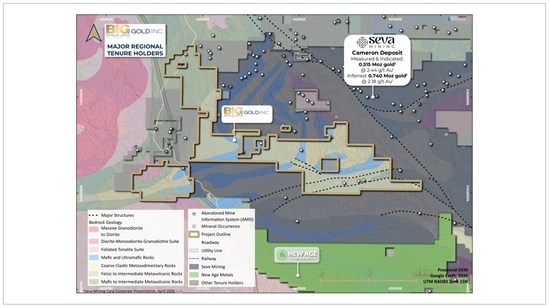
Big Gold Initiates Review of Martin Kenty Project
- Project Review Initiation: Big Gold Inc. has announced the commencement of a comprehensive desktop review of its Martin Kenty Project in Ontario, aimed at integrating historical exploration data to support future drilling plans, thereby laying the groundwork for exploration activities in 2026.
- Historical Data Compilation: The review will compile historical drilling logs, surface sampling data, and geophysical and geochemical datasets into a single integrated file server, which is expected to provide prioritized targets for follow-up field work, enhancing resource allocation efficiency.
- Regional Exploration Potential: The Martin Kenty Project is located near SEVA Mining's Cameron Deposit, which has reported a mineral resource of 0.515 million ounces of gold, indicating strong exploration potential in the area, and Big Gold aims to leverage this opportunity to enhance its market competitiveness.
- Increased Financial Transparency: Big Gold also announced the adoption of a semi-annual financial reporting framework to reduce the administrative and financial burden associated with quarterly reporting, which is expected to improve operational efficiency and bolster investor confidence.
Updated Quant Ratings for Consumer Staples Companies Post Q1 Earnings
- Quant Rating Overview: As Q1 earnings conclude, investors are focusing on quant ratings, with Ambev (ABEV) achieving a score of 4.82, classified as a Strong Buy, indicating robust market performance.
- Strong Performers: Archer-Daniels-Midland (ADM) and Bunge Global (BG) received high ratings of 4.79 and 4.69 respectively, showcasing their advantages in earnings growth and valuation, which attract investor interest.
- Underperformers: Beiersdorf (BDRFY) received a low quant rating of 1.20, categorized as a Strong Sell, reflecting weak fundamentals that may undermine investor confidence.
- BJ's Wholesale Club Performance: BJ's maintains its FY2026 guidance with 2%-3% comp growth and EPS between $4.40-$4.60, demonstrating strong membership fee income growth despite its lower overall rating.

Bunge Increases Quarterly Dividend to $0.72 per Share
- Dividend Increase: Bunge has declared a quarterly dividend increase from $0.70 to $0.72 per share, representing a 2.9% rise, which reflects the company's ongoing improvement in profitability and cash flow management, thereby boosting investor confidence.
- Dividend Payment Schedule: The new dividend will be payable on June 1, with a record date of May 22, and additional payments scheduled for September 1 and December 1, reinforcing the company's commitment to providing stable returns to shareholders and strengthening relationships with investors.
- Future Outlook: Bunge forecasts adjusted EPS for 2026 to be between $9 and $9.50 following strong Q1 performance, indicating robust profitability that may attract more investor interest in the company's long-term growth potential.
- Policy Impact: The U.S. Congress has passed legislation for year-round sales of higher-ethanol gasoline, which will benefit Bunge's business, particularly in the renewable energy sector, further advancing the company's strategic positioning in agriculture and energy markets.

U.S. House Passes E15 Gasoline Sales Legislation
- Legislative Progress: The U.S. House of Representatives passed legislation on Wednesday allowing year-round sales of E15 gasoline, a significant victory for corn farmers after over a decade of failed attempts to expand the E15 market.
- Market Impact: The promotion of E15 gasoline is expected to significantly boost farm profits, especially as growers face record crop yields and rising input costs like fertilizers, providing crucial market support.
- Industry Reaction: Renewable Fuels Association President Geoff Cooper stated that this bill offers much-needed certainty for fuel retailers, oil refiners, ethanol producers, and consumers amid extreme market volatility and rising costs.
- Future Challenges: Despite the House's approval, the bill's prospects in the Senate remain uncertain, and it still requires support from the president, which could affect the market rollout of E15.
Bunge Global Stock Up 48.3% Year-to-Date
- Analyst Ranking: Bunge Global stands out in the ranking of 500 components based on average analyst opinions, indicating strong market confidence in its future performance.
- Stock Performance: Year-to-date, Bunge Global's stock has risen by 48.3%, reflecting investor optimism regarding the company's performance and market outlook.
- Market Reaction: The stock price increase not only enhances Bunge Global's market value but may also attract more investor attention, potentially driving further price appreciation and strengthening the company's capital base.
- Industry Impact: Bunge Global's robust performance could influence the stock price movements of its peers, particularly in the agriculture and food sectors, showcasing the company's leadership and competitive advantage within the industry.
Comparison of Stock Performance: BG vs TPL
- Stock Performance Comparison: BG is currently trading up approximately 0.6%, while TPL is up about 0.2%, indicating BG's relative strength in the market, which may attract more investor interest.
- Market Trend Analysis: The price movements of BG and TPL during Thursday's trading reflect differing market expectations, with BG's increase potentially linked to improvements in its fundamentals.
- Investor Sentiment: The rise in BG's stock may bolster investor confidence in its future growth potential, while TPL's modest increase could indicate market recognition of its stability, influencing asset allocation decisions.
- Industry Impact: The stock performance of BG and TPL may affect investment trends in related industries, especially in the current economic environment, where investors may prefer stronger-performing stocks to mitigate risks.
Big Gold Initiates Review of Martin Kenty Project
- Project Review Initiation: Big Gold Inc. has announced the commencement of a comprehensive desktop review of its Martin Kenty Project in Ontario, aimed at integrating historical exploration data to support future drilling plans, thereby laying the groundwork for exploration activities in 2026.
- Historical Data Compilation: The review will compile historical drilling logs, surface sampling data, and geophysical and geochemical datasets into a single integrated file server, which is expected to provide prioritized targets for follow-up field work, enhancing resource allocation efficiency.
- Regional Exploration Potential: The Martin Kenty Project is located near SEVA Mining's Cameron Deposit, which has reported a mineral resource of 0.515 million ounces of gold, indicating strong exploration potential in the area, and Big Gold aims to leverage this opportunity to enhance its market competitiveness.
- Increased Financial Transparency: Big Gold also announced the adoption of a semi-annual financial reporting framework to reduce the administrative and financial burden associated with quarterly reporting, which is expected to improve operational efficiency and bolster investor confidence.
Updated Quant Ratings for Consumer Staples Companies Post Q1 Earnings
- Quant Rating Overview: As Q1 earnings conclude, investors are focusing on quant ratings, with Ambev (ABEV) achieving a score of 4.82, classified as a Strong Buy, indicating robust market performance.
- Strong Performers: Archer-Daniels-Midland (ADM) and Bunge Global (BG) received high ratings of 4.79 and 4.69 respectively, showcasing their advantages in earnings growth and valuation, which attract investor interest.
- Underperformers: Beiersdorf (BDRFY) received a low quant rating of 1.20, categorized as a Strong Sell, reflecting weak fundamentals that may undermine investor confidence.
- BJ's Wholesale Club Performance: BJ's maintains its FY2026 guidance with 2%-3% comp growth and EPS between $4.40-$4.60, demonstrating strong membership fee income growth despite its lower overall rating.
Bunge Increases Quarterly Dividend to $0.72 per Share
- Dividend Increase: Bunge has declared a quarterly dividend increase from $0.70 to $0.72 per share, representing a 2.9% rise, which reflects the company's ongoing improvement in profitability and cash flow management, thereby boosting investor confidence.
- Dividend Payment Schedule: The new dividend will be payable on June 1, with a record date of May 22, and additional payments scheduled for September 1 and December 1, reinforcing the company's commitment to providing stable returns to shareholders and strengthening relationships with investors.
- Future Outlook: Bunge forecasts adjusted EPS for 2026 to be between $9 and $9.50 following strong Q1 performance, indicating robust profitability that may attract more investor interest in the company's long-term growth potential.
- Policy Impact: The U.S. Congress has passed legislation for year-round sales of higher-ethanol gasoline, which will benefit Bunge's business, particularly in the renewable energy sector, further advancing the company's strategic positioning in agriculture and energy markets.
U.S. House Passes E15 Gasoline Sales Legislation
- Legislative Progress: The U.S. House of Representatives passed legislation on Wednesday allowing year-round sales of E15 gasoline, a significant victory for corn farmers after over a decade of failed attempts to expand the E15 market.
- Market Impact: The promotion of E15 gasoline is expected to significantly boost farm profits, especially as growers face record crop yields and rising input costs like fertilizers, providing crucial market support.
- Industry Reaction: Renewable Fuels Association President Geoff Cooper stated that this bill offers much-needed certainty for fuel retailers, oil refiners, ethanol producers, and consumers amid extreme market volatility and rising costs.
- Future Challenges: Despite the House's approval, the bill's prospects in the Senate remain uncertain, and it still requires support from the president, which could affect the market rollout of E15.