Wisk's Commercial Launch Delayed Until 2030

- Certification Hurdles: Wisk's commercial launch is expected to be delayed until at least 2030 due to the complex certification process for its autonomous eVTOL, putting it at a disadvantage against competitors like Joby and Archer who have first-mover advantages.
- Boeing's Financial Pressure: Boeing's financial health and capital allocation decisions could significantly impact Wisk's future, especially as Boeing needs to fund a new narrow-body aircraft, which may lead management to prioritize other projects over Wisk.
- Automated Flight Rules Proposal: Boeing is proposing a new 'Concept of Operations for Automated Flight Rules' aimed at promoting system automation across the industry, but this initiative requires substantial capital investment and FAA approval, making implementation challenging.
- Competitive Threat: Wisk's Generation 6 autonomous eVTOL poses a direct threat to Joby's air taxi business, particularly due to its pilotless design which could offer cost advantages, yet it also faces significant regulatory hurdles that must be overcome.
Trade with 70% Backtested Accuracy
Analyst Views on BA

About BA
About the author

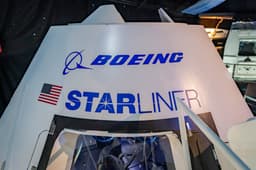
Boeing Faces Increased Cash Flow Pressure Amid Debt and Development Costs

- Cash Flow Challenges: Boeing's consolidated debt reached $54.1 billion by the end of 2025, while cash and marketable securities totaled $29.4 billion, resulting in a net debt of $24.7 billion, with a cash burn of $1.9 billion in 2025, indicating significant pressure on the company to manage debt repayment and new aircraft development.
- New Aircraft Development Costs: The former CEO indicated that developing a new narrowbody aircraft would cost approximately $50 billion, which will further strain Boeing's financial resources, particularly given the current cash flow constraints.
- Rising Capital Expenditures: Boeing's capital spending surged to $4 billion in 2025, up from $2.9 billion in 2024, driven partly by the need to ensure timely delivery of fixed-price development programs, which adds additional pressure on cash flow.
- 737 MAX Production Outlook: Despite cash flow pressures, the ramp-up in 737 MAX production is expected to enhance profitability and cash flow, with management guiding for free cash flow between $1 billion and $3 billion next year, indicating potential growth amidst challenges.

Three Stocks Have Been Added to the MSCI World Index


MSCI Index Graduation: Three companies have graduated to the MSCI World Index, marking a significant milestone that influences global financial markets and requires passive funds to adjust their holdings accordingly by February 27.
AST SpaceMobile's Growth: AST SpaceMobile has rapidly evolved from a speculative concept to a critical player in global telecommunications, with its stock reflecting market confidence and its inclusion in the MSCI World Index validating its technology.
Cohere's Market Position: Cohere has successfully transitioned from a niche player to a significant entity in the AI sector, driven by strong earnings and strategic partnerships, which have bolstered its market presence and profitability.
FTAI Aviation's Unique Addition: FTAI Aviation's inclusion in the MSCI World Index highlights its unique position in the aviation sector, capitalizing on current market demands and establishing a dual-threat business model that appeals to both value and growth investors.
Surge in U.S. Defense Contracts in January 2026

- Total Defense Contracts: In January 2026, the U.S. Defense Security Cooperation Agency submitted 11 arms deals to Congress, totaling $22.5 billion, indicating a robust growth in defense investments that could drive stock prices of involved companies higher.
- Lockheed Martin's Gains: Among these deals, Lockheed Martin secured a $9 billion contract for 730 PAC-3 MSE missiles from Saudi Arabia, making it the largest beneficiary and further solidifying its leadership position in the global defense market.
- Boeing's Contract: Boeing won a $2.3 billion contract in Singapore for four P-8A Poseidon patrol aircraft and their weapon systems, although RTX will not gain additional revenue, Boeing's defense division is expected to improve its financial performance.
- Israel's Order: Israel placed a $3.8 billion order for 30 AH-64E Apache attack helicopters and related equipment from Boeing and Lockheed Martin, reflecting Israel's ongoing demand for advanced military equipment and further driving growth for both companies in the international market.
US Defense Agency Proposes $22.5 Billion in Arms Sales
- Total Arms Sales: The U.S. Defense Security Cooperation Agency (DSCA) submitted 11 arms deals to Congress in January, totaling $22.5 billion, indicating a robust growth trend in defense investments that could further boost stock prices of involved companies.
- Major Contract Beneficiary: Lockheed Martin secured a $9 billion contract for 730 PAC-3 MSE missiles and related equipment for Saudi Arabia on January 30, underscoring its dominant position in the international defense market and expected to significantly enhance the company's revenue and profits.
- Boeing's Contract: Boeing won a $2.3 billion contract on January 20 for Singapore's purchase of four P-8A Poseidon patrol aircraft, which, despite its defense division still being unprofitable, will provide crucial cash flow that may improve its financial standing.
- Israeli Orders: Israel is ordering 30 AH-64E Apache attack helicopters and related equipment from Lockheed and Boeing for a total of $3.8 billion, showcasing the strong competitive edge of both companies in the global defense market while laying a foundation for future growth.

Joby Aviation Partners with Nvidia for Autonomous Flight Development


- Strategic Partnership: Joby Aviation's collaboration with Nvidia to leverage the IGX Thor platform enhances its autonomous flight capabilities, potentially positioning Joby as a leader in the electric vertical take-off and landing (eVTOL) market.
- Technological Innovation: By utilizing Nvidia's technology, Joby aims to advance its Superpilot system towards certifiable autonomy, strengthening its market position for both civil and military applications while mitigating competition from Wisk.
- Market Positioning: Unlike Archer Aviation, Joby not only designs and manufactures eVTOLs but also plans to operate transportation services, leveraging its first-mover advantage to secure funding and establish technological trust in the marketplace.
- Data-Driven Development: Joby's autonomous flight initiatives will generate substantial flight-hour data akin to Tesla's full self-driving software, further enhancing its technological capabilities and accelerating market entry, making it an attractive stock for investors seeking eVTOL exposure.

Joby Partners with Nvidia to Develop Autonomous Flight Technology
- Collaborative Development: Joby's partnership with Nvidia will leverage the latter's IGX Thor platform alongside Joby's Superpilot technology to advance autonomous flight capabilities, which is expected to significantly enhance Joby's competitiveness in the eVTOL market.
- Market Leadership Advantage: Joby's vertically integrated strategy positions it as a first mover in the electric vertical take-off and landing market, with plans to launch autonomous flight features by late 2025, potentially gaining an edge in funding and market trust.
- Dual-Use Strategy: Joby's plan to develop autonomous eVTOLs for military applications in the near term not only allows for early technology testing but also lays the groundwork for future civil market adoption, akin to Tesla's data accumulation for full self-driving software.
- Risk Management and Competition: By collaborating with Nvidia, Joby mitigates the risk of Wisk overtaking it in the autonomous market, with expectations that Joby could launch both piloted air taxis and possibly autonomous military versions before Wisk's civil autonomous eVTOL is certified.
Boeing Faces Increased Cash Flow Pressure Amid Debt and Development Costs
- Cash Flow Challenges: Boeing's consolidated debt reached $54.1 billion by the end of 2025, while cash and marketable securities totaled $29.4 billion, resulting in a net debt of $24.7 billion, with a cash burn of $1.9 billion in 2025, indicating significant pressure on the company to manage debt repayment and new aircraft development.
- New Aircraft Development Costs: The former CEO indicated that developing a new narrowbody aircraft would cost approximately $50 billion, which will further strain Boeing's financial resources, particularly given the current cash flow constraints.
- Rising Capital Expenditures: Boeing's capital spending surged to $4 billion in 2025, up from $2.9 billion in 2024, driven partly by the need to ensure timely delivery of fixed-price development programs, which adds additional pressure on cash flow.
- 737 MAX Production Outlook: Despite cash flow pressures, the ramp-up in 737 MAX production is expected to enhance profitability and cash flow, with management guiding for free cash flow between $1 billion and $3 billion next year, indicating potential growth amidst challenges.
Three Stocks Have Been Added to the MSCI World Index
MSCI Index Graduation: Three companies have graduated to the MSCI World Index, marking a significant milestone that influences global financial markets and requires passive funds to adjust their holdings accordingly by February 27.
AST SpaceMobile's Growth: AST SpaceMobile has rapidly evolved from a speculative concept to a critical player in global telecommunications, with its stock reflecting market confidence and its inclusion in the MSCI World Index validating its technology.
Cohere's Market Position: Cohere has successfully transitioned from a niche player to a significant entity in the AI sector, driven by strong earnings and strategic partnerships, which have bolstered its market presence and profitability.
FTAI Aviation's Unique Addition: FTAI Aviation's inclusion in the MSCI World Index highlights its unique position in the aviation sector, capitalizing on current market demands and establishing a dual-threat business model that appeals to both value and growth investors.
Surge in U.S. Defense Contracts in January 2026
- Total Defense Contracts: In January 2026, the U.S. Defense Security Cooperation Agency submitted 11 arms deals to Congress, totaling $22.5 billion, indicating a robust growth in defense investments that could drive stock prices of involved companies higher.
- Lockheed Martin's Gains: Among these deals, Lockheed Martin secured a $9 billion contract for 730 PAC-3 MSE missiles from Saudi Arabia, making it the largest beneficiary and further solidifying its leadership position in the global defense market.
- Boeing's Contract: Boeing won a $2.3 billion contract in Singapore for four P-8A Poseidon patrol aircraft and their weapon systems, although RTX will not gain additional revenue, Boeing's defense division is expected to improve its financial performance.
- Israel's Order: Israel placed a $3.8 billion order for 30 AH-64E Apache attack helicopters and related equipment from Boeing and Lockheed Martin, reflecting Israel's ongoing demand for advanced military equipment and further driving growth for both companies in the international market.
US Defense Agency Proposes $22.5 Billion in Arms Sales
- Total Arms Sales: The U.S. Defense Security Cooperation Agency (DSCA) submitted 11 arms deals to Congress in January, totaling $22.5 billion, indicating a robust growth trend in defense investments that could further boost stock prices of involved companies.
- Major Contract Beneficiary: Lockheed Martin secured a $9 billion contract for 730 PAC-3 MSE missiles and related equipment for Saudi Arabia on January 30, underscoring its dominant position in the international defense market and expected to significantly enhance the company's revenue and profits.
- Boeing's Contract: Boeing won a $2.3 billion contract on January 20 for Singapore's purchase of four P-8A Poseidon patrol aircraft, which, despite its defense division still being unprofitable, will provide crucial cash flow that may improve its financial standing.
- Israeli Orders: Israel is ordering 30 AH-64E Apache attack helicopters and related equipment from Lockheed and Boeing for a total of $3.8 billion, showcasing the strong competitive edge of both companies in the global defense market while laying a foundation for future growth.
Joby Aviation Partners with Nvidia for Autonomous Flight Development
- Strategic Partnership: Joby Aviation's collaboration with Nvidia to leverage the IGX Thor platform enhances its autonomous flight capabilities, potentially positioning Joby as a leader in the electric vertical take-off and landing (eVTOL) market.
- Technological Innovation: By utilizing Nvidia's technology, Joby aims to advance its Superpilot system towards certifiable autonomy, strengthening its market position for both civil and military applications while mitigating competition from Wisk.
- Market Positioning: Unlike Archer Aviation, Joby not only designs and manufactures eVTOLs but also plans to operate transportation services, leveraging its first-mover advantage to secure funding and establish technological trust in the marketplace.
- Data-Driven Development: Joby's autonomous flight initiatives will generate substantial flight-hour data akin to Tesla's full self-driving software, further enhancing its technological capabilities and accelerating market entry, making it an attractive stock for investors seeking eVTOL exposure.
Joby Partners with Nvidia to Develop Autonomous Flight Technology
- Collaborative Development: Joby's partnership with Nvidia will leverage the latter's IGX Thor platform alongside Joby's Superpilot technology to advance autonomous flight capabilities, which is expected to significantly enhance Joby's competitiveness in the eVTOL market.
- Market Leadership Advantage: Joby's vertically integrated strategy positions it as a first mover in the electric vertical take-off and landing market, with plans to launch autonomous flight features by late 2025, potentially gaining an edge in funding and market trust.
- Dual-Use Strategy: Joby's plan to develop autonomous eVTOLs for military applications in the near term not only allows for early technology testing but also lays the groundwork for future civil market adoption, akin to Tesla's data accumulation for full self-driving software.
- Risk Management and Competition: By collaborating with Nvidia, Joby mitigates the risk of Wisk overtaking it in the autonomous market, with expectations that Joby could launch both piloted air taxis and possibly autonomous military versions before Wisk's civil autonomous eVTOL is certified.