Strategic Shift in Rare Earth Alloy Market
Written by Emily J. Thompson, Senior Investment Analyst
Updated: Apr 30 2026
0mins


Source: PRnewswire
- Supply Chain Restructuring: REalloys (ALOY) focuses on bringing the rare earth alloy supply chain back to the U.S., aiming to meet the Pentagon's ban on Chinese-origin materials by 2027, thereby ensuring the security and independence of the defense supply chain.
- Market Price Fluctuations: Rare earth metal prices rebounded to $130-150/kg by mid-2024, reflecting strong demand for rare earth materials, particularly in the production of high-performance permanent magnets, which directly impacts the production capabilities of defense and EV industries.
- Heavy Rare Earth Production Capacity: REalloys partners with the Saskatchewan Research Council to achieve an initial production of 525 tonnes of NdPr metal by early 2027, scaling up to 3,500 tonnes, positioning itself as one of North America's largest heavy rare earth producers and significantly enhancing U.S. competitiveness in the global rare earth market.
- High Demand Drives Profit Growth: With rare earth metals priced at $1,200-1,500/kg in the U.S. market, REalloys' business model shifts from mere production to delivering high-value non-China materials, expected to substantially increase the company's profitability and market share.
Trade with 70% Backtested Accuracy
Stop guessing "Should I Buy BA?" and start using high-conviction signals backed by rigorous historical data.
Sign up today to access powerful investing tools and make smarter, data-driven decisions.
Analyst Views on BA
Wall Street analysts forecast BA stock price to rise
16 Analyst Rating
14 Buy
1 Hold
1 Sell
Strong Buy
Current: 224.300

Low
150.00
Averages
269.14
High
298.00
Current: 224.300
Low
150.00
Averages
269.14
High
298.00
About BA
The Boeing Company is an aerospace company. Its segments include Commercial Airplanes (BCA), Defense, Space & Security (BDS), and Global Services (BGS). Its BCA segment develops, produces and markets commercial jet aircraft principally for the commercial airline industry worldwide. Its family of commercial jet aircraft in production includes the 737 narrow-body model and the 767, 777 and 787 wide-body models. Its BDS segment is engaged in the research, development, production and modification of manned and unmanned military aircraft and weapons systems for strike, surveillance and mobility. Its BGS segment provides services to its commercial and defense customers worldwide. It sustains aerospace platforms and systems with a range of products and services, including supply chain and logistics management, engineering, maintenance and modifications, upgrades and conversions, spare parts, pilot and maintenance training systems and services, technical and maintenance documents, and others.
About the author

Emily J. Thompson
Emily J. Thompson, a Chartered Financial Analyst (CFA) with 12 years in investment research, graduated with honors from the Wharton School. Specializing in industrial and technology stocks, she provides in-depth analysis for Intellectia’s earnings and market brief reports.

China's 200-Plane Order Boosts Boeing's Future Revenue

- Order Impact: China's confirmation to purchase 200 737 jets significantly boosts Boeing's backlog, which now totals $695 billion, enhancing future revenue potential and reinforcing the investment case for the stock.
- Profitability Uncertainty: Despite the increase in orders, Boeing's profitability remains uncertain due to past operational issues, particularly the high-profile groundings of the 737 MAX and manufacturing quality concerns, which could dampen investor confidence.
- Cash Flow Outlook: Boeing's management projects free cash flow of $1 billion to $3 billion in 2026, with the upper limit suggesting a valuation of 57.6 times free cash flow, reflecting a cautious market sentiment regarding its future performance.
- Strategic Investment: The increase in 737 delivery rates by CEO Kelly Ortberg, alongside addressing defense contract challenges, combined with the impact of the Chinese order, may provide Boeing with more opportunities to execute, although investors are advised to seek evidence of operational improvements before committing.
See More
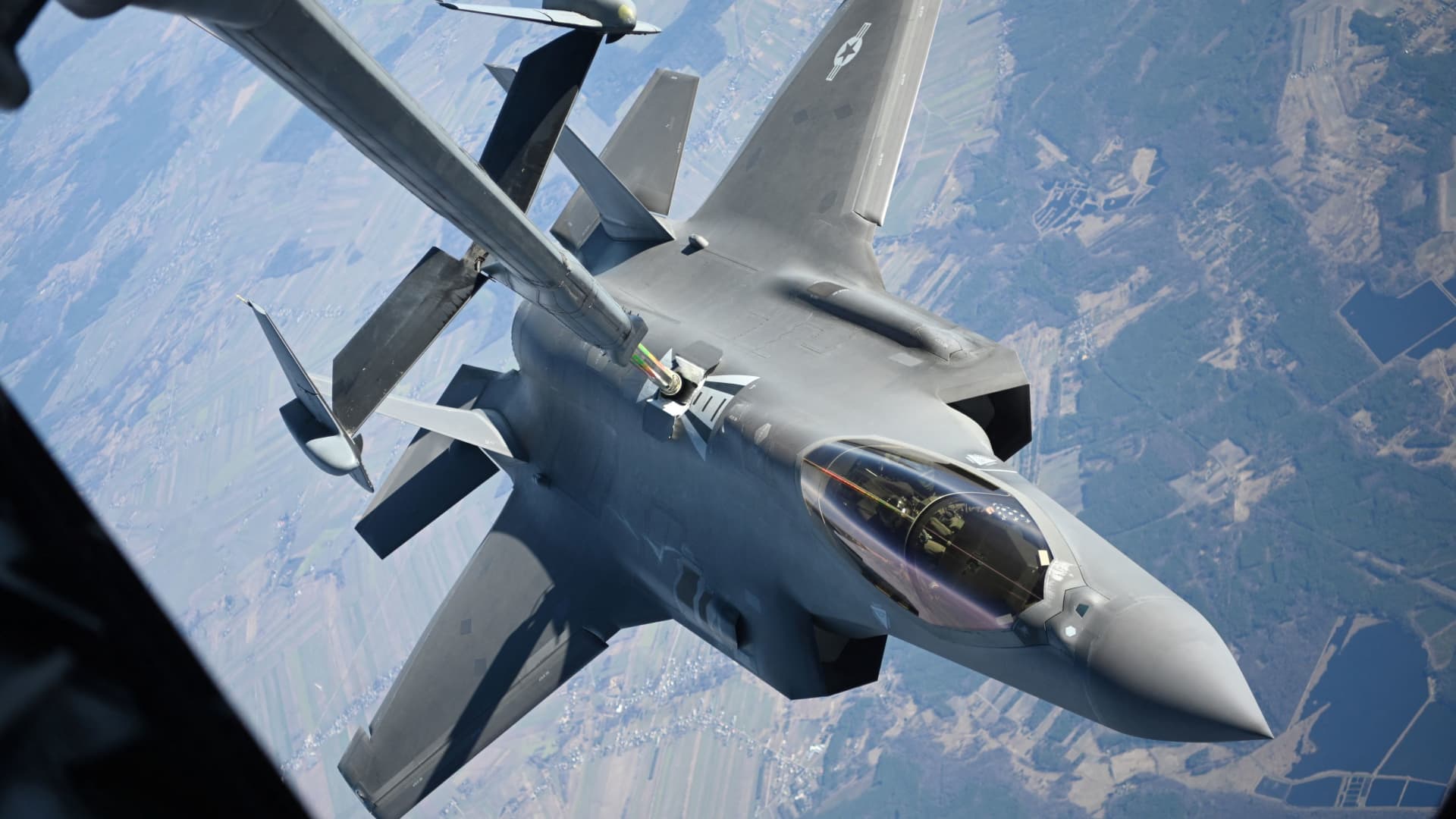
U.S. Considers Expanding Nuclear Weapons Deployment to More NATO Countries

- Nuclear Deployment Expansion: The U.S. is considering expanding its nuclear weapons deployment to more European NATO member states, currently limited to six countries, which could enhance the market outlook for defense companies involved in this sector.
- Interest from Eastern Europe: Countries like Poland and certain Baltic nations may express interest in hosting nuclear-capable bombers, especially following President Trump's pledge to increase troop presence, thereby strengthening their defense capabilities and strategic position within NATO.
- Increased Defense Spending: As Europe seeks to reduce reliance on the U.S. and boost its defense spending, there is expected to be a surge in demand for dual-capable aircraft like the F-35, which will significantly benefit companies such as BAE Systems, Lockheed Martin, and Rolls-Royce.
- Market Opportunities and Jobs: Analysts indicate that an increase in nuclear weapons deployment will necessitate more dual-capable aircraft, potentially creating numerous new jobs and generating substantial revenue growth for manufacturers, thereby solidifying their positions in the global supply chain.
See More
Boeing's MQ-28 Ghost Bat Completes Radar Testing
- Radar Testing Completed: Boeing announced that its MQ-28 Ghost Bat drone has completed radar cross-section testing, aimed at validating the aircraft's ability to reduce detection by enemy radar systems, thereby enhancing its survivability and operational flexibility in combat.
- Data Generation and Application: The radar signature data generated from this testing will assist military customers in assessing the MQ-28's survivability, supporting procurement decisions, and providing critical information for operational planning, further promoting the use of drones in modern warfare.
- Investment and Market Outlook: Several countries, including the United States and Australia, are investing in collaborative combat aircraft programs to expand airpower at lower costs and increase operational flexibility, with the progress of the MQ-28 indicating the ongoing growth potential of the drone market.
- Technological and Collaborative Advantages: Since its development began in 2017, the MQ-28 has completed over 150 flights and participated in multiple joint exercises with other military systems, showcasing its collaborative capabilities in missions such as intelligence gathering, electronic warfare, and force support, marking Boeing's leading position in the emerging drone sector.
See More

SpaceX Set for June IPO, Potentially Largest in History

- Increased Market Attention: SpaceX's planned IPO in June is expected to be the largest in history, drawing significant investor interest in space stocks, especially as the global space economy is projected to reach $1.8 trillion by 2035.
- Defense and Space Infrastructure: Redwire plays a crucial role in space infrastructure and defense technology, providing hardware like solar panels and robotic arms that supported NASA's Artemis II mission, highlighting its importance in national security.
- Contracts and Market Opportunities: Redwire was selected as one of 14 companies by the U.S. Space Force to compete for an $1.8 billion contract for advanced space surveillance and reconnaissance satellites, indicating its competitiveness and market opportunities in the defense sector.
- Financial Outlook and Risks: While Redwire's backlog stands at $498 million with a projected 40% revenue growth in 2026, the company is currently unprofitable, and analysts do not expect profitability within the next three years, necessitating careful risk assessment by investors.
See More

SpaceX Set for June IPO, Potentially Largest Ever
- Increased Market Attention: SpaceX is preparing for an IPO in June, which is expected to be the largest in history, drawing significant investor interest in space stocks and reflecting the potential for the global space economy to reach $1.8 trillion by 2035.
- Defense and Space Technology: Redwire has been selected to compete for an $1.8 billion contract to design and build advanced space surveillance and reconnaissance satellites, highlighting its critical role in defense and space infrastructure and further solidifying its market position.
- Broad Customer Base: Redwire serves a diverse clientele, including U.S. government agencies like NASA and the Department of Defense, as well as top aerospace companies such as Lockheed Martin and Boeing, indicating its essential role and strong market demand in the industry.
- Financial Outlook and Risks: While Redwire's backlog has reached $498 million and analysts project a 40% revenue growth in 2026, the company is currently unprofitable and unlikely to achieve profitability within the next three years, making it suitable for aggressive investors with a long-term outlook.
See More

Iran War Costs Could Reach $50 Billion

- Cost Estimation: The Pentagon's initial estimate for replacing munitions in the Iran war stands at $25 billion, but damage to U.S. bases could double this figure to $50 billion, imposing a significant burden on taxpayers.
- Defense Contractors Involvement: Major defense contractors like Boeing, RTX, and Lockheed Martin will be engaged for years to replace missiles and munitions expended during the conflict, positively impacting their future revenue streams.
- Base Damage Impact: U.S. bases in the Persian Gulf sustained damage from Iranian retaliatory strikes, which could add an additional $15 billion to $25 billion to the overall cost, further exacerbating the economic burden of the war.
- Investment Opportunity Exploration: While mainstream defense stocks like RTX and Lockheed will lead the rebuilding efforts, lesser-known companies such as KBR, Aecom, and Eaton may present potential investment opportunities due to recent Pentagon contracts.
See More
China's 200-Plane Order Boosts Boeing's Future Revenue
- Order Impact: China's confirmation to purchase 200 737 jets significantly boosts Boeing's backlog, which now totals $695 billion, enhancing future revenue potential and reinforcing the investment case for the stock.
- Profitability Uncertainty: Despite the increase in orders, Boeing's profitability remains uncertain due to past operational issues, particularly the high-profile groundings of the 737 MAX and manufacturing quality concerns, which could dampen investor confidence.
- Cash Flow Outlook: Boeing's management projects free cash flow of $1 billion to $3 billion in 2026, with the upper limit suggesting a valuation of 57.6 times free cash flow, reflecting a cautious market sentiment regarding its future performance.
- Strategic Investment: The increase in 737 delivery rates by CEO Kelly Ortberg, alongside addressing defense contract challenges, combined with the impact of the Chinese order, may provide Boeing with more opportunities to execute, although investors are advised to seek evidence of operational improvements before committing.
See More
U.S. Considers Expanding Nuclear Weapons Deployment to More NATO Countries
- Nuclear Deployment Expansion: The U.S. is considering expanding its nuclear weapons deployment to more European NATO member states, currently limited to six countries, which could enhance the market outlook for defense companies involved in this sector.
- Interest from Eastern Europe: Countries like Poland and certain Baltic nations may express interest in hosting nuclear-capable bombers, especially following President Trump's pledge to increase troop presence, thereby strengthening their defense capabilities and strategic position within NATO.
- Increased Defense Spending: As Europe seeks to reduce reliance on the U.S. and boost its defense spending, there is expected to be a surge in demand for dual-capable aircraft like the F-35, which will significantly benefit companies such as BAE Systems, Lockheed Martin, and Rolls-Royce.
- Market Opportunities and Jobs: Analysts indicate that an increase in nuclear weapons deployment will necessitate more dual-capable aircraft, potentially creating numerous new jobs and generating substantial revenue growth for manufacturers, thereby solidifying their positions in the global supply chain.
See More
Boeing's MQ-28 Ghost Bat Completes Radar Testing
- Radar Testing Completed: Boeing announced that its MQ-28 Ghost Bat drone has completed radar cross-section testing, aimed at validating the aircraft's ability to reduce detection by enemy radar systems, thereby enhancing its survivability and operational flexibility in combat.
- Data Generation and Application: The radar signature data generated from this testing will assist military customers in assessing the MQ-28's survivability, supporting procurement decisions, and providing critical information for operational planning, further promoting the use of drones in modern warfare.
- Investment and Market Outlook: Several countries, including the United States and Australia, are investing in collaborative combat aircraft programs to expand airpower at lower costs and increase operational flexibility, with the progress of the MQ-28 indicating the ongoing growth potential of the drone market.
- Technological and Collaborative Advantages: Since its development began in 2017, the MQ-28 has completed over 150 flights and participated in multiple joint exercises with other military systems, showcasing its collaborative capabilities in missions such as intelligence gathering, electronic warfare, and force support, marking Boeing's leading position in the emerging drone sector.
See More
SpaceX Set for June IPO, Potentially Largest in History
- Increased Market Attention: SpaceX's planned IPO in June is expected to be the largest in history, drawing significant investor interest in space stocks, especially as the global space economy is projected to reach $1.8 trillion by 2035.
- Defense and Space Infrastructure: Redwire plays a crucial role in space infrastructure and defense technology, providing hardware like solar panels and robotic arms that supported NASA's Artemis II mission, highlighting its importance in national security.
- Contracts and Market Opportunities: Redwire was selected as one of 14 companies by the U.S. Space Force to compete for an $1.8 billion contract for advanced space surveillance and reconnaissance satellites, indicating its competitiveness and market opportunities in the defense sector.
- Financial Outlook and Risks: While Redwire's backlog stands at $498 million with a projected 40% revenue growth in 2026, the company is currently unprofitable, and analysts do not expect profitability within the next three years, necessitating careful risk assessment by investors.
See More
SpaceX Set for June IPO, Potentially Largest Ever
- Increased Market Attention: SpaceX is preparing for an IPO in June, which is expected to be the largest in history, drawing significant investor interest in space stocks and reflecting the potential for the global space economy to reach $1.8 trillion by 2035.
- Defense and Space Technology: Redwire has been selected to compete for an $1.8 billion contract to design and build advanced space surveillance and reconnaissance satellites, highlighting its critical role in defense and space infrastructure and further solidifying its market position.
- Broad Customer Base: Redwire serves a diverse clientele, including U.S. government agencies like NASA and the Department of Defense, as well as top aerospace companies such as Lockheed Martin and Boeing, indicating its essential role and strong market demand in the industry.
- Financial Outlook and Risks: While Redwire's backlog has reached $498 million and analysts project a 40% revenue growth in 2026, the company is currently unprofitable and unlikely to achieve profitability within the next three years, making it suitable for aggressive investors with a long-term outlook.
See More
Iran War Costs Could Reach $50 Billion
- Cost Estimation: The Pentagon's initial estimate for replacing munitions in the Iran war stands at $25 billion, but damage to U.S. bases could double this figure to $50 billion, imposing a significant burden on taxpayers.
- Defense Contractors Involvement: Major defense contractors like Boeing, RTX, and Lockheed Martin will be engaged for years to replace missiles and munitions expended during the conflict, positively impacting their future revenue streams.
- Base Damage Impact: U.S. bases in the Persian Gulf sustained damage from Iranian retaliatory strikes, which could add an additional $15 billion to $25 billion to the overall cost, further exacerbating the economic burden of the war.
- Investment Opportunity Exploration: While mainstream defense stocks like RTX and Lockheed will lead the rebuilding efforts, lesser-known companies such as KBR, Aecom, and Eaton may present potential investment opportunities due to recent Pentagon contracts.
See More