<Research>BOCI Maintains Hold Rating on CHINA SHENHUA (01088.HK) as 2025 Profit Projections Fall Short of Expectations
Profit Forecast: China Shenhua estimates a 6.3-14.7% decline in net profit for 2025, projecting RMB50.8-55.8 billion, which is lower than BOCI's forecast.
Factors Influencing Decline: The anticipated profit drop is attributed to increased coal business costs, changes in sales mix, and challenges in the power sector, including higher coal costs and reduced utilization rates.
Trade with 70% Backtested Accuracy
Analyst Views on 01088

About the author

UBS Anticipates Limited Upside for Chinese Coal Prices, Downgrades YANKUANG ENERGY (01171.HK) to Sell


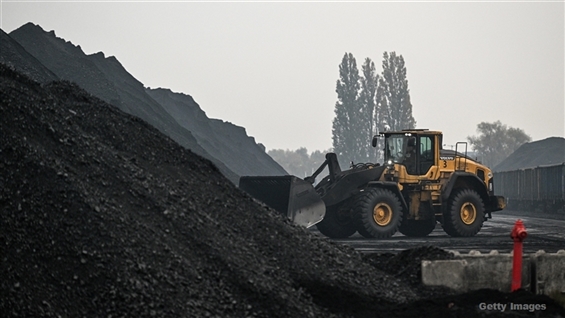
Thermal Coal Price Prediction: UBS reports that Chinese coal trade experts anticipate thermal coal prices in China will reach RMB750-800 per ton by 2026, with potential price increases during the May-June summer restocking period due to international energy prices and Indonesian supply fluctuations.
Price Surge Limitations: In a tight supply scenario, prices may briefly hit RMB900 per ton; however, China's effective policy coordination suggests that sustained price surges are unlikely.
Target Prices for CHINA SHENHUA: UBS has set target prices for CHINA SHENHUA's A-/H-shares at RMB48.6/$48, maintaining a Neutral rating amid current market conditions.
Sell Ratings for Other Companies: The broker has assigned Sell ratings for YANKUANG ENERGY and SHAANXI COAL IND, with target prices of $11.4/RMB22.8, indicating that current stock prices have already incorporated the underlying fundamentals.
HSI Declines by 133 Points; OOIL Drops 3% After Earnings Report; Oil and Coal Prices Rise


Market Opening: The Hong Kong bourse opened lower, with the HSI down 0.5% at 25,583, influenced by Iran's continued shutdown of the Strait of Hormuz.
Tech Sector Performance: Major tech stocks like TENCENT and BABA-W opened flat or slightly lower, while NTES-S saw a 1.9% increase.
Commodity Prices: Brent oil futures rose above USD100, with PETROCHINA and CNOOC opening higher, while gold prices dropped by 1% due to weakened expectations for interest rate cuts.
Company Earnings: OOIL reported a significant drop in net profit by 41%, leading to a 3.4% decline in its stock price, while POP MART's collaboration with Sanrio sold out quickly, impacting its stock negatively.
<Daily Summary> HSI Ends at 25,716, Dropping 182 Points; HSTI Finishes at 5,027, Down 27 Points; CSPC PHARMA Falls by More than 4%; CNOOC, CHINA SHENHUA, CHINA RISUN GP, QINGSONG HEALTH, and 160 HEALTH Reach New Peaks; Market Trading Volume Increases


Market Performance: The Hang Seng Index (HSI) fell by 182 points (0.7%) to close at 25,716, while the Hang Seng Tech Index (HSTI) and the Hang Seng China Enterprises Index (HSCEI) also experienced declines.
Active Heavyweights: Major stocks like Alibaba, Tencent, and Meituan saw slight declines, with Alibaba closing at $131.6 (-1.2%) and Tencent at $546.5 (-1%).
Notable Movers: Xpeng and JD Logistics were among the gainers, with Xpeng rising 4.4% to $78.45, while CSPC Pharma and Nongfu Spring faced significant losses, dropping 4.5% and 4.4%, respectively.
Short Selling Trends: High short selling ratios were observed in several stocks, including Meituan (46.5%) and Nongfu Spring (53.8%), indicating increased bearish sentiment among investors.
<Midday Update> HSI Falls 318 Points; HSTI Declines by 60 Points; CMOC Drops Over 5%; CNOOC, CHINA SHENHUA, CHINA RISUN GP, QINGSONG HEALTH, YANKUANG ENERGY Reach New Peaks

Market Performance: The Hang Seng Index (HSI) fell by 318 points (1.2%) to 25,579, while the Hang Seng Tech Index (HSTI) and the Hang Seng China Enterprises Index (HSCEI) also experienced declines.
Active Heavyweights: Major stocks like Alibaba, Meituan, and Tencent saw significant drops, with Alibaba closing down 2.3% and Tencent down 1.1%, amidst high short selling activity.
Notable Movers: CMOC and Nongfu Spring were among the biggest losers, dropping over 5%, while China Risun GP and Qingsong Health achieved notable gains, with China Risun GP up 18.3%.
Short Selling Trends: The report highlighted substantial short selling across various stocks, indicating bearish sentiment in the market, particularly for companies like Meituan and Techtronic Industries.

HSI Drops 61 Points, NIO Soars 14%; Energy and Power Utility Stocks Active


Market Performance: The HSI closed down 61 points (0.2%) at 25,898, with total market turnover dropping 23% to $254.481 billion.
Automaker Gains: NIO-SW surged 14.1% after reporting its first quarterly profit, while other automakers like GEELY AUTO and XPENG-W also saw significant increases.
Sector Highlights: Intelligent driving and battery stocks experienced notable gains, with CATL rising 9% and WERIDE-W increasing by 7.1%.
Energy and Coal Stocks: Power utilities and coal stocks performed well, with companies like HUANENG POWER and CHINA SHENHUA seeing increases of 3.5% and 4.6%, respectively.

<Daily Summary> HSI Ends at 25,898, Decreasing by 61 Points; HSTI Finishes at 5,054, Down 5 Points; CATL Surges Over 9%; 160 HEALTH, AB&B BIO-TECH-B, GOFINTECH QUANT, KINETIC DEV, YANCOAL AUS Reach New Peaks; Market Turnover Increases

Market Performance: The Hang Seng Index (HSI) fell by 61 points (0.2%) to close at 25,898, with a total market turnover of $254.48 billion.
Active Heavyweights: Major stocks like Meituan, CCB, and Xiaomi experienced declines, with Meituan down 2.1% and CCB down 1.6%, while Tencent and Alibaba also saw minor drops.
Top Gainers: CATL and Geely Auto were notable gainers, rising by 9% and 8.2% respectively, while other stocks like China Shenhua and XPeng also posted significant increases.
Notable Movements: 160 Health and 51World saw substantial gains of 28.5% and 28.2%, respectively, while Breton experienced a significant drop of 16.6%.
UBS Anticipates Limited Upside for Chinese Coal Prices, Downgrades YANKUANG ENERGY (01171.HK) to Sell
Thermal Coal Price Prediction: UBS reports that Chinese coal trade experts anticipate thermal coal prices in China will reach RMB750-800 per ton by 2026, with potential price increases during the May-June summer restocking period due to international energy prices and Indonesian supply fluctuations.
Price Surge Limitations: In a tight supply scenario, prices may briefly hit RMB900 per ton; however, China's effective policy coordination suggests that sustained price surges are unlikely.
Target Prices for CHINA SHENHUA: UBS has set target prices for CHINA SHENHUA's A-/H-shares at RMB48.6/$48, maintaining a Neutral rating amid current market conditions.
Sell Ratings for Other Companies: The broker has assigned Sell ratings for YANKUANG ENERGY and SHAANXI COAL IND, with target prices of $11.4/RMB22.8, indicating that current stock prices have already incorporated the underlying fundamentals.
HSI Declines by 133 Points; OOIL Drops 3% After Earnings Report; Oil and Coal Prices Rise
Market Opening: The Hong Kong bourse opened lower, with the HSI down 0.5% at 25,583, influenced by Iran's continued shutdown of the Strait of Hormuz.
Tech Sector Performance: Major tech stocks like TENCENT and BABA-W opened flat or slightly lower, while NTES-S saw a 1.9% increase.
Commodity Prices: Brent oil futures rose above USD100, with PETROCHINA and CNOOC opening higher, while gold prices dropped by 1% due to weakened expectations for interest rate cuts.
Company Earnings: OOIL reported a significant drop in net profit by 41%, leading to a 3.4% decline in its stock price, while POP MART's collaboration with Sanrio sold out quickly, impacting its stock negatively.
<Daily Summary> HSI Ends at 25,716, Dropping 182 Points; HSTI Finishes at 5,027, Down 27 Points; CSPC PHARMA Falls by More than 4%; CNOOC, CHINA SHENHUA, CHINA RISUN GP, QINGSONG HEALTH, and 160 HEALTH Reach New Peaks; Market Trading Volume Increases
Market Performance: The Hang Seng Index (HSI) fell by 182 points (0.7%) to close at 25,716, while the Hang Seng Tech Index (HSTI) and the Hang Seng China Enterprises Index (HSCEI) also experienced declines.
Active Heavyweights: Major stocks like Alibaba, Tencent, and Meituan saw slight declines, with Alibaba closing at $131.6 (-1.2%) and Tencent at $546.5 (-1%).
Notable Movers: Xpeng and JD Logistics were among the gainers, with Xpeng rising 4.4% to $78.45, while CSPC Pharma and Nongfu Spring faced significant losses, dropping 4.5% and 4.4%, respectively.
Short Selling Trends: High short selling ratios were observed in several stocks, including Meituan (46.5%) and Nongfu Spring (53.8%), indicating increased bearish sentiment among investors.
<Midday Update> HSI Falls 318 Points; HSTI Declines by 60 Points; CMOC Drops Over 5%; CNOOC, CHINA SHENHUA, CHINA RISUN GP, QINGSONG HEALTH, YANKUANG ENERGY Reach New Peaks
Market Performance: The Hang Seng Index (HSI) fell by 318 points (1.2%) to 25,579, while the Hang Seng Tech Index (HSTI) and the Hang Seng China Enterprises Index (HSCEI) also experienced declines.
Active Heavyweights: Major stocks like Alibaba, Meituan, and Tencent saw significant drops, with Alibaba closing down 2.3% and Tencent down 1.1%, amidst high short selling activity.
Notable Movers: CMOC and Nongfu Spring were among the biggest losers, dropping over 5%, while China Risun GP and Qingsong Health achieved notable gains, with China Risun GP up 18.3%.
Short Selling Trends: The report highlighted substantial short selling across various stocks, indicating bearish sentiment in the market, particularly for companies like Meituan and Techtronic Industries.
HSI Drops 61 Points, NIO Soars 14%; Energy and Power Utility Stocks Active
Market Performance: The HSI closed down 61 points (0.2%) at 25,898, with total market turnover dropping 23% to $254.481 billion.
Automaker Gains: NIO-SW surged 14.1% after reporting its first quarterly profit, while other automakers like GEELY AUTO and XPENG-W also saw significant increases.
Sector Highlights: Intelligent driving and battery stocks experienced notable gains, with CATL rising 9% and WERIDE-W increasing by 7.1%.
Energy and Coal Stocks: Power utilities and coal stocks performed well, with companies like HUANENG POWER and CHINA SHENHUA seeing increases of 3.5% and 4.6%, respectively.
<Daily Summary> HSI Ends at 25,898, Decreasing by 61 Points; HSTI Finishes at 5,054, Down 5 Points; CATL Surges Over 9%; 160 HEALTH, AB&B BIO-TECH-B, GOFINTECH QUANT, KINETIC DEV, YANCOAL AUS Reach New Peaks; Market Turnover Increases
Market Performance: The Hang Seng Index (HSI) fell by 61 points (0.2%) to close at 25,898, with a total market turnover of $254.48 billion.
Active Heavyweights: Major stocks like Meituan, CCB, and Xiaomi experienced declines, with Meituan down 2.1% and CCB down 1.6%, while Tencent and Alibaba also saw minor drops.
Top Gainers: CATL and Geely Auto were notable gainers, rising by 9% and 8.2% respectively, while other stocks like China Shenhua and XPeng also posted significant increases.
Notable Movements: 160 Health and 51World saw substantial gains of 28.5% and 28.2%, respectively, while Breton experienced a significant drop of 16.6%.