Oklo's Stock Volatility and Future Outlook
Written by Emily J. Thompson, Senior Investment Analyst
Updated: May 01 2026
0mins

Source: Fool
- Stock Volatility: Oklo experienced a remarkable 238% gain in 2025, yet has seen a 15% decline in 2026, indicating investor concerns about its current valuation and future prospects, necessitating careful evaluation before investing.
- Collaborative Projects: The partnership with Meta to develop a 1.2GW nuclear energy campus involves deploying multiple Aurora reactors, but the lack of Nuclear Regulatory Commission approval raises questions about the project's feasibility and timeline.
- Fuel Supply Challenges: The Aurora reactors require high-assay low-enriched uranium (HALEU), which is currently in short supply in the U.S., with only 0.9 metric tons delivered in 2025, potentially hindering the commercialization timeline.
- Future Risks: With commercialization expected by 2027 or 2028, Oklo faces execution risks and market volatility, making it crucial for investors to weigh its long-term potential against short-term uncertainties.
Trade with 70% Backtested Accuracy
Stop guessing "Should I Buy OKLO?" and start using high-conviction signals backed by rigorous historical data.
Sign up today to access powerful investing tools and make smarter, data-driven decisions.
Analyst Views on OKLO
Wall Street analysts forecast OKLO stock price to rise
12 Analyst Rating
7 Buy
5 Hold
0 Sell
Moderate Buy
Current: 68.090

Low
90.00
Averages
125.11
High
175.00
Current: 68.090
Low
90.00
Averages
125.11
High
175.00
About OKLO
Oklo Inc. is an advanced nuclear technology company. The Company is engaged in developing fast fission power plants to provide clean, reliable, and affordable energy at scale. It is developing advanced fuel recycling technologies in collaboration with the United States Department of Energy and United States National Laboratories. It provides 24/7 clean energy to data centers, factories, industrial sites, communities, and defense facilities. It offers heat and power through power purchase agreements. Its powerhouse product line, Aurora, is designed to be inherently safe, to be able to run on fresh or recycled fuel, and to produce 15-50 megawatts electric (MWe) and with the potential to expand powerhouse size to produce 100 MWe of electricity. The Company intends to develop specialized radioisotope production capabilities to address urgent supply shortages in life-saving medical radioisotopes and advanced industrial applications.
About the author

Emily J. Thompson
Emily J. Thompson, a Chartered Financial Analyst (CFA) with 12 years in investment research, graduated with honors from the Wharton School. Specializing in industrial and technology stocks, she provides in-depth analysis for Intellectia’s earnings and market brief reports.

SpaceX Plans IPO This Summer, Targeting AI Market Growth

- IPO Timeline Expected: SpaceX is anticipated to go public this summer, potentially as early as June, providing investors with a chance to engage directly in its valuation, which could reach up to $2 trillion, significantly enhancing the company's capital-raising capabilities.
- Market Opportunity Analysis: With the AI industry projected to grow at an annual rate of 30%, global spending on data centers could reach $7 trillion by 2030, and SpaceX's orbital data center (ODC) initiative aims to meet this rapidly growing energy demand, enhancing its competitive position in the market.
- Technological Innovation Outlook: SpaceX's ODC plan seeks to deploy data centers in low Earth orbit to utilize solar energy for cooling cost reduction, and despite facing challenges related to physics and radiation, its leading rocket technology and decreasing launch costs position it well to realize this vision.
- Nuclear Company Synergy: Complementing SpaceX's efforts is Oklo, which is targeting traditional terrestrial nuclear energy deployments using small modular reactors (SMRs) to quickly meet the AI industry's energy needs, and if it secures regulatory approvals, it could grow rapidly alongside the AI sector.
See More

Nuclear Power's Synergy with AI Growth
- Nuclear Resurgence: From 2005 to 2023, U.S. electricity generation remained flat, but new all-time highs are expected in 2024 and 2025, driven by the rapid growth of the AI industry, which is increasing electricity demand and positioning nuclear energy as a viable solution.
- Oklo's Market Positioning: Oklo focuses on small modular reactors (SMRs), with its 'microreactor' design enabling local deployment in data centers, and a streamlined licensing and deployment timeline of just 6 to 12 months enhances its competitive edge in the market.
- NuScale's Strategic Approach: NuScale is pursuing grid-scale deployments, exemplified by its 6-gigawatt system agreement with the Tennessee Valley Authority, with a power purchase agreement expected to close by year-end, solidifying its position in the low-carbon power sector.
- Diversification Investment Advice: Given the differing market strategies of Oklo and NuScale, investors may achieve diversified exposure by purchasing shares of both, although NuScale was not recommended as a top investment choice by The Motley Fool.
See More
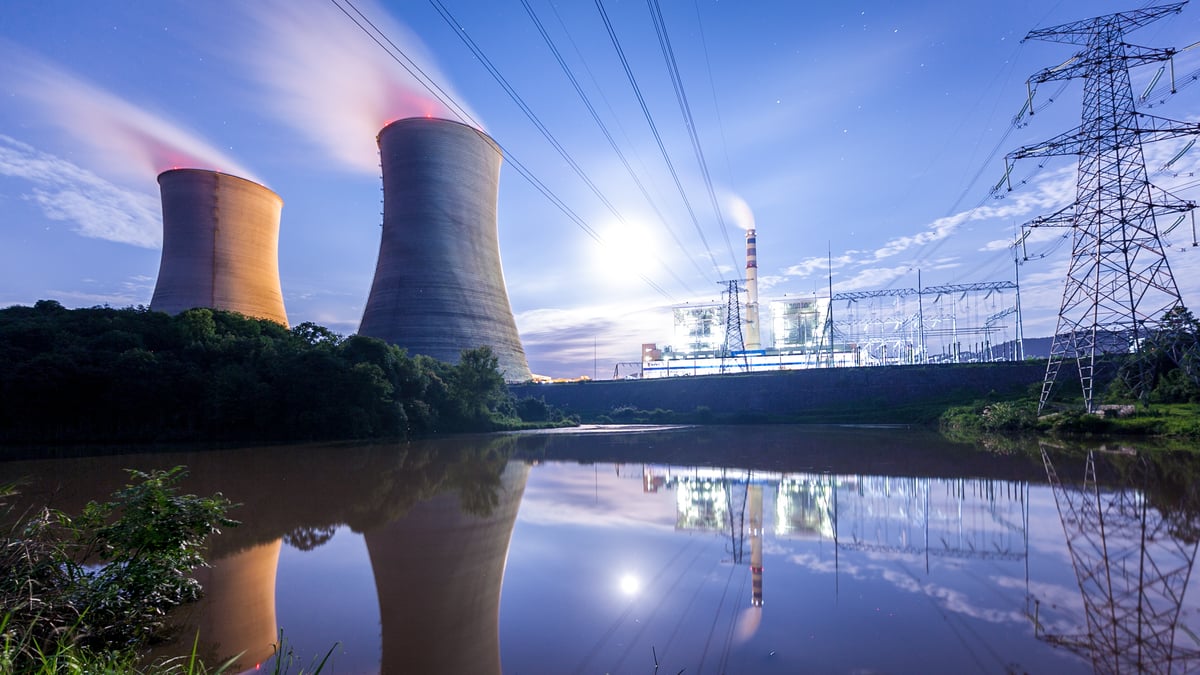
Nuclear Energy's Resurgence Driven by AI Demand
- Surging Nuclear Demand: The rapid growth of the AI industry is expected to sustain increased electricity demand for decades, with U.S. electricity generation projected to hit an all-time high in 2024, highlighting nuclear energy's potential as a solution.
- Oklo's Market Positioning: Oklo focuses on small modular reactors (SMRs), with its microreactor design making it an ideal choice for data centers, and once fully scaled, the licensing and deployment timeline is expected to be just six to twelve months.
- NuScale's Strategic Advantage: NuScale Power is focused on grid-scale deployments, exemplified by its agreement with the Tennessee Valley Authority for a 6-gigawatt system, with a power purchasing agreement anticipated to be finalized by year-end, further solidifying its market position.
- Diverse Competitive Landscape: Oklo enhances its market competitiveness through the acquisition of Atomic Alchemy for fuel recycling, while NuScale meets utilities' needs for low-carbon, reliable baseload power, showcasing different strategic directions in the nuclear energy market.
See More

Public Opposition to AI Data Centers Disrupts Construction Plans
- Poll Results: A recent Gallup poll reveals that 71% of Americans oppose AI data center construction in their areas, with 48% strongly against it and only 7% in strong support, indicating significant public resistance to such developments.
- Construction Delays: Local opposition has blocked or delayed at least $64 billion in U.S. data center construction projects since 2024, and this figure is expected to rise as more projects face local zoning boards, highlighting the critical role of local governance in project approvals.
- Nuclear Solution: Nuclear company Oklo is building its first small modular reactor prototype, expected to provide 75 MW of power sufficient for about 50,000 homes, and has partnered with Vertiv to develop a cooling system that serves both the data center and the reactor, enhancing energy efficiency.
- Market Outlook: Although Oklo's business plan and technology remain highly speculative, Gallup's findings show that nuclear power plant construction is 18 percentage points more favorable than AI data centers, suggesting that if Oklo successfully launches its nuclear-powered data centers, its stock could become a significant long-term investment opportunity.
See More
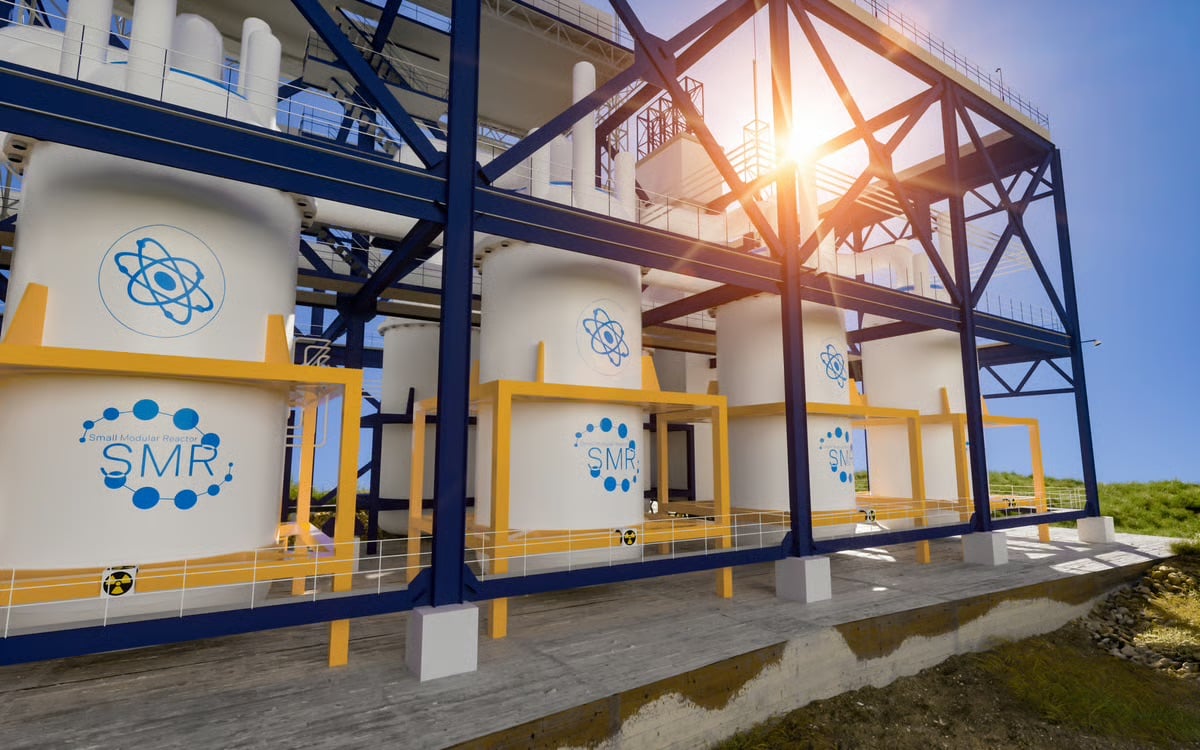
Emerging Competitors in the Nuclear Energy Sector
- Market Opportunity: Bank of America estimates the nuclear energy market could be worth $10 trillion, with Oklo and NuScale Power driving a resurgence in nuclear technology expected to yield significant growth over the coming decades.
- Business Model Differences: Oklo focuses on providing reliable power to data centers through power purchase agreements, while NuScale partners with ENTRA1 to sell its small modular reactor technology, offering global market opportunities despite a more complex model.
- Client Appeal: Oklo's direct approach allows it to meet data center demands more rapidly, having established significant partnerships with clients like Equinix, Switch, and Meta Platforms, whereas NuScale has yet to secure major deals with large data centers.
- Regulatory Risk Considerations: While Oklo's business model is more appealing, it lacks NRC approval for its reactor designs, whereas NuScale can leverage partners to manage the complexities of nuclear projects, providing greater regulatory certainty.
See More

Oklo and NuScale Design Small Nuclear Reactors
- Significant Market Opportunity: Oklo and NuScale are developing small nuclear reactors, expected to drive growth in the nuclear sector, with Bank of America estimating this market opportunity at $10 trillion, indicating potential returns for decades to come.
- Differing Business Models: Oklo plans to sell electricity directly to customers through power purchase agreements, while NuScale partners with ENTRA1 to sell its reactor technology; although NuScale's model is more complex, it provides access to the global market.
- Alignment with Client Needs: Oklo's model is particularly suited for industrial clients like data centers that seek clean, reliable power without the complexities of owning and operating a power plant, making Oklo more attractive in the market.
- Notable Project Potential: NuScale's partnership with ENTRA1 has initiated a 6GW SMR project, which, if successful, would become the largest SMR deployment in the U.S., further solidifying its position in the nuclear energy market.
See More
SpaceX Plans IPO This Summer, Targeting AI Market Growth
- IPO Timeline Expected: SpaceX is anticipated to go public this summer, potentially as early as June, providing investors with a chance to engage directly in its valuation, which could reach up to $2 trillion, significantly enhancing the company's capital-raising capabilities.
- Market Opportunity Analysis: With the AI industry projected to grow at an annual rate of 30%, global spending on data centers could reach $7 trillion by 2030, and SpaceX's orbital data center (ODC) initiative aims to meet this rapidly growing energy demand, enhancing its competitive position in the market.
- Technological Innovation Outlook: SpaceX's ODC plan seeks to deploy data centers in low Earth orbit to utilize solar energy for cooling cost reduction, and despite facing challenges related to physics and radiation, its leading rocket technology and decreasing launch costs position it well to realize this vision.
- Nuclear Company Synergy: Complementing SpaceX's efforts is Oklo, which is targeting traditional terrestrial nuclear energy deployments using small modular reactors (SMRs) to quickly meet the AI industry's energy needs, and if it secures regulatory approvals, it could grow rapidly alongside the AI sector.
See More
Nuclear Power's Synergy with AI Growth
- Nuclear Resurgence: From 2005 to 2023, U.S. electricity generation remained flat, but new all-time highs are expected in 2024 and 2025, driven by the rapid growth of the AI industry, which is increasing electricity demand and positioning nuclear energy as a viable solution.
- Oklo's Market Positioning: Oklo focuses on small modular reactors (SMRs), with its 'microreactor' design enabling local deployment in data centers, and a streamlined licensing and deployment timeline of just 6 to 12 months enhances its competitive edge in the market.
- NuScale's Strategic Approach: NuScale is pursuing grid-scale deployments, exemplified by its 6-gigawatt system agreement with the Tennessee Valley Authority, with a power purchase agreement expected to close by year-end, solidifying its position in the low-carbon power sector.
- Diversification Investment Advice: Given the differing market strategies of Oklo and NuScale, investors may achieve diversified exposure by purchasing shares of both, although NuScale was not recommended as a top investment choice by The Motley Fool.
See More
Nuclear Energy's Resurgence Driven by AI Demand
- Surging Nuclear Demand: The rapid growth of the AI industry is expected to sustain increased electricity demand for decades, with U.S. electricity generation projected to hit an all-time high in 2024, highlighting nuclear energy's potential as a solution.
- Oklo's Market Positioning: Oklo focuses on small modular reactors (SMRs), with its microreactor design making it an ideal choice for data centers, and once fully scaled, the licensing and deployment timeline is expected to be just six to twelve months.
- NuScale's Strategic Advantage: NuScale Power is focused on grid-scale deployments, exemplified by its agreement with the Tennessee Valley Authority for a 6-gigawatt system, with a power purchasing agreement anticipated to be finalized by year-end, further solidifying its market position.
- Diverse Competitive Landscape: Oklo enhances its market competitiveness through the acquisition of Atomic Alchemy for fuel recycling, while NuScale meets utilities' needs for low-carbon, reliable baseload power, showcasing different strategic directions in the nuclear energy market.
See More
Public Opposition to AI Data Centers Disrupts Construction Plans
- Poll Results: A recent Gallup poll reveals that 71% of Americans oppose AI data center construction in their areas, with 48% strongly against it and only 7% in strong support, indicating significant public resistance to such developments.
- Construction Delays: Local opposition has blocked or delayed at least $64 billion in U.S. data center construction projects since 2024, and this figure is expected to rise as more projects face local zoning boards, highlighting the critical role of local governance in project approvals.
- Nuclear Solution: Nuclear company Oklo is building its first small modular reactor prototype, expected to provide 75 MW of power sufficient for about 50,000 homes, and has partnered with Vertiv to develop a cooling system that serves both the data center and the reactor, enhancing energy efficiency.
- Market Outlook: Although Oklo's business plan and technology remain highly speculative, Gallup's findings show that nuclear power plant construction is 18 percentage points more favorable than AI data centers, suggesting that if Oklo successfully launches its nuclear-powered data centers, its stock could become a significant long-term investment opportunity.
See More
Emerging Competitors in the Nuclear Energy Sector
- Market Opportunity: Bank of America estimates the nuclear energy market could be worth $10 trillion, with Oklo and NuScale Power driving a resurgence in nuclear technology expected to yield significant growth over the coming decades.
- Business Model Differences: Oklo focuses on providing reliable power to data centers through power purchase agreements, while NuScale partners with ENTRA1 to sell its small modular reactor technology, offering global market opportunities despite a more complex model.
- Client Appeal: Oklo's direct approach allows it to meet data center demands more rapidly, having established significant partnerships with clients like Equinix, Switch, and Meta Platforms, whereas NuScale has yet to secure major deals with large data centers.
- Regulatory Risk Considerations: While Oklo's business model is more appealing, it lacks NRC approval for its reactor designs, whereas NuScale can leverage partners to manage the complexities of nuclear projects, providing greater regulatory certainty.
See More
Oklo and NuScale Design Small Nuclear Reactors
- Significant Market Opportunity: Oklo and NuScale are developing small nuclear reactors, expected to drive growth in the nuclear sector, with Bank of America estimating this market opportunity at $10 trillion, indicating potential returns for decades to come.
- Differing Business Models: Oklo plans to sell electricity directly to customers through power purchase agreements, while NuScale partners with ENTRA1 to sell its reactor technology; although NuScale's model is more complex, it provides access to the global market.
- Alignment with Client Needs: Oklo's model is particularly suited for industrial clients like data centers that seek clean, reliable power without the complexities of owning and operating a power plant, making Oklo more attractive in the market.
- Notable Project Potential: NuScale's partnership with ENTRA1 has initiated a 6GW SMR project, which, if successful, would become the largest SMR deployment in the U.S., further solidifying its position in the nuclear energy market.
See More