Japan's LDP Secures Overwhelming Election Victory
Written by Emily J. Thompson, Senior Investment Analyst
Updated: 6 days ago
0mins


Should l Buy NVDA?
Source: CNBC
- Election Impact: Japan's Prime Minister Sanae Takaichi and her ruling LDP secured a supermajority in the election, controlling over two-thirds of the Lower House, which allows her to freely pursue an agenda of increased spending and suspension of certain food taxes, likely stimulating economic growth further.
- Market Surge: Following the election results, Japanese stocks reached a record high, with the yen strengthening to 156.88 per dollar, reflecting renewed investor confidence and indicating positive market expectations regarding Takaichi's policies.
- U.S. Market Rebound: Major U.S. indexes rebounded post-election, with the S&P 500 rising 1.97% and the Nasdaq Composite climbing 2.18%, driven by strong performances from tech stocks like Nvidia and Oracle, which bolstered global investor confidence.
- Private Credit Concerns: The private credit market faces renewed uncertainty as AI pressures software companies, raising investor concerns about borrower business models and potentially increasing default risks, which could impact overall financial stability.
Trade with 70% Backtested Accuracy
Stop guessing "Should I Buy NVDA?" and start using high-conviction signals backed by rigorous historical data.
Sign up today to access powerful investing tools and make smarter, data-driven decisions.
Analyst Views on NVDA
Wall Street analysts forecast NVDA stock price to rise
41 Analyst Rating
39 Buy
1 Hold
1 Sell
Strong Buy
Current: 186.940

Low
200.00
Averages
264.97
High
352.00
Current: 186.940
Low
200.00
Averages
264.97
High
352.00
About NVDA
NVIDIA Corporation is a full-stack computing infrastructure company. The Company is engaged in accelerated computing to help solve the challenging computational problems. The Company’s segments include Compute & Networking and Graphics. The Compute & Networking segment includes its Data Center accelerated computing platforms and artificial intelligence (AI) solutions and software; networking; automotive platforms and autonomous and electric vehicle solutions; Jetson for robotics and other embedded platforms, and DGX Cloud computing services. The Graphics segment includes GeForce GPUs for gaming and PCs, the GeForce NOW game streaming service and related infrastructure, and solutions for gaming platforms; Quadro/NVIDIA RTX GPUs for enterprise workstation graphics; virtual GPU software for cloud-based visual and virtual computing; automotive platforms for infotainment systems, and Omniverse Enterprise software for building and operating industrial AI and digital twin applications.
About the author

Emily J. Thompson
Emily J. Thompson, a Chartered Financial Analyst (CFA) with 12 years in investment research, graduated with honors from the Wharton School. Specializing in industrial and technology stocks, she provides in-depth analysis for Intellectia’s earnings and market brief reports.

Cohere Achieves $240M Annual Revenue in 2025, Surpassing Targets

- Significant Revenue Growth: Cohere achieved approximately $240 million in annual recurring revenue in 2025, surpassing its $200 million target, indicating strong market demand that is expected to further enhance the company's market share in the AI sector.
- Successful Fundraising: In August 2025, Cohere raised $500 million, valuing the company at $6.8 billion, with investors including AMD, Nvidia, and Salesforce, reflecting market recognition of its capital-efficient model and strengthening its position in the competitive AI landscape.
- Improved Gross Margins: Cohere's gross margins averaged about 70% in 2025, expanding by 25 basis points year-over-year, demonstrating the company's ability to achieve sustainable growth by optimizing resource allocation and managing customer demand without being affected by market volatility.
- Market Expansion Plans: Cohere plans to continue expanding into the European market in 2026 and build its AI agent platform, North, anticipating another year of rapid growth, with the CEO indicating that the company is poised for a public market debut to attract more investor interest.
See More

Micron Technology Compared to Nvidia's Growth Trajectory


- Significant Revenue Growth: Micron Technology reported a 57% year-over-year revenue increase in Q1 FY2026, with adjusted earnings soaring 169% to $5.5 billion, showcasing strong performance driven by AI demand, which may attract more investor interest.
- Competitive Pressure: Despite strong demand for Micron's high-bandwidth memory (HBM), significant competition from Samsung and SK Hynix poses a threat, especially with rumors that Micron's HBM4 chips failed to meet Nvidia's requirements, potentially impacting market share.
- Stock Volatility Risk: Micron is viewed as a cyclical stock, with investors concerned that the current memory supply-demand imbalance could quickly evaporate, leading to a sharp decline in share price, which explains its low forward P/E ratio of 11.8.
- AI Demand Outlook: Despite cyclical challenges, analysts believe that the demand for Micron's high-performance memory driven by AI will continue to grow, potentially positioning it closer to Nvidia than Intel in future market competition.
See More

Analysis of Stock Market Performance During Trump's Presidency
- Market Uptrend: During Trump's first term, the Dow Jones, S&P 500, and Nasdaq gained 57%, 70%, and 142%, respectively, indicating strong market performance and reflecting investor optimism about economic growth.
- Second Term Performance: From January 20, 2025, to February 10, 2026, the three major indexes rose by 15%, 16%, and 18%, suggesting that Trump's policies continue to drive stock market gains despite facing some economic headwinds.
- Tax Policy Impact: The Tax Cuts and Jobs Act signed by Trump in 2017 reduced the corporate income tax rate from 35% to 21%, which not only encouraged corporate investment and hiring but also led to record stock buybacks, with S&P 500 companies projected to exceed $1 trillion in buybacks by 2025.
- Valuation Risk Warning: As of February 10, 2026, the S&P 500's Shiller P/E ratio reached 40.36, the second-highest in history after the dot-com bubble, indicating overvaluation that could lead to significant market corrections, prompting investors to approach with caution.
See More

Three Tech Stocks with More Potential Than Any Cryptocurrency
- Alphabet's Strong Earnings: Alphabet reported $113.8 billion in revenue for Q4 2026, an 18% increase year-over-year, with net income reaching $34.45 billion, up nearly 30%, and despite market concerns over its $185 billion AI infrastructure spending, this investment is crucial for accelerating growth in its cloud computing division amid rising AI platform demand.
- TSMC's Market Share Growth: Taiwan Semiconductor Manufacturing increased its market share from 66% to 72% in Q3, achieving $33.73 billion in revenue for Q4, a 25.5% year-over-year increase, and it forecasts first-quarter revenue to rise further to between $34.6 billion and $35.8 billion, highlighting its robust growth in semiconductor manufacturing.
- Oracle's Cloud Computing Surge: Oracle generated $7.97 billion in revenue for Q2 FY2026, a 34% increase, with its cloud computing segment becoming the largest revenue driver, and despite over $100 billion in debt, its $300 billion infrastructure deal with OpenAI presents significant market opportunities.
- Cryptocurrency Market Volatility: The overall cryptocurrency market has fallen over 45% from its high of $4.28 trillion on October 6, 2025, primarily driven by Bitcoin's price fluctuations and geopolitical instability, yet long-term investors can still find sustainable growth opportunities in the stock market.
See More
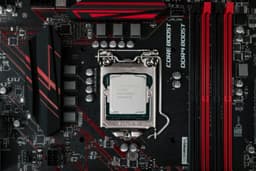
Will Micron Be the Next Nvidia or Intel?
- Significant Revenue Growth: Micron Technology reported a 57% year-over-year revenue increase in its fiscal Q1 2026, with adjusted earnings soaring 169% to $5.5 billion, indicating strong market demand and profitability that could attract more investor interest.
- Intensifying Market Competition: Despite the high demand for Micron's high-bandwidth memory (HBM), competitors like Samsung and SK Hynix are rapidly capturing market share, posing a potential threat to Micron's market position and future growth prospects.
- Rising Technological Importance: Nvidia CEO Jensen Huang emphasized that Micron's leadership in high-performance memory is crucial for enabling the next generation of AI breakthroughs, suggesting that Micron's technology plays a key role in the AI wave, potentially enhancing its market value.
- Cyclical Risk Exists: Micron is viewed as a cyclical stock, with investors concerned that the current memory supply-demand imbalance could quickly evaporate, leading to a stock price decline, which is reflected in its trading at only 11.8 times forward earnings, indicating market uncertainty about its future.
See More

Robinhood Reports Growth Amid Stock Decline

- Performance Growth: Robinhood has achieved year-over-year growth across all key operating metrics, including net deposits, Gold subscriptions, and total platform assets, which increased by 68% to $324 billion, demonstrating the company's strong ability to attract customer assets.
- Revenue Challenges: Despite the diversification of revenue from trading and new products, the stock price fell sharply as revenue came in below analysts' forecasts, currently trading 53% below its 52-week high, reflecting market concerns about its short-term performance.
- Product Expansion: Robinhood currently has 11 products generating over $100 million in annual revenue, with its credit card expected to bring that number to 12 this year, indicating the company's ongoing efforts to diversify revenue sources and enhance long-term growth potential.
- Banking Service Launch: Robinhood Banking has started rolling out to Gold members, with 25,000 customers depositing $400 million; this new service not only offers interest and fee-related revenue potential but also helps smooth out trading volatility, further improving customer retention.
See More
Cohere Achieves $240M Annual Revenue in 2025, Surpassing Targets
- Significant Revenue Growth: Cohere achieved approximately $240 million in annual recurring revenue in 2025, surpassing its $200 million target, indicating strong market demand that is expected to further enhance the company's market share in the AI sector.
- Successful Fundraising: In August 2025, Cohere raised $500 million, valuing the company at $6.8 billion, with investors including AMD, Nvidia, and Salesforce, reflecting market recognition of its capital-efficient model and strengthening its position in the competitive AI landscape.
- Improved Gross Margins: Cohere's gross margins averaged about 70% in 2025, expanding by 25 basis points year-over-year, demonstrating the company's ability to achieve sustainable growth by optimizing resource allocation and managing customer demand without being affected by market volatility.
- Market Expansion Plans: Cohere plans to continue expanding into the European market in 2026 and build its AI agent platform, North, anticipating another year of rapid growth, with the CEO indicating that the company is poised for a public market debut to attract more investor interest.
See More
Micron Technology Compared to Nvidia's Growth Trajectory
- Significant Revenue Growth: Micron Technology reported a 57% year-over-year revenue increase in Q1 FY2026, with adjusted earnings soaring 169% to $5.5 billion, showcasing strong performance driven by AI demand, which may attract more investor interest.
- Competitive Pressure: Despite strong demand for Micron's high-bandwidth memory (HBM), significant competition from Samsung and SK Hynix poses a threat, especially with rumors that Micron's HBM4 chips failed to meet Nvidia's requirements, potentially impacting market share.
- Stock Volatility Risk: Micron is viewed as a cyclical stock, with investors concerned that the current memory supply-demand imbalance could quickly evaporate, leading to a sharp decline in share price, which explains its low forward P/E ratio of 11.8.
- AI Demand Outlook: Despite cyclical challenges, analysts believe that the demand for Micron's high-performance memory driven by AI will continue to grow, potentially positioning it closer to Nvidia than Intel in future market competition.
See More
Analysis of Stock Market Performance During Trump's Presidency
- Market Uptrend: During Trump's first term, the Dow Jones, S&P 500, and Nasdaq gained 57%, 70%, and 142%, respectively, indicating strong market performance and reflecting investor optimism about economic growth.
- Second Term Performance: From January 20, 2025, to February 10, 2026, the three major indexes rose by 15%, 16%, and 18%, suggesting that Trump's policies continue to drive stock market gains despite facing some economic headwinds.
- Tax Policy Impact: The Tax Cuts and Jobs Act signed by Trump in 2017 reduced the corporate income tax rate from 35% to 21%, which not only encouraged corporate investment and hiring but also led to record stock buybacks, with S&P 500 companies projected to exceed $1 trillion in buybacks by 2025.
- Valuation Risk Warning: As of February 10, 2026, the S&P 500's Shiller P/E ratio reached 40.36, the second-highest in history after the dot-com bubble, indicating overvaluation that could lead to significant market corrections, prompting investors to approach with caution.
See More
Three Tech Stocks with More Potential Than Any Cryptocurrency
- Alphabet's Strong Earnings: Alphabet reported $113.8 billion in revenue for Q4 2026, an 18% increase year-over-year, with net income reaching $34.45 billion, up nearly 30%, and despite market concerns over its $185 billion AI infrastructure spending, this investment is crucial for accelerating growth in its cloud computing division amid rising AI platform demand.
- TSMC's Market Share Growth: Taiwan Semiconductor Manufacturing increased its market share from 66% to 72% in Q3, achieving $33.73 billion in revenue for Q4, a 25.5% year-over-year increase, and it forecasts first-quarter revenue to rise further to between $34.6 billion and $35.8 billion, highlighting its robust growth in semiconductor manufacturing.
- Oracle's Cloud Computing Surge: Oracle generated $7.97 billion in revenue for Q2 FY2026, a 34% increase, with its cloud computing segment becoming the largest revenue driver, and despite over $100 billion in debt, its $300 billion infrastructure deal with OpenAI presents significant market opportunities.
- Cryptocurrency Market Volatility: The overall cryptocurrency market has fallen over 45% from its high of $4.28 trillion on October 6, 2025, primarily driven by Bitcoin's price fluctuations and geopolitical instability, yet long-term investors can still find sustainable growth opportunities in the stock market.
See More
Will Micron Be the Next Nvidia or Intel?
- Significant Revenue Growth: Micron Technology reported a 57% year-over-year revenue increase in its fiscal Q1 2026, with adjusted earnings soaring 169% to $5.5 billion, indicating strong market demand and profitability that could attract more investor interest.
- Intensifying Market Competition: Despite the high demand for Micron's high-bandwidth memory (HBM), competitors like Samsung and SK Hynix are rapidly capturing market share, posing a potential threat to Micron's market position and future growth prospects.
- Rising Technological Importance: Nvidia CEO Jensen Huang emphasized that Micron's leadership in high-performance memory is crucial for enabling the next generation of AI breakthroughs, suggesting that Micron's technology plays a key role in the AI wave, potentially enhancing its market value.
- Cyclical Risk Exists: Micron is viewed as a cyclical stock, with investors concerned that the current memory supply-demand imbalance could quickly evaporate, leading to a stock price decline, which is reflected in its trading at only 11.8 times forward earnings, indicating market uncertainty about its future.
See More
Robinhood Reports Growth Amid Stock Decline
- Performance Growth: Robinhood has achieved year-over-year growth across all key operating metrics, including net deposits, Gold subscriptions, and total platform assets, which increased by 68% to $324 billion, demonstrating the company's strong ability to attract customer assets.
- Revenue Challenges: Despite the diversification of revenue from trading and new products, the stock price fell sharply as revenue came in below analysts' forecasts, currently trading 53% below its 52-week high, reflecting market concerns about its short-term performance.
- Product Expansion: Robinhood currently has 11 products generating over $100 million in annual revenue, with its credit card expected to bring that number to 12 this year, indicating the company's ongoing efforts to diversify revenue sources and enhance long-term growth potential.
- Banking Service Launch: Robinhood Banking has started rolling out to Gold members, with 25,000 customers depositing $400 million; this new service not only offers interest and fee-related revenue potential but also helps smooth out trading volatility, further improving customer retention.
See More