

iShares S&P Small-Cap 600 Value ETF Experiences Big Outflow
Written by Emily J. Thompson, Senior Investment Analyst
Updated: Mar 14 2025
0mins


Source: NASDAQ.COM
IJS Share Price Analysis: The IJS ETF has a 52-week low of $93.89 and a high of $119.28, with the last trade recorded at $97.20, indicating its current position relative to historical performance.
ETF Trading Dynamics: ETFs function like stocks but involve trading "units" that can be created or destroyed based on investor demand, affecting the underlying assets held within the ETFs during significant inflows or outflows.
Trade with 70% Backtested Accuracy
Stop guessing "Should I Buy SNDK?" and start using high-conviction signals backed by rigorous historical data.
Sign up today to access powerful investing tools and make smarter, data-driven decisions.
Analyst Views on SNDK
Wall Street analysts forecast SNDK stock price to fall
14 Analyst Rating
11 Buy
3 Hold
0 Sell
Strong Buy
Current: 1745.000

Low
220.00
Averages
283.69
High
410.00
Current: 1745.000
Low
220.00
Averages
283.69
High
410.00
About SNDK
SanDisk Corporation is a developer, manufacturer and provider of data storage devices and solutions based on NAND flash technology and has consumer brands and franchises globally. The Company's solutions include a range of solid state drives (SSDs) embedded products, removable cards, universal serial bus (USB) drives, and wafers and components. Its broad portfolio of technology and products addresses multiple end markets of Datacenter, Edge and Consumer. Its Datacenter end market is composed primarily of products for public or private cloud environments and enterprise customers. The Company, through the Edge end market, provides original equipment manufacturer and channel customers a broad array of high-performance flash solutions across personal computer, mobile, gaming, automotive, virtual reality headsets, at-home entertainment, and industrial spaces. The Company serves the Consumer end market with a broad range of retail and other end-user products.
About the author

Emily J. Thompson
Emily J. Thompson, a Chartered Financial Analyst (CFA) with 12 years in investment research, graduated with honors from the Wharton School. Specializing in industrial and technology stocks, she provides in-depth analysis for Intellectia’s earnings and market brief reports.

Sandisk Stock Soars 800% in 2026, Analysts See More Upside

- Outstanding Stock Performance: Sandisk's stock has surged approximately 800% in 2026, significantly outperforming second-place Micron Technology, which is up about 300%, reflecting strong demand and performance in the semiconductor sector.
- Escalating Memory Chip Shortage: Sandisk, which primarily manufactures NAND memory for long-term data storage, is benefiting from soaring SSD demand in data centers, leading to skyrocketing memory chip prices and solidifying its market position.
- Future Growth Potential: Analysts project Sandisk will achieve a remarkable 336% growth in fiscal Q4 and 122% growth for fiscal 2027, indicating substantial growth opportunities ahead and promising returns for investors.
- Reasonable Valuation: With a forward P/E ratio of 11, Sandisk's stock is considered reasonably priced given its future earnings potential, and analysts believe it has room to rise further, making it an attractive buy for investors.
See More

Sandisk Stock Soars 635%: Key Drivers Behind the Surge
- Surge in Market Demand: Sandisk's NAND memory has surged due to skyrocketing demand for solid-state drives (SSDs), particularly in data centers where AI software requires unprecedented data storage, leading to a 635% stock increase year-to-date.
- Impact of Price Increases: The overwhelming demand for NAND has allowed Sandisk to significantly raise product prices, resulting in soaring revenue and earnings, with its price-to-earnings ratio skyrocketing from 0.6 to over 35 times, reflecting optimistic market expectations for future growth.
- Future Growth Potential: Industry analysts predict that tight memory market conditions will persist beyond 2027, providing a favorable outlook for Sandisk shareholders, especially as its stock price has reverted to a relatively cheap level, with strong growth likely ahead.
- Investment Timing: Despite a pullback from a high of 884%, current market conditions may present an ideal buying opportunity for Sandisk, particularly as ongoing data center expansions could prolong the imbalance between memory supply and demand for years.
See More

Sandisk Thrives Amid Soaring Memory Demand
- Surge in Memory Demand: The massive spike in NAND memory usage driven by AI software's data storage needs has significantly increased Sandisk's revenue and earnings, reflecting strong market demand for its products in data centers.
- Stock Price Surge: As of now, Sandisk's stock has risen approximately 635% year-to-date, although it has retreated from a high of 884% due to recent AI-related sell-offs, indicating strong market performance and investor confidence in its future growth.
- Valuation Shift: Sandisk's price-to-earnings ratio skyrocketed from just 0.6 times forward earnings last year to 9.3 times currently, reflecting a market reassessment of its future profitability, especially with expectations of sustained tightness in the memory market for years to come.
- Optimistic Market Outlook: According to industry peer Micron, tight market conditions are expected to persist beyond 2027, providing a favorable outlook for Sandisk shareholders and suggesting that the stock could continue to rise amid ongoing supply constraints.
See More
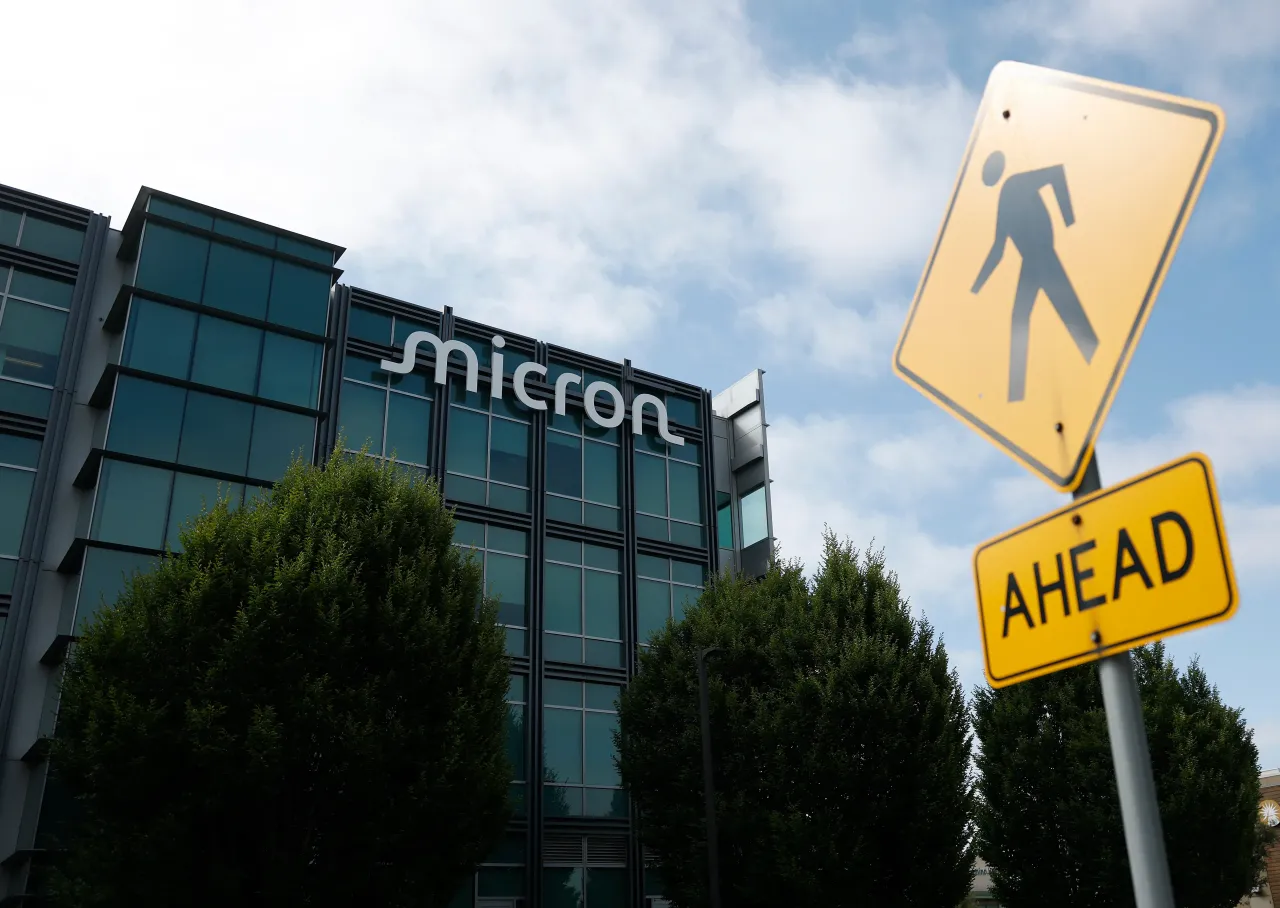
U.S. Memory Chip Stocks Decline Despite Samsung's Strong Earnings

- Market Decline: U.S. memory chip stocks fell sharply in Tuesday's premarket trading, with Micron and Western Digital both down 5%, indicating a broader market pessimism that could undermine investor confidence in the semiconductor sector.
- Korean Market Impact: The South Korean stock market briefly entered bear territory due to losses in Samsung Electronics and SK Hynix, which dropped 6.9% and 6.1% respectively, negatively impacting the global memory chip market sentiment.
- Investor Sentiment: Despite the declines in Micron and SanDisk, retail sentiment on Stocktwits was 'extremely bullish' for SanDisk and 'bullish' for Micron and DRAM, suggesting that traders are viewing the dips as potential buying opportunities.
- Profit Booking Phenomenon: Profit-taking was evident in memory stocks, with Micron and SanDisk trading below their peaks from last month, and DRAM prices down 19% from their June 22 high, reflecting a cautious market outlook on short-term profitability.
See More

Sandisk Benefits from NAND Flash Supply Shortage
- Surging Market Demand: Sandisk has seen a significant increase in demand for its NAND flash chips due to AI-driven storage needs, leading to a substantial price surge that has propelled the company's revenue and earnings, with stock gains exceeding 3,660% over the past year.
- Competitor Investment: SK Hynix plans to invest $51 billion in a new NAND flash production facility by 2029, which could increase market supply; however, due to the strong storage demands from AI data centers, Sandisk's growth momentum is expected to remain largely unaffected.
- Optimistic Industry Outlook: TrendForce forecasts that NAND flash industry revenue will reach $379 billion by 2027, significantly up from the previous estimate of $176 billion, indicating robust growth in the market even with new capacity additions.
- Investment Appeal: Despite Sandisk's stock price soaring over the past year, it trades at an attractive forward P/E ratio of 27, making it a potential buy for investors, especially given the optimistic long-term growth outlook for the NAND flash market.
See More

Nasdaq Futures Slip as Market Awaits Fed Minutes and Earnings Season


- Market Sentiment Fluctuates: Nasdaq futures fell by 0.9% and S&P 500 futures declined by 0.3%, while Dow futures rose by 0.2%, indicating investor unease following Samsung Electronics' earnings-driven selloff, with heightened focus on the upcoming Fed minutes and the approaching earnings season.
- Tech Stocks Under Pressure: Following Samsung's earnings-induced selloff, memory chip makers Micron and SanDisk saw their stock prices drop by 5% in premarket trading, reflecting a growing trend of profit-taking across the AI hardware sector amid market volatility.
- Stock Movements: Space Exploration Technologies Corp faced pressure ahead of its inclusion in the Nasdaq-100, despite Ark Invest's Cathie Wood increasing her stake, while billionaire investor Jeremy Grantham criticized the company's valuation as overly reliant on “third-rate AI,” highlighting investor skepticism.
- Economic Data Focus: Investors are set to track the release of trade balance data today, and while no major earnings reports are expected, Levi Strauss, PepsiCo, and Delta Air Lines are scheduled to report in the coming days, marking the unofficial kickoff of the earnings season for major U.S. banks.
See More
Sandisk Stock Soars 800% in 2026, Analysts See More Upside
- Outstanding Stock Performance: Sandisk's stock has surged approximately 800% in 2026, significantly outperforming second-place Micron Technology, which is up about 300%, reflecting strong demand and performance in the semiconductor sector.
- Escalating Memory Chip Shortage: Sandisk, which primarily manufactures NAND memory for long-term data storage, is benefiting from soaring SSD demand in data centers, leading to skyrocketing memory chip prices and solidifying its market position.
- Future Growth Potential: Analysts project Sandisk will achieve a remarkable 336% growth in fiscal Q4 and 122% growth for fiscal 2027, indicating substantial growth opportunities ahead and promising returns for investors.
- Reasonable Valuation: With a forward P/E ratio of 11, Sandisk's stock is considered reasonably priced given its future earnings potential, and analysts believe it has room to rise further, making it an attractive buy for investors.
See More
Sandisk Stock Soars 635%: Key Drivers Behind the Surge
- Surge in Market Demand: Sandisk's NAND memory has surged due to skyrocketing demand for solid-state drives (SSDs), particularly in data centers where AI software requires unprecedented data storage, leading to a 635% stock increase year-to-date.
- Impact of Price Increases: The overwhelming demand for NAND has allowed Sandisk to significantly raise product prices, resulting in soaring revenue and earnings, with its price-to-earnings ratio skyrocketing from 0.6 to over 35 times, reflecting optimistic market expectations for future growth.
- Future Growth Potential: Industry analysts predict that tight memory market conditions will persist beyond 2027, providing a favorable outlook for Sandisk shareholders, especially as its stock price has reverted to a relatively cheap level, with strong growth likely ahead.
- Investment Timing: Despite a pullback from a high of 884%, current market conditions may present an ideal buying opportunity for Sandisk, particularly as ongoing data center expansions could prolong the imbalance between memory supply and demand for years.
See More
Sandisk Thrives Amid Soaring Memory Demand
- Surge in Memory Demand: The massive spike in NAND memory usage driven by AI software's data storage needs has significantly increased Sandisk's revenue and earnings, reflecting strong market demand for its products in data centers.
- Stock Price Surge: As of now, Sandisk's stock has risen approximately 635% year-to-date, although it has retreated from a high of 884% due to recent AI-related sell-offs, indicating strong market performance and investor confidence in its future growth.
- Valuation Shift: Sandisk's price-to-earnings ratio skyrocketed from just 0.6 times forward earnings last year to 9.3 times currently, reflecting a market reassessment of its future profitability, especially with expectations of sustained tightness in the memory market for years to come.
- Optimistic Market Outlook: According to industry peer Micron, tight market conditions are expected to persist beyond 2027, providing a favorable outlook for Sandisk shareholders and suggesting that the stock could continue to rise amid ongoing supply constraints.
See More
U.S. Memory Chip Stocks Decline Despite Samsung's Strong Earnings
- Market Decline: U.S. memory chip stocks fell sharply in Tuesday's premarket trading, with Micron and Western Digital both down 5%, indicating a broader market pessimism that could undermine investor confidence in the semiconductor sector.
- Korean Market Impact: The South Korean stock market briefly entered bear territory due to losses in Samsung Electronics and SK Hynix, which dropped 6.9% and 6.1% respectively, negatively impacting the global memory chip market sentiment.
- Investor Sentiment: Despite the declines in Micron and SanDisk, retail sentiment on Stocktwits was 'extremely bullish' for SanDisk and 'bullish' for Micron and DRAM, suggesting that traders are viewing the dips as potential buying opportunities.
- Profit Booking Phenomenon: Profit-taking was evident in memory stocks, with Micron and SanDisk trading below their peaks from last month, and DRAM prices down 19% from their June 22 high, reflecting a cautious market outlook on short-term profitability.
See More
Sandisk Benefits from NAND Flash Supply Shortage
- Surging Market Demand: Sandisk has seen a significant increase in demand for its NAND flash chips due to AI-driven storage needs, leading to a substantial price surge that has propelled the company's revenue and earnings, with stock gains exceeding 3,660% over the past year.
- Competitor Investment: SK Hynix plans to invest $51 billion in a new NAND flash production facility by 2029, which could increase market supply; however, due to the strong storage demands from AI data centers, Sandisk's growth momentum is expected to remain largely unaffected.
- Optimistic Industry Outlook: TrendForce forecasts that NAND flash industry revenue will reach $379 billion by 2027, significantly up from the previous estimate of $176 billion, indicating robust growth in the market even with new capacity additions.
- Investment Appeal: Despite Sandisk's stock price soaring over the past year, it trades at an attractive forward P/E ratio of 27, making it a potential buy for investors, especially given the optimistic long-term growth outlook for the NAND flash market.
See More
Nasdaq Futures Slip as Market Awaits Fed Minutes and Earnings Season
- Market Sentiment Fluctuates: Nasdaq futures fell by 0.9% and S&P 500 futures declined by 0.3%, while Dow futures rose by 0.2%, indicating investor unease following Samsung Electronics' earnings-driven selloff, with heightened focus on the upcoming Fed minutes and the approaching earnings season.
- Tech Stocks Under Pressure: Following Samsung's earnings-induced selloff, memory chip makers Micron and SanDisk saw their stock prices drop by 5% in premarket trading, reflecting a growing trend of profit-taking across the AI hardware sector amid market volatility.
- Stock Movements: Space Exploration Technologies Corp faced pressure ahead of its inclusion in the Nasdaq-100, despite Ark Invest's Cathie Wood increasing her stake, while billionaire investor Jeremy Grantham criticized the company's valuation as overly reliant on “third-rate AI,” highlighting investor skepticism.
- Economic Data Focus: Investors are set to track the release of trade balance data today, and while no major earnings reports are expected, Levi Strauss, PepsiCo, and Delta Air Lines are scheduled to report in the coming days, marking the unofficial kickoff of the earnings season for major U.S. banks.
See More





