How Is Bunge Global's Stock Performance Compared to Other Agribusiness Stocks?
Written by Emily J. Thompson, Senior Investment Analyst
Updated: Mar 28 2025
0mins

Source: NASDAQ.COM
Company Overview: Bunge Global SA, a Missouri-based agribusiness valued at $9.9 billion, produces plant-based oils and proteins for various applications, but has faced a 33.4% decline from its 52-week high due to tough market conditions and increased corporate expenses.
Market Performance: Despite underperforming compared to the VanEck Agribusiness ETF, analysts maintain a "Moderate Buy" rating for BG with a price target suggesting a potential upside of 13.1%, indicating some optimism about its future prospects.
Trade with 70% Backtested Accuracy
Stop guessing "Should I Buy BG?" and start using high-conviction signals backed by rigorous historical data.
Sign up today to access powerful investing tools and make smarter, data-driven decisions.
Analyst Views on BG
Wall Street analysts forecast BG stock price to rise
6 Analyst Rating
6 Buy
0 Hold
0 Sell
Strong Buy
Current: 104.890

Low
109.00
Averages
115.50
High
120.00
Current: 104.890
Low
109.00
Averages
115.50
High
120.00
About BG
Bunge Global SA is an agribusiness solutions company. The Company is engaged in the processing of oil seeds and the production and supply of specialty vegetable oils and fats. Its segments include Soybean Processing and Refining, Softseed Processing and Refining, Other Oilseeds Processing and Refining, and Grain Merchandising and Milling. The Soybean Processing and Refining segment is a globally integrated business principally involved in the purchase, storage, transportation, processing, distribution, refining, marketing, and sale of soybean and soybean related products, as well as biodiesel and fertilizer production and distribution. The Softseed Processing and Refining segment is a globally integrated business principally involved in the purchase, storage, transportation, processing, refining, marketing, and sale of soft seeds (canola/rapeseed, sunflower seed, and safflower seed) and soft seed related products, as well as biodiesel production and distribution.
About the author

Emily J. Thompson
Emily J. Thompson, a Chartered Financial Analyst (CFA) with 12 years in investment research, graduated with honors from the Wharton School. Specializing in industrial and technology stocks, she provides in-depth analysis for Intellectia’s earnings and market brief reports.
Bunge Global SA Shares Hit Oversold Signal

- Oversold Signal: Bunge Global SA shares fell to $108.35 on Monday, resulting in an RSI of 29.8, indicating an oversold condition that may attract bullish investors seeking buying opportunities.
- Market Comparison: Compared to the S&P 500 ETF's current RSI of 51.4, Bunge's 29.8 RSI suggests that the recent heavy selling is exhausting, potentially providing investors with a rebound opportunity.
- Historical Performance: Bunge's stock has a 52-week low of $71.60 and a high of $134.865, with the last trade at $109.10, illustrating significant price volatility and shifts in market sentiment.
- Investor Focus: As the stock enters oversold territory, investors may closely monitor Bunge's future performance to assess potential rebound opportunities, influencing their investment decisions and market dynamics.
See More

Trump Administration Pushes for Year-Round E15 Gasoline Sales

- Policy Initiative: The Trump administration formally requested Congress to pass legislation allowing year-round sales of 15% ethanol blended gasoline (E15), marking the first push by the White House to support the biofuels industry despite refiners' warnings about potential cost increases.
- Price Control Efforts: This initiative represents Trump's latest attempt to address rising gasoline prices, with supporters arguing that E15 offers consumers a cheaper alternative to conventional gasoline, as the national average for regular gasoline stands at $3.93 per gallon.
- Legislative Hurdles: Although the legislation permitting year-round E15 sales narrowly passed the House, it faces significant challenges in the Senate, where major bills typically require 60 votes for passage, highlighting the complexities of implementing this policy.
- Industry Impact: The policy could significantly affect several related companies, including Archer Daniels Midland (ADM), Bunge (BG), and Green Plains (GPRE), which hold substantial positions in the biofuels and agriculture sectors and may benefit from the implementation of this policy.
See More

Bunge Global Stock Up 48.3% Year-to-Date
- Analyst Ranking: Bunge Global stands out in the ranking of 500 components based on average analyst opinions, indicating strong market confidence in its future performance.
- Stock Performance: Year-to-date, Bunge Global's stock has risen by 48.3%, reflecting investor optimism regarding the company's performance and market outlook.
- Market Reaction: The stock price increase not only enhances Bunge Global's market value but may also attract more investor attention, potentially driving further price appreciation and strengthening the company's capital base.
- Industry Impact: Bunge Global's robust performance could influence the stock price movements of its peers, particularly in the agriculture and food sectors, showcasing the company's leadership and competitive advantage within the industry.
See More
Comparison of Stock Performance: BG vs TPL

- Stock Performance Comparison: BG is currently trading up approximately 0.6%, while TPL is up about 0.2%, indicating BG's relative strength in the market, which may attract more investor interest.
- Market Trend Analysis: The price movements of BG and TPL during Thursday's trading reflect differing market expectations, with BG's increase potentially linked to improvements in its fundamentals.
- Investor Sentiment: The rise in BG's stock may bolster investor confidence in its future growth potential, while TPL's modest increase could indicate market recognition of its stability, influencing asset allocation decisions.
- Industry Impact: The stock performance of BG and TPL may affect investment trends in related industries, especially in the current economic environment, where investors may prefer stronger-performing stocks to mitigate risks.
See More
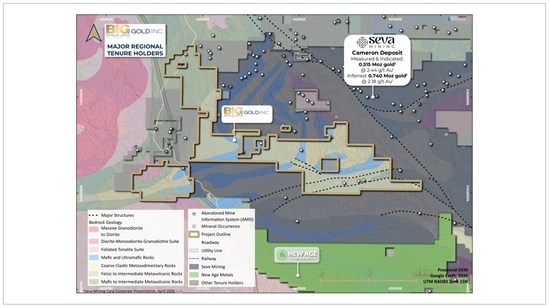
Big Gold Initiates Review of Martin Kenty Project
- Project Review Initiation: Big Gold Inc. has announced the commencement of a comprehensive desktop review of its Martin Kenty Project in Ontario, aimed at integrating historical exploration data to support future drilling plans, thereby laying the groundwork for exploration activities in 2026.
- Historical Data Compilation: The review will compile historical drilling logs, surface sampling data, and geophysical and geochemical datasets into a single integrated file server, which is expected to provide prioritized targets for follow-up field work, enhancing resource allocation efficiency.
- Regional Exploration Potential: The Martin Kenty Project is located near SEVA Mining's Cameron Deposit, which has reported a mineral resource of 0.515 million ounces of gold, indicating strong exploration potential in the area, and Big Gold aims to leverage this opportunity to enhance its market competitiveness.
- Increased Financial Transparency: Big Gold also announced the adoption of a semi-annual financial reporting framework to reduce the administrative and financial burden associated with quarterly reporting, which is expected to improve operational efficiency and bolster investor confidence.
See More
Updated Quant Ratings for Consumer Staples Companies Post Q1 Earnings
- Quant Rating Overview: As Q1 earnings conclude, investors are focusing on quant ratings, with Ambev (ABEV) achieving a score of 4.82, classified as a Strong Buy, indicating robust market performance.
- Strong Performers: Archer-Daniels-Midland (ADM) and Bunge Global (BG) received high ratings of 4.79 and 4.69 respectively, showcasing their advantages in earnings growth and valuation, which attract investor interest.
- Underperformers: Beiersdorf (BDRFY) received a low quant rating of 1.20, categorized as a Strong Sell, reflecting weak fundamentals that may undermine investor confidence.
- BJ's Wholesale Club Performance: BJ's maintains its FY2026 guidance with 2%-3% comp growth and EPS between $4.40-$4.60, demonstrating strong membership fee income growth despite its lower overall rating.
See More
Bunge Global SA Shares Hit Oversold Signal
- Oversold Signal: Bunge Global SA shares fell to $108.35 on Monday, resulting in an RSI of 29.8, indicating an oversold condition that may attract bullish investors seeking buying opportunities.
- Market Comparison: Compared to the S&P 500 ETF's current RSI of 51.4, Bunge's 29.8 RSI suggests that the recent heavy selling is exhausting, potentially providing investors with a rebound opportunity.
- Historical Performance: Bunge's stock has a 52-week low of $71.60 and a high of $134.865, with the last trade at $109.10, illustrating significant price volatility and shifts in market sentiment.
- Investor Focus: As the stock enters oversold territory, investors may closely monitor Bunge's future performance to assess potential rebound opportunities, influencing their investment decisions and market dynamics.
See More
Trump Administration Pushes for Year-Round E15 Gasoline Sales
- Policy Initiative: The Trump administration formally requested Congress to pass legislation allowing year-round sales of 15% ethanol blended gasoline (E15), marking the first push by the White House to support the biofuels industry despite refiners' warnings about potential cost increases.
- Price Control Efforts: This initiative represents Trump's latest attempt to address rising gasoline prices, with supporters arguing that E15 offers consumers a cheaper alternative to conventional gasoline, as the national average for regular gasoline stands at $3.93 per gallon.
- Legislative Hurdles: Although the legislation permitting year-round E15 sales narrowly passed the House, it faces significant challenges in the Senate, where major bills typically require 60 votes for passage, highlighting the complexities of implementing this policy.
- Industry Impact: The policy could significantly affect several related companies, including Archer Daniels Midland (ADM), Bunge (BG), and Green Plains (GPRE), which hold substantial positions in the biofuels and agriculture sectors and may benefit from the implementation of this policy.
See More
Bunge Global Stock Up 48.3% Year-to-Date
- Analyst Ranking: Bunge Global stands out in the ranking of 500 components based on average analyst opinions, indicating strong market confidence in its future performance.
- Stock Performance: Year-to-date, Bunge Global's stock has risen by 48.3%, reflecting investor optimism regarding the company's performance and market outlook.
- Market Reaction: The stock price increase not only enhances Bunge Global's market value but may also attract more investor attention, potentially driving further price appreciation and strengthening the company's capital base.
- Industry Impact: Bunge Global's robust performance could influence the stock price movements of its peers, particularly in the agriculture and food sectors, showcasing the company's leadership and competitive advantage within the industry.
See More
Comparison of Stock Performance: BG vs TPL
- Stock Performance Comparison: BG is currently trading up approximately 0.6%, while TPL is up about 0.2%, indicating BG's relative strength in the market, which may attract more investor interest.
- Market Trend Analysis: The price movements of BG and TPL during Thursday's trading reflect differing market expectations, with BG's increase potentially linked to improvements in its fundamentals.
- Investor Sentiment: The rise in BG's stock may bolster investor confidence in its future growth potential, while TPL's modest increase could indicate market recognition of its stability, influencing asset allocation decisions.
- Industry Impact: The stock performance of BG and TPL may affect investment trends in related industries, especially in the current economic environment, where investors may prefer stronger-performing stocks to mitigate risks.
See More
Big Gold Initiates Review of Martin Kenty Project
- Project Review Initiation: Big Gold Inc. has announced the commencement of a comprehensive desktop review of its Martin Kenty Project in Ontario, aimed at integrating historical exploration data to support future drilling plans, thereby laying the groundwork for exploration activities in 2026.
- Historical Data Compilation: The review will compile historical drilling logs, surface sampling data, and geophysical and geochemical datasets into a single integrated file server, which is expected to provide prioritized targets for follow-up field work, enhancing resource allocation efficiency.
- Regional Exploration Potential: The Martin Kenty Project is located near SEVA Mining's Cameron Deposit, which has reported a mineral resource of 0.515 million ounces of gold, indicating strong exploration potential in the area, and Big Gold aims to leverage this opportunity to enhance its market competitiveness.
- Increased Financial Transparency: Big Gold also announced the adoption of a semi-annual financial reporting framework to reduce the administrative and financial burden associated with quarterly reporting, which is expected to improve operational efficiency and bolster investor confidence.
See More
Updated Quant Ratings for Consumer Staples Companies Post Q1 Earnings
- Quant Rating Overview: As Q1 earnings conclude, investors are focusing on quant ratings, with Ambev (ABEV) achieving a score of 4.82, classified as a Strong Buy, indicating robust market performance.
- Strong Performers: Archer-Daniels-Midland (ADM) and Bunge Global (BG) received high ratings of 4.79 and 4.69 respectively, showcasing their advantages in earnings growth and valuation, which attract investor interest.
- Underperformers: Beiersdorf (BDRFY) received a low quant rating of 1.20, categorized as a Strong Sell, reflecting weak fundamentals that may undermine investor confidence.
- BJ's Wholesale Club Performance: BJ's maintains its FY2026 guidance with 2%-3% comp growth and EPS between $4.40-$4.60, demonstrating strong membership fee income growth despite its lower overall rating.
See More