

GE Aerospace Invests In Supercomputing Talent: Plans To Hire 900 Engineers
Written by Emily J. Thompson, Senior Investment Analyst
Updated: Jul 22 2024
0mins


Source: Benzinga
Collaboration for Engine Technology: GE Aerospace has partnered with Oak Ridge National Laboratory to enhance supercomputing capabilities for developing next-generation aircraft engines, including the Open Fan design, which will utilize advanced simulations and AI tools.
Investment and Growth Plans: GE Aerospace is set to hire over 900 engineers in 2024 and invest over $1 billion in expanding its maintenance and repair facilities, while also collaborating with Kratos Defense to produce small engines for unmanned aerial systems.
Trade with 70% Backtested Accuracy
Stop guessing "Should I Buy KTOS?" and start using high-conviction signals backed by rigorous historical data.
Sign up today to access powerful investing tools and make smarter, data-driven decisions.
Analyst Views on KTOS
Wall Street analysts forecast KTOS stock price to rise
13 Analyst Rating
11 Buy
2 Hold
0 Sell
Strong Buy
Current: 55.350

Low
80.00
Averages
108.69
High
150.00
Current: 55.350
Low
80.00
Averages
108.69
High
150.00
About KTOS
Kratos Defense & Security Solutions, Inc. is a technology, products, system and software company addressing the defense, national security, and commercial markets. It operates through two segments: Kratos Government Solutions (KGS) and Unmanned Systems (US). The KGS segment includes its microwave electronic products, space, satellite and cyber, training solutions, command, control, communication, computing, combat, intelligence surveillance and reconnaissance (C5ISR)/modular systems, turbine technologies, and defense and rocket support services operating segments. The US segment consists of its unmanned aerial, unmanned ground, unmanned seaborne and related command, control and communications system businesses. Its KGS and US segments provide products, solutions and services for mission-critical National Security programs. KGS and US customers primarily include National Security-related agencies, the DoD, intelligence agencies and classified agencies, and others.
About the author

Emily J. Thompson
Emily J. Thompson, a Chartered Financial Analyst (CFA) with 12 years in investment research, graduated with honors from the Wharton School. Specializing in industrial and technology stocks, she provides in-depth analysis for Intellectia’s earnings and market brief reports.

Analysis of Investment Opportunities in Space Stocks

- Significant Market Opportunity: SpaceX's recent IPO claims the space-enabled solutions market is valued at approximately $370 billion, with an additional $1.61 trillion opportunity in broadband and mobile services, highlighting the sector's potential.
- Amazon's Acquisition Strategy: Amazon announced its acquisition of Globalstar at $90 per share, aiming to enhance its voice, data, and messaging services through the deployment of a D2D satellite system, thereby strengthening its competitive position in the space market.
- Diversified Investment Approach: Analysts recommend that investors focus on multiple niches, such as Earth observation, space surveillance, and defense-adjacent hypersonics, to mitigate risks and capture growth opportunities across different segments.
- Intense Competition Among Small Firms: Among small space companies, Planet Labs and BlackSky compete on data quality and constellation scale, while Rocket Lab stands out in launch and satellite services, underscoring the importance of innovation and market demand in the small-cap sector.
See More

Defense Stocks Surge, Led by Elbit Systems

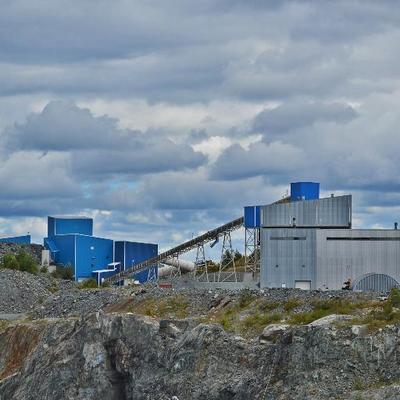
- Defense Sector Rally: On Thursday, defense stocks collectively rose by approximately 3.1%, indicating strong market confidence in the sector, likely driven by geopolitical tensions.
- Elbit Systems Leads: Elbit Systems saw its stock price increase by about 6.3%, positioning it as the leader among defense stocks, reflecting investor optimism regarding its future growth potential.
- Kratos Defense Growth: Kratos Defense & Security Solutions experienced a stock price rise of approximately 4.3%, showcasing its competitiveness and market recognition in the defense sector, which may attract more investor interest.
- Positive Market Sentiment: The robust performance of defense stocks could draw additional capital into the sector, further driving up the stock prices of related companies and enhancing market expectations for defense spending.
See More
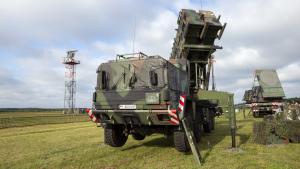
Kratos Secures $36M Sole-Source Air Defense Contract
- Significant Contract Value: Kratos Defense & Security Solutions announced it has secured a sole-source contract worth approximately $36 million for a new air defense missile system, indicating the company's continued expansion in the defense sector.
- Secure Production Facility: The work will be performed at a secure Kratos manufacturing facility, ensuring confidentiality of technology and production processes, which enhances client trust in the company's capabilities.
- Strong Market Demand: The company noted ongoing strong demand for its air defense systems from U.S. and international customers, reflecting the urgency of global security concerns and laying a foundation for future revenue growth.
- Positive Stock Reaction: Following the contract announcement, Kratos' shares rose by 6.38%, demonstrating market optimism regarding the company's prospects and further bolstering investor confidence in its long-term development.
See More

Wedbush Initiates Outperform Ratings for AVAV and KTOS

- Positive Market Reaction: AeroVironment (AVAV) rose 4.1% and Kratos Defense (KTOS) increased by 4.9% in Wednesday's trading, reflecting investor enthusiasm following Wedbush's Outperform ratings and price targets of $250 and $85, respectively.
- Long-Term Winner Potential: Wedbush analyst Sam Brandeis emphasizes that despite near-term noise, AeroVironment is a long-term winner, as the market undervalues its diversified platform's role in a significant procurement reorientation, indicating strong positioning in the new era of defense technology.
- Attractive Entry Point: The recent financial restatement, disclosure of material weakness, and Space Force contract termination create an attractive entry point for AeroVironment, especially as the U.S. Department of War elevates demand for nimble, software-defined suppliers.
- Misunderstood Kratos: Kratos is characterized as the merchant arms supplier to the U.S. defense complex, with the analyst noting that the market misinterprets its role, as its “picks-and-shovels” business model across hypersonics, missile defense, space, and microelectronics captures value regardless of platform dominance, highlighting its unique position in the defense sector.
See More

Wedbush Initiates Outperform Ratings for AeroVironment and Kratos
- AeroVironment's Positive Outlook: Wedbush initiated coverage with an Outperform rating and a $250 price target for AeroVironment, indicating a 51% upside potential; despite recent financial restatements and contract cancellations, the company's leadership in unmanned systems and diversified capabilities provide a competitive edge.
- Kratos Business Model Advantage: Wedbush assigned an Outperform rating to Kratos with an $85 price target, suggesting a 70% upside; the analyst highlighted Kratos's strategy of supplying critical defense software and components, which allows it to avoid direct competition with major contractors and gain exposure across various defense programs.
- Divergent Market Sentiment: While retail sentiment for AeroVironment remains in the 'extremely bullish' territory on Stocktwits, Kratos is viewed as 'bearish', indicating differing investor perceptions and reflecting market recognition of AeroVironment's evolving role in autonomous systems and military infrastructure.
- Stock Price Volatility: Year-to-date, AeroVironment and Kratos stocks have declined by 34% and 31%, respectively; although Wedbush's ratings have boosted confidence in both companies, their short-term stock performance continues to be influenced by overall market sentiment.
See More

Analysis of Hot Stock Performances

- Ultra Clean Holdings: The stock is performing strongly, with analysts suggesting that as long as data center demand remains high, the stock will continue to be profitable; they recommend taking a quarter off to recover costs while letting the rest run for a potential 15% gain.
- TE Connectivity: Analysts believe the stock is undervalued and should trade at market multiples, highlighting its potential as a strong investment, indicating possible future price appreciation.
- Voyager Technologies: The company is experiencing significant losses, with analysts stating it may take a long time before it becomes profitable, presenting a high investment risk.
- Symbiotic: Unlike many loss-making companies, Symbiotic is profitable, and analysts believe its speculative value is underestimated, indicating a relatively favorable investment outlook.
See More
Analysis of Investment Opportunities in Space Stocks
- Significant Market Opportunity: SpaceX's recent IPO claims the space-enabled solutions market is valued at approximately $370 billion, with an additional $1.61 trillion opportunity in broadband and mobile services, highlighting the sector's potential.
- Amazon's Acquisition Strategy: Amazon announced its acquisition of Globalstar at $90 per share, aiming to enhance its voice, data, and messaging services through the deployment of a D2D satellite system, thereby strengthening its competitive position in the space market.
- Diversified Investment Approach: Analysts recommend that investors focus on multiple niches, such as Earth observation, space surveillance, and defense-adjacent hypersonics, to mitigate risks and capture growth opportunities across different segments.
- Intense Competition Among Small Firms: Among small space companies, Planet Labs and BlackSky compete on data quality and constellation scale, while Rocket Lab stands out in launch and satellite services, underscoring the importance of innovation and market demand in the small-cap sector.
See More
Defense Stocks Surge, Led by Elbit Systems
- Defense Sector Rally: On Thursday, defense stocks collectively rose by approximately 3.1%, indicating strong market confidence in the sector, likely driven by geopolitical tensions.
- Elbit Systems Leads: Elbit Systems saw its stock price increase by about 6.3%, positioning it as the leader among defense stocks, reflecting investor optimism regarding its future growth potential.
- Kratos Defense Growth: Kratos Defense & Security Solutions experienced a stock price rise of approximately 4.3%, showcasing its competitiveness and market recognition in the defense sector, which may attract more investor interest.
- Positive Market Sentiment: The robust performance of defense stocks could draw additional capital into the sector, further driving up the stock prices of related companies and enhancing market expectations for defense spending.
See More
Kratos Secures $36M Sole-Source Air Defense Contract
- Significant Contract Value: Kratos Defense & Security Solutions announced it has secured a sole-source contract worth approximately $36 million for a new air defense missile system, indicating the company's continued expansion in the defense sector.
- Secure Production Facility: The work will be performed at a secure Kratos manufacturing facility, ensuring confidentiality of technology and production processes, which enhances client trust in the company's capabilities.
- Strong Market Demand: The company noted ongoing strong demand for its air defense systems from U.S. and international customers, reflecting the urgency of global security concerns and laying a foundation for future revenue growth.
- Positive Stock Reaction: Following the contract announcement, Kratos' shares rose by 6.38%, demonstrating market optimism regarding the company's prospects and further bolstering investor confidence in its long-term development.
See More
Wedbush Initiates Outperform Ratings for AVAV and KTOS
- Positive Market Reaction: AeroVironment (AVAV) rose 4.1% and Kratos Defense (KTOS) increased by 4.9% in Wednesday's trading, reflecting investor enthusiasm following Wedbush's Outperform ratings and price targets of $250 and $85, respectively.
- Long-Term Winner Potential: Wedbush analyst Sam Brandeis emphasizes that despite near-term noise, AeroVironment is a long-term winner, as the market undervalues its diversified platform's role in a significant procurement reorientation, indicating strong positioning in the new era of defense technology.
- Attractive Entry Point: The recent financial restatement, disclosure of material weakness, and Space Force contract termination create an attractive entry point for AeroVironment, especially as the U.S. Department of War elevates demand for nimble, software-defined suppliers.
- Misunderstood Kratos: Kratos is characterized as the merchant arms supplier to the U.S. defense complex, with the analyst noting that the market misinterprets its role, as its “picks-and-shovels” business model across hypersonics, missile defense, space, and microelectronics captures value regardless of platform dominance, highlighting its unique position in the defense sector.
See More
Wedbush Initiates Outperform Ratings for AeroVironment and Kratos
- AeroVironment's Positive Outlook: Wedbush initiated coverage with an Outperform rating and a $250 price target for AeroVironment, indicating a 51% upside potential; despite recent financial restatements and contract cancellations, the company's leadership in unmanned systems and diversified capabilities provide a competitive edge.
- Kratos Business Model Advantage: Wedbush assigned an Outperform rating to Kratos with an $85 price target, suggesting a 70% upside; the analyst highlighted Kratos's strategy of supplying critical defense software and components, which allows it to avoid direct competition with major contractors and gain exposure across various defense programs.
- Divergent Market Sentiment: While retail sentiment for AeroVironment remains in the 'extremely bullish' territory on Stocktwits, Kratos is viewed as 'bearish', indicating differing investor perceptions and reflecting market recognition of AeroVironment's evolving role in autonomous systems and military infrastructure.
- Stock Price Volatility: Year-to-date, AeroVironment and Kratos stocks have declined by 34% and 31%, respectively; although Wedbush's ratings have boosted confidence in both companies, their short-term stock performance continues to be influenced by overall market sentiment.
See More
Analysis of Hot Stock Performances
- Ultra Clean Holdings: The stock is performing strongly, with analysts suggesting that as long as data center demand remains high, the stock will continue to be profitable; they recommend taking a quarter off to recover costs while letting the rest run for a potential 15% gain.
- TE Connectivity: Analysts believe the stock is undervalued and should trade at market multiples, highlighting its potential as a strong investment, indicating possible future price appreciation.
- Voyager Technologies: The company is experiencing significant losses, with analysts stating it may take a long time before it becomes profitable, presenting a high investment risk.
- Symbiotic: Unlike many loss-making companies, Symbiotic is profitable, and analysts believe its speculative value is underestimated, indicating a relatively favorable investment outlook.
See More





