Analysis of RSP ETF's 52-Week Price Fluctuations
Written by Emily J. Thompson, Senior Investment Analyst
Updated: Feb 05 2026
0mins

Source: NASDAQ.COM
- Price Range Analysis: The RSP ETF's 52-week low is $150.35 per share, with a high of $200.95, and the latest trade at $198.87 indicates strong performance near its peak, potentially attracting more investor interest.
- Technical Analysis Tool: Comparing the latest share price to the 200-day moving average provides valuable insights for investors, helping them assess market trends and identify potential buy or sell opportunities.
- ETF Trading Mechanism: ETFs trade like stocks, where investors buy and sell 'units' that can be created or destroyed based on demand, impacting the liquidity and market performance of the ETF.
- Inflows and Outflows Monitoring: Weekly monitoring of changes in shares outstanding helps identify ETFs experiencing significant inflows or outflows, where inflows necessitate purchasing underlying assets, while outflows may lead to selling, affecting the ETF's components.
Trade with 70% Backtested Accuracy
Stop guessing "Should I Buy SNDK?" and start using high-conviction signals backed by rigorous historical data.
Sign up today to access powerful investing tools and make smarter, data-driven decisions.
Analyst Views on SNDK
Wall Street analysts forecast SNDK stock price to fall
14 Analyst Rating
11 Buy
3 Hold
0 Sell
Strong Buy
Current: 1958.800

Low
220.00
Averages
283.69
High
410.00
Current: 1958.800
Low
220.00
Averages
283.69
High
410.00
About SNDK
SanDisk Corporation is a developer, manufacturer and provider of data storage devices and solutions based on NAND flash technology and has consumer brands and franchises globally. The Company's solutions include a range of solid state drives (SSDs) embedded products, removable cards, universal serial bus (USB) drives, and wafers and components. Its broad portfolio of technology and products addresses multiple end markets of Datacenter, Edge and Consumer. Its Datacenter end market is composed primarily of products for public or private cloud environments and enterprise customers. The Company, through the Edge end market, provides original equipment manufacturer and channel customers a broad array of high-performance flash solutions across personal computer, mobile, gaming, automotive, virtual reality headsets, at-home entertainment, and industrial spaces. The Company serves the Consumer end market with a broad range of retail and other end-user products.
About the author

Emily J. Thompson
Emily J. Thompson, a Chartered Financial Analyst (CFA) with 12 years in investment research, graduated with honors from the Wharton School. Specializing in industrial and technology stocks, she provides in-depth analysis for Intellectia’s earnings and market brief reports.

Sandisk Benefits from AI Memory Supercycle

- Structural Demand Growth: As a leading producer of NAND flash memory and enterprise SSDs, Sandisk benefits from the enormous demand for high-bandwidth, low-latency storage driven by AI infrastructure, with expectations that this demand will persist into 2027 and 2028, significantly enhancing the company's profitability and market position.
- Remarkable Stock Performance: Since its spinoff from Western Digital in February 2025, Sandisk's stock price has skyrocketed from around $36 on its first trading day to $2,184.75, representing a nearly 6,000% increase, reflecting strong market confidence in its future growth while raising concerns about whether its valuation is excessive.
- Optimistic Analyst Ratings: Among the 21 Wall Street analysts covering Sandisk, 86% have assigned buy or equivalent ratings, with an average price target of $1,863 suggesting the stock is slightly overbought, yet some analysts have set targets exceeding $2,200, indicating a positive outlook on its prospects.
- Enhanced Financial Stability: The recent implementation of multiyear supply agreements has further stabilized Sandisk's financial trajectory, and combined with the current high-margin environment, the company's profit margins and revenues have soared, indicating that its fundamental business drivers remain strong and future growth potential is promising.
See More

Sandisk Stock Soars Nearly 6000% Since Spinoff Amid AI Demand
- Remarkable Stock Performance: Since its spinoff from Western Digital in February 2025, Sandisk's stock has surged from approximately $36 to $2184.75, representing a nearly 6000% increase, reflecting the strong positive impact of AI-driven demand on the company's performance.
- Strong Market Demand: As a leading producer of NAND flash memory and enterprise solid-state drives, Sandisk has benefited from enormous demand for high-bandwidth, low-latency storage, particularly from large cloud service providers, significantly boosting profit margins and revenues.
- Analysts Optimistic on Outlook: Among the 21 Wall Street analysts covering Sandisk, 86% have assigned buy or equivalent ratings, and while the average price target is $1863 indicating a slight overvaluation, some analysts have set targets exceeding $2200, reflecting a positive market outlook for the company's future.
- Significant Valuation Expansion: Sandisk's forward P/E ratio stands above 33, and while its rapid earnings growth in a high-margin environment justifies this valuation, it also indicates that the market is optimistic about its future performance, prompting investors to be cautious about short-term price fluctuations.
See More

JPMorgan Chase Stock Outlook Analysis

- Regulatory Environment Shift: With Trump's return, the burdensome regulations that previously hampered JPMorgan Chase have ended, providing greater flexibility for future growth and potentially enhancing its market performance.
- Attractive Stock Valuation: Although JPMorgan's stock is considered relatively cheap, it has garnered less attention in the market; Cramer suggests that in the current environment, investors may find significant upside potential.
- Comparison with Market Leaders: Cramer noted that while companies like Seagate and Sandisk are performing well, stocks of large banks like JPMorgan could see much larger gains in the future, indicating their investment value.
- AI Stock Potential: While JPMorgan is viewed as a promising investment, analysts believe that certain AI stocks may offer greater upside potential and lower downside risk in the short term, prompting investors to explore these opportunities.
See More

Bank of America Bullish on Multiple Tech Stocks Ahead


- Sandisk New Business Model: Analyst Wamsi Mohan highlights Sandisk's shift to a new business model focused on multiyear contracts to mitigate revenue fluctuations, which is expected to enhance the company's pricing power and positively impact stock performance.
- Dynatrace High Growth Potential: Analyst Koji Ikeda raises Dynatrace's price target to $50 per share, believing its AI-driven software will drive strategic deals and strong growth in annual recurring revenue, despite a 4% decline in shares year-to-date.
- Meta AI Search Opportunity: Analyst Justin Post notes that Meta has significant market opportunities following the rollout of its new AI search feature, with expectations that AI will strengthen search indexing, even as shares have fallen 13% year-to-date.
- Nvidia Reasonable Valuation: Bank of America sets Nvidia's price target at $350 per share, based on its leading position in the fast-growing AI computing market, acknowledging some volatility in global AI projects but maintaining an optimistic long-term outlook.
See More
Marvell Technology's Optimistic Outlook Fueled by AI Product Innovations


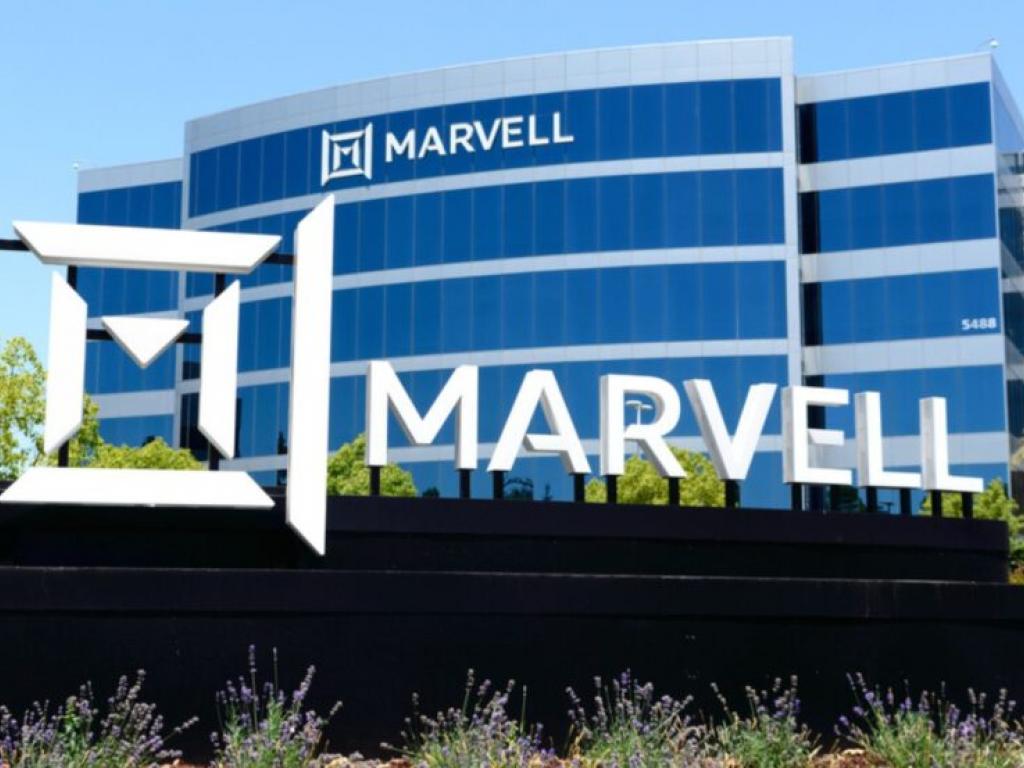
- Strong Revenue Growth: Marvell Technology achieved a 28% year-over-year revenue growth in Q1 FY2027, with Q2 revenue projected at $2.7 billion, reflecting a 35% year-over-year and 11.7% sequential growth, indicating significant long-term growth potential.
- Surge in AI Orders: CEO Matt Murphy noted exceptional AI-related bookings, leading to a substantial upward revision in revenue outlook for FY2027 and FY2028, suggesting a future valuation of $1 trillion, although other AI stocks may reach this milestone sooner.
- Launch of Teralynx T100 Chip: The newly released Teralynx T100 networking chip delivers 25% lower power consumption and the industry's lowest latency for AI workloads, significantly enhancing data center efficiency and addressing the high demand for energy optimization.
- Product Portfolio Strength: The upgrade of the Teralynx T100 complements Marvell's existing portfolio of ASIC chips and optical fibers, with ongoing product innovations poised to help the company maintain its competitive edge and expand market share.
See More
Marvell Technology Shows Strong Growth Potential
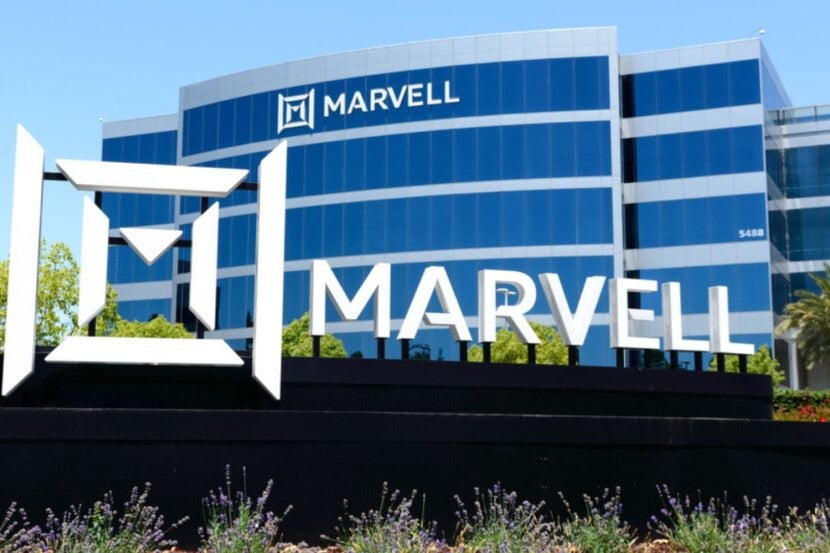
- Significant Revenue Growth: Marvell Technology achieved a 28% year-over-year revenue growth in Q1 FY2027, with projected Q2 revenue of $2.7 billion indicating a 35% year-over-year increase and 11.7% sequential growth, showcasing the company's strengthening market competitiveness.
- Optimistic Guidance Outlook: CEO Matt Murphy indicated that revenue is expected to accelerate each quarter throughout FY2027, particularly due to a surge in AI-related bookings, which raises the revenue outlook for both FY2027 and FY2028, suggesting a potential $1 trillion valuation in the future.
- Product Innovation Enhances Competitiveness: The newly launched Teralynx T100 networking chip delivers 25% lower power consumption and the industry's lowest latency for AI workloads, optimizing data center energy use and enhancing Marvell's competitive edge in the market.
- Market Share Expansion Strategy: Through continuous product upgrades and innovations, Marvell Technology aims to increase its market share in ASIC chips and optical fibers, and while other AI stocks like AMD and Sandisk may reach $1 trillion sooner, Marvell's strategic positioning lays a solid foundation for future growth.
See More
Sandisk Benefits from AI Memory Supercycle
- Structural Demand Growth: As a leading producer of NAND flash memory and enterprise SSDs, Sandisk benefits from the enormous demand for high-bandwidth, low-latency storage driven by AI infrastructure, with expectations that this demand will persist into 2027 and 2028, significantly enhancing the company's profitability and market position.
- Remarkable Stock Performance: Since its spinoff from Western Digital in February 2025, Sandisk's stock price has skyrocketed from around $36 on its first trading day to $2,184.75, representing a nearly 6,000% increase, reflecting strong market confidence in its future growth while raising concerns about whether its valuation is excessive.
- Optimistic Analyst Ratings: Among the 21 Wall Street analysts covering Sandisk, 86% have assigned buy or equivalent ratings, with an average price target of $1,863 suggesting the stock is slightly overbought, yet some analysts have set targets exceeding $2,200, indicating a positive outlook on its prospects.
- Enhanced Financial Stability: The recent implementation of multiyear supply agreements has further stabilized Sandisk's financial trajectory, and combined with the current high-margin environment, the company's profit margins and revenues have soared, indicating that its fundamental business drivers remain strong and future growth potential is promising.
See More
Sandisk Stock Soars Nearly 6000% Since Spinoff Amid AI Demand
- Remarkable Stock Performance: Since its spinoff from Western Digital in February 2025, Sandisk's stock has surged from approximately $36 to $2184.75, representing a nearly 6000% increase, reflecting the strong positive impact of AI-driven demand on the company's performance.
- Strong Market Demand: As a leading producer of NAND flash memory and enterprise solid-state drives, Sandisk has benefited from enormous demand for high-bandwidth, low-latency storage, particularly from large cloud service providers, significantly boosting profit margins and revenues.
- Analysts Optimistic on Outlook: Among the 21 Wall Street analysts covering Sandisk, 86% have assigned buy or equivalent ratings, and while the average price target is $1863 indicating a slight overvaluation, some analysts have set targets exceeding $2200, reflecting a positive market outlook for the company's future.
- Significant Valuation Expansion: Sandisk's forward P/E ratio stands above 33, and while its rapid earnings growth in a high-margin environment justifies this valuation, it also indicates that the market is optimistic about its future performance, prompting investors to be cautious about short-term price fluctuations.
See More
JPMorgan Chase Stock Outlook Analysis
- Regulatory Environment Shift: With Trump's return, the burdensome regulations that previously hampered JPMorgan Chase have ended, providing greater flexibility for future growth and potentially enhancing its market performance.
- Attractive Stock Valuation: Although JPMorgan's stock is considered relatively cheap, it has garnered less attention in the market; Cramer suggests that in the current environment, investors may find significant upside potential.
- Comparison with Market Leaders: Cramer noted that while companies like Seagate and Sandisk are performing well, stocks of large banks like JPMorgan could see much larger gains in the future, indicating their investment value.
- AI Stock Potential: While JPMorgan is viewed as a promising investment, analysts believe that certain AI stocks may offer greater upside potential and lower downside risk in the short term, prompting investors to explore these opportunities.
See More
Bank of America Bullish on Multiple Tech Stocks Ahead
- Sandisk New Business Model: Analyst Wamsi Mohan highlights Sandisk's shift to a new business model focused on multiyear contracts to mitigate revenue fluctuations, which is expected to enhance the company's pricing power and positively impact stock performance.
- Dynatrace High Growth Potential: Analyst Koji Ikeda raises Dynatrace's price target to $50 per share, believing its AI-driven software will drive strategic deals and strong growth in annual recurring revenue, despite a 4% decline in shares year-to-date.
- Meta AI Search Opportunity: Analyst Justin Post notes that Meta has significant market opportunities following the rollout of its new AI search feature, with expectations that AI will strengthen search indexing, even as shares have fallen 13% year-to-date.
- Nvidia Reasonable Valuation: Bank of America sets Nvidia's price target at $350 per share, based on its leading position in the fast-growing AI computing market, acknowledging some volatility in global AI projects but maintaining an optimistic long-term outlook.
See More
Marvell Technology's Optimistic Outlook Fueled by AI Product Innovations
- Strong Revenue Growth: Marvell Technology achieved a 28% year-over-year revenue growth in Q1 FY2027, with Q2 revenue projected at $2.7 billion, reflecting a 35% year-over-year and 11.7% sequential growth, indicating significant long-term growth potential.
- Surge in AI Orders: CEO Matt Murphy noted exceptional AI-related bookings, leading to a substantial upward revision in revenue outlook for FY2027 and FY2028, suggesting a future valuation of $1 trillion, although other AI stocks may reach this milestone sooner.
- Launch of Teralynx T100 Chip: The newly released Teralynx T100 networking chip delivers 25% lower power consumption and the industry's lowest latency for AI workloads, significantly enhancing data center efficiency and addressing the high demand for energy optimization.
- Product Portfolio Strength: The upgrade of the Teralynx T100 complements Marvell's existing portfolio of ASIC chips and optical fibers, with ongoing product innovations poised to help the company maintain its competitive edge and expand market share.
See More
Marvell Technology Shows Strong Growth Potential
- Significant Revenue Growth: Marvell Technology achieved a 28% year-over-year revenue growth in Q1 FY2027, with projected Q2 revenue of $2.7 billion indicating a 35% year-over-year increase and 11.7% sequential growth, showcasing the company's strengthening market competitiveness.
- Optimistic Guidance Outlook: CEO Matt Murphy indicated that revenue is expected to accelerate each quarter throughout FY2027, particularly due to a surge in AI-related bookings, which raises the revenue outlook for both FY2027 and FY2028, suggesting a potential $1 trillion valuation in the future.
- Product Innovation Enhances Competitiveness: The newly launched Teralynx T100 networking chip delivers 25% lower power consumption and the industry's lowest latency for AI workloads, optimizing data center energy use and enhancing Marvell's competitive edge in the market.
- Market Share Expansion Strategy: Through continuous product upgrades and innovations, Marvell Technology aims to increase its market share in ASIC chips and optical fibers, and while other AI stocks like AMD and Sandisk may reach $1 trillion sooner, Marvell's strategic positioning lays a solid foundation for future growth.
See More