

Key Takeaway
Nebius Group represents one of the most compelling risk-reward opportunities in the AI infrastructure space for 2026, with Wall Street analysts offering a Strong Buy consensus and price targets suggesting 44-50% upside from current levels. The company's transformation from Yandex's cloud division to a global AI infrastructure provider is gaining momentum, with Q4 2025 results showing explosive growth: revenue surged 547% year-over-year to $228 million, while annualized recurring revenue reached $1.2 billion, exceeding guidance by $250 million. For investors asking whether to buy Nebius stock, the answer depends on your risk tolerance and conviction in the AI infrastructure buildout thesis.
The investment case for Nebius centers on extraordinarily ambitious 2026 guidance that, if achieved, would represent one of the fastest growth trajectories in the technology sector. Management has guided for $7 billion to $9 billion in ARR by year-end 2026, alongside $3 billion to $3.4 billion in revenue and a 40% adjusted EBITDA margin. These targets imply approximately 6-7x ARR growth from current levels—a staggering ramp that requires flawless execution but would justify significant stock price appreciation if delivered.
Analyst price targets reflect this growth potential, with the average 12-month target of $151.71 implying 50.79% upside from current trading levels. The range of analyst estimates spans from a conservative $108 to a bullish $232, demonstrating the wide dispersion of views on Nebius's execution capability. Seven analysts covering the stock maintain a Strong Buy consensus, suggesting that sophisticated market participants see the risk-reward as favorable despite the ambitious growth targets.
However, prospective investors must weigh these compelling fundamentals against genuine execution risks. Nebius's Q4 2025 revenue technically missed analyst expectations, and the company operates in an intensely competitive environment dominated by hyperscale cloud providers with substantially greater resources. The path to $7-9 billion ARR requires massive capital investment, successful international expansion, and continued access to scarce NVIDIA GPUs—all factors that introduce uncertainty. For risk-tolerant investors with conviction in AI infrastructure growth, Nebius offers asymmetric upside; for conservative investors, the execution risks may outweigh potential returns.
Nebius Q4 2025 Earnings: Explosive Growth with a Revenue Miss
The Numbers Behind the Story
Nebius's Q4 2025 earnings report presented a mixed picture that encapsulates both the opportunity and risk of investing in this emerging AI infrastructure player. Revenue reached $228 million, representing extraordinary year-over-year growth of 547% and sequential growth of 56% from Q3. This growth trajectory is virtually unprecedented in the technology sector, reflecting the company's successful pivot from a regional cloud provider to a global AI infrastructure platform.
The core AI cloud revenue segment drove this explosive growth, increasing 830% year-over-year as customers flocked to Nebius's NVIDIA GPU-powered infrastructure. This metric matters more than headline revenue because it demonstrates that Nebius is successfully capturing share of the rapidly expanding AI training and inference market. The company's positioning as a pure-play AI cloud provider—rather than a generalist cloud platform—resonates with customers seeking optimized infrastructure for machine learning workloads.
Perhaps most impressively, Nebius achieved positive EBITDA in Q4, driven by what management described as "explosive AI cloud growth and strong operating leverage." The company exceeded its 2025 ARR target of $900 million to $1.1 billion, reaching $1.2 billion instead. This $250 million beat against guidance demonstrates execution capability that supports confidence in the even more ambitious 2026 targets. For a company at this growth stage, achieving profitability while scaling rapidly is a significant positive signal.
The Revenue Miss Context
Despite the impressive growth metrics, Nebius technically missed analyst revenue expectations in Q4 2025—a factor that created some near-term selling pressure and highlighted execution risks. The miss reflects the challenges of managing hypergrowth while building global infrastructure, including supply chain constraints for NVIDIA GPUs, data center construction timelines, and international expansion complexity.
The revenue miss matters less than the ARR beat for assessing Nebius's trajectory. Annualized recurring revenue provides better visibility into the company's growth engine than quarterly revenue, which can be lumpy due to timing of customer deployments and infrastructure ramp. The $1.2 billion ARR figure—$250 million above guidance—suggests that customer demand is substantially exceeding internal projections, even if quarterly revenue recognition hasn't kept pace.
Management commentary around the revenue miss emphasized that the company remains supply-constrained rather than demand-constrained, with more customer orders than available GPU capacity. This dynamic, while frustrating for near-term revenue recognition, actually strengthens the long-term investment case by demonstrating sustainable demand that will drive growth as capacity expands. The key question for 2026 is whether Nebius can secure sufficient GPU supply and build data center capacity fast enough to capture this demand.
The $7-9 Billion ARR Vision: Analyzing 2026 Guidance
Breaking Down the Ambitious Targets
Nebius's 2026 guidance represents one of the most aggressive growth projections in the technology sector. The company targets $7 billion to $9 billion in ARR by year-end 2026, alongside $3 billion to $3.4 billion in revenue and a 40% adjusted EBITDA margin. These targets imply approximately 6-7x ARR growth from the $1.2 billion base achieved in Q4 2025—a trajectory that would place Nebius among the fastest-growing technology companies in history if executed successfully.
The $3-3.4 billion revenue guidance for 2026 is particularly notable because it assumes substantial growth even from the elevated Q4 2025 run rate. Annualizing Q4's $228 million revenue implies approximately $912 million in baseline revenue; the $3+ billion target suggests management expects to more than triple the business again in 2026. This growth would be driven by a combination of customer acquisition, capacity expansion, and increasing utilization of deployed infrastructure.
The 40% adjusted EBITDA margin target demonstrates management's confidence in achieving operating leverage as the business scales. Cloud infrastructure businesses typically require substantial upfront investment in data centers and GPUs, with margins improving as utilization increases and revenue scales against relatively fixed cost bases. Nebius's achievement of positive EBITDA in Q4 2025 provides early evidence that this margin expansion thesis is playing out, though sustaining 40% margins at scale will require exceptional execution.
The Path to $7-9B ARR
Achieving the ambitious 2026 ARR targets requires Nebius to execute flawlessly across multiple dimensions: securing GPU supply, building data center capacity, acquiring customers, and expanding internationally. Management has outlined a capital expenditure plan supporting this growth, with the majority of the company's cash position earmarked for infrastructure deployment.
The upcoming launch of Nebius's 300MW facility in Vineland, New Jersey represents a critical near-term catalyst for the 2026 growth trajectory. This U.S. expansion signals Nebius's arrival as a global player and addresses one of the key concerns about the company: that it was primarily a European/regional provider without the geographic diversification to attract multinational customers. The U.S. facility will provide capacity for substantial customer growth while reducing latency for North American AI workloads.
GPU supply remains the critical constraint for Nebius's growth ambitions. The company's partnerships with NVIDIA provide access to H100, H200, and the latest Blackwell-generation B200 and GB200 chips. However, NVIDIA's own supply constraints mean that Nebius competes with hyperscalers and other cloud providers for limited GPU availability. Securing sufficient NVIDIA allocation to support 6-7x ARR growth represents the single biggest execution risk to the 2026 guidance.
The AI Infrastructure Opportunity
Nebius's Competitive Positioning
Nebius operates in the rapidly expanding AI infrastructure market, providing GPU cloud services optimized for machine learning training and inference. The company's platform offers NVIDIA H100, H200, B200, and the latest GB200 and GB300 NVL72 systems, connected via NVIDIA InfiniBand networking. This focus on high-performance AI workloads differentiates Nebius from generalist cloud providers like AWS, Azure, and Google Cloud.
The Nebius AI Cloud platform positions itself as a "true full-stack AI platform" built specifically for AI workloads rather than adapted from general-purpose cloud infrastructure. This architecture includes large-scale NVIDIA GPU clusters built to NVIDIA reference architecture, with proprietary cloud platform software including managed Kubernetes and orchestration tools. For customers seeking optimized AI infrastructure without managing their own data centers, Nebius offers a compelling alternative to hyperscalers.
The launch of Nebius AI Cloud 3.1 in December 2025 added next-generation NVIDIA Blackwell Ultra compute and transparent capacity management tools. These enhancements address enterprise demands for operational visibility into GPU capacity, resource allocation across teams, and access to next-generation hardware as models grow in complexity. Version 3.1 includes Capacity Blocks and a real-time Capacity Dashboard that give customers complete visibility into their reserved GPU capacity across regions.
The Addressable Market
Nebius targets the rapidly growing market for AI training and inference infrastructure, a segment that is expanding as enterprises deploy AI models at scale. While hyperscalers dominate the general cloud computing market, specialized AI cloud providers like Nebius can capture share by offering optimized infrastructure, better price-performance for GPU workloads, and superior customer experience for AI-specific use cases.
The total addressable market for AI infrastructure is projected to grow to $1 trillion by 2030, according to industry estimates. Nebius's $7-9 billion ARR target for 2026 would represent less than 1% of this projected market, suggesting that the company's growth ambitions are achievable if it can execute effectively. The key question is whether Nebius can differentiate sufficiently from both hyperscalers and other specialized GPU cloud providers to capture meaningful market share.
Customer traction to date suggests strong product-market fit. The 830% year-over-year growth in AI cloud revenue demonstrates that customers are voting with their wallets for Nebius's platform. The company's ability to exceed ARR guidance by $250 million suggests that demand is outpacing even optimistic internal projections—a dynamic that supports confidence in the ambitious 2026 targets.
Analyst Consensus and Price Targets
Wall Street Bullishness
Wall Street analysts have embraced the Nebius growth story, with 7-11 analysts covering the stock and maintaining a Strong Buy consensus. The average 12-month price target of approximately $151.71 implies 50.79% upside from current trading levels, while individual targets range from a conservative $108 to a bullish $232. This wide dispersion of targets reflects the uncertainty surrounding Nebius's ability to execute its ambitious growth plan.
The analyst bullishness rests on several key pillars. First, Nebius's demonstrated ability to grow revenue 547% year-over-year while achieving profitability suggests that the company has found product-market fit and can scale efficiently. Second, the AI infrastructure market is expanding rapidly, creating a favorable demand environment that should support continued growth. Third, management's ARR guidance beat in 2025 demonstrates execution capability that supports confidence in the 2026 targets.
However, analysts also acknowledge significant risks. The revenue miss in Q4 2025 highlighted execution challenges in managing hypergrowth. Competition from hyperscalers with substantially greater resources creates pricing and market share pressure. Supply constraints for NVIDIA GPUs could limit growth regardless of customer demand. These risk factors contribute to the wide dispersion of analyst price targets and suggest that Nebius remains a high-risk, high-reward investment.
Price Target Distribution
The distribution of analyst price targets provides insight into bull and bear scenarios for Nebius stock. The conservative end of the range around $108-110 assumes that growth moderates more quickly than management projects, or that competitive pressure forces pricing concessions that compress margins. This scenario might see Nebius achieve 3-4x ARR growth rather than the guided 6-7x.
The consensus target around $150-155 assumes that Nebius executes well enough to achieve the lower end of 2026 guidance ($7B ARR) while maintaining healthy margins. This scenario would see the stock appreciate 45-50% from current levels—a strong return that justifies the execution risk for investors with appropriate risk tolerance.
The bullish target of $232 represents a scenario where Nebius achieves or exceeds the high end of 2026 guidance ($9B ARR), captures additional market share from hyperscalers, and achieves multiple expansion as investors gain confidence in the company's long-term trajectory. This scenario would require flawless execution across all dimensions but would deliver transformative returns for early investors.
Risk Factors and Investment Considerations
Execution and Competition Risks
The most significant risk facing Nebius investors is execution risk around the ambitious 2026 guidance. Achieving 6-7x ARR growth requires flawless execution across GPU procurement, data center construction, customer acquisition, and international expansion. Any delays or missteps could cause the company to miss guidance and trigger significant stock price volatility.
Competition from hyperscalers—Amazon AWS, Microsoft Azure, Google Cloud—represents a formidable threat. These competitors have substantially greater financial resources, established customer relationships, and existing infrastructure footprints. While Nebius argues that its AI-native architecture provides technical advantages, hyperscalers are investing heavily in their own AI infrastructure offerings and can compete aggressively on price if they choose to defend market share.
Supply chain constraints for NVIDIA GPUs create additional execution risk. Nebius's growth depends on securing adequate GPU supply from NVIDIA, which faces its own supply constraints and allocates production across multiple customers including hyperscalers. If Nebius cannot secure sufficient GPU allocation to support its growth targets, revenue growth will disappoint regardless of customer demand.
Geopolitical and Regulatory Risks
Nebius's origins as Yandex's cloud division create unique geopolitical risk factors. The company's Russian heritage—though it has reorganized as a Dutch entity and expanded internationally—may create customer hesitancy or regulatory scrutiny in Western markets. While Nebius has taken steps to distance itself from its Russian origins, including leadership changes and corporate restructuring, reputational risk remains.
Data sovereignty regulations in Europe and other jurisdictions could impact Nebius's ability to serve certain customers or require costly compliance investments. As a cloud provider handling potentially sensitive AI workloads, Nebius must navigate complex regulatory environments across multiple jurisdictions. Any regulatory actions or compliance failures could damage customer trust and limit growth opportunities.
International expansion into the U.S. market—the critical 300MW New Jersey facility—exposes Nebius to additional regulatory scrutiny. The Committee on Foreign Investment in the United States (CFIUS) or other regulatory bodies could review Nebius's U.S. operations given its Russian origins, potentially creating operational constraints or requiring divestitures. While management has not indicated specific regulatory concerns, this risk factor warrants monitoring.
Investment Strategies for Nebius in 2026
Growth Investment Approach
Investors with high risk tolerance and conviction in the AI infrastructure thesis may find Nebius attractive as a pure-play growth opportunity. The company's 6-7x ARR growth target, if achieved, would deliver exceptional returns that justify the elevated risk profile. A position sized appropriately within a diversified portfolio—perhaps 2-3% allocation—can provide meaningful upside exposure while limiting downside risk if execution falls short.
The key to successful investment in Nebius is maintaining conviction through inevitable volatility. High-growth stocks with ambitious targets experience significant price swings as quarterly results provide incremental evidence either supporting or contradicting the growth thesis. Investors should focus on ARR progression and customer traction metrics rather than short-term stock price movements, using periods of weakness as opportunities to add to positions rather than reasons to sell.
Dollar-cost averaging can help manage volatility while building exposure to Nebius's growth potential. Given the wide range of analyst price targets and inherent uncertainty about execution, scaling into a position over time rather than deploying capital all at once reduces timing risk. This approach allows investors to add on weakness if execution disappoints or momentum builds if the company delivers against guidance.
When to Buy Nebius Stock
For investors considering whether to buy Nebius stock in 2026, several factors should inform timing decisions. The company has several near-term catalysts that could drive stock appreciation, including the launch of the 300MW New Jersey facility and quarterly earnings reports that demonstrate ARR growth toward the $7-9 billion target. Investors might consider initiating or adding to positions ahead of these catalysts if they believe execution will meet or exceed expectations.
Conversely, any execution setbacks—missed ARR targets, delayed facility launches, or loss of major customers—could create buying opportunities for long-term investors at lower prices. The high-risk, high-reward nature of Nebius means that volatility should be expected, and patient investors may be rewarded by waiting for attractive entry points created by temporary setbacks.
Technical analysis can inform entry timing, though it should be secondary to fundamental assessment of execution against guidance. The stock has established support and resistance levels that traders can monitor, with volume patterns providing additional context for timing decisions. However, given the binary nature of Nebius's growth thesis—either the company achieves 6-7x ARR growth or it doesn't—fundamental developments will likely dominate price action.
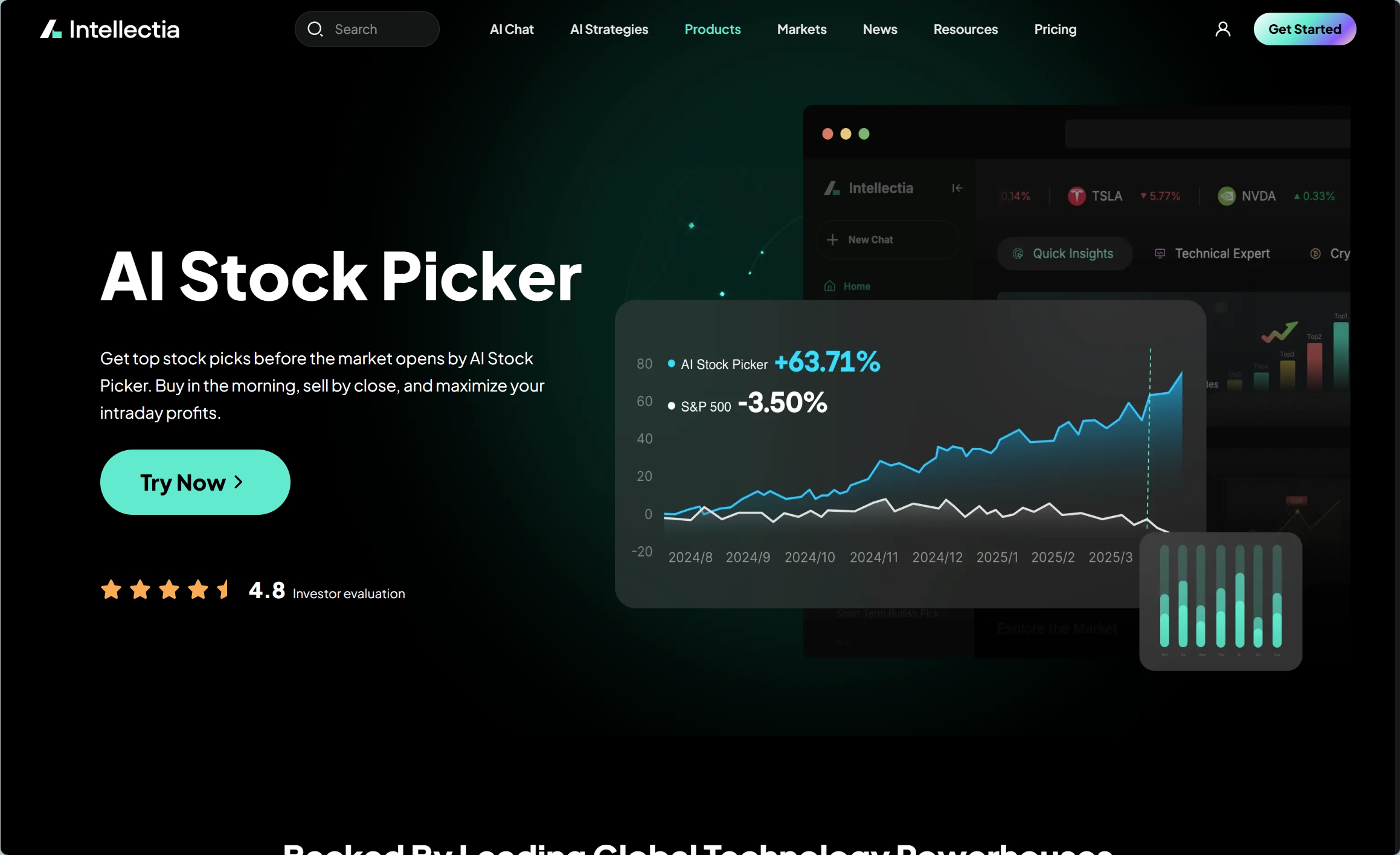
Ready to enhance your investment research? Intellectia's AI-powered stock analysis platform provides real-time insights, analyst consensus data, and AI-driven stock ratings to help you evaluate high-growth opportunities like Nebius. Our platform aggregates thousands of data sources to identify high-conviction investment ideas and provide early warning when fundamentals change.
Conclusion
Should you buy Nebius stock in 2026? The answer depends on your risk tolerance, investment horizon, and conviction in the AI infrastructure buildout thesis. For investors comfortable with high-risk, high-reward opportunities, Nebius offers an attractive asymmetric profile: if the company achieves its $7-9 billion ARR guidance, the stock could appreciate 50% or more; if execution falls short, significant downside is possible.
The fundamental case for Nebius rests on several compelling pillars. The company's demonstrated ability to grow revenue 547% year-over-year while achieving profitability suggests exceptional execution capability. The AI cloud market is expanding rapidly, creating a favorable demand environment. The 2025 ARR guidance beat demonstrates that demand is outpacing even optimistic internal projections. These factors support analyst confidence in the Strong Buy consensus and $151 average price target.
However, prospective investors must weigh these positives against genuine risks. The Q4 2025 revenue miss highlighted execution challenges in managing hypergrowth. Competition from hyperscalers with substantially greater resources creates pricing and market share pressure. Supply constraints for NVIDIA GPUs could limit growth regardless of customer demand. Geopolitical risks related to Nebius's Russian origins warrant monitoring.
For risk-tolerant growth investors, Nebius represents a compelling opportunity to gain exposure to the AI infrastructure buildout through a pure-play provider with demonstrated execution capability. The 6-7x ARR growth target, if achieved, would deliver exceptional returns that justify the elevated risk profile. However, conservative investors may prefer to wait for additional evidence of execution before initiating positions, or to gain AI exposure through larger, more diversified companies with lower execution risk.
The next 12 months will be critical for assessing whether Nebius can deliver against its ambitious 2026 guidance. Quarterly ARR progression, successful launch of the New Jersey facility, and continued customer traction will provide incremental evidence either supporting or contradicting the bull case. Investors who believe in the company's execution capability may find current prices attractive; those who prefer to see evidence before investing may benefit from waiting for additional data points.
Take your investment analysis to the next level with Intellectia's AI stock picker. Our advanced algorithms analyze thousands of data points to identify high-conviction opportunities, track analyst sentiment shifts, and provide actionable insights for growth stocks like Nebius. Whether you're evaluating AI infrastructure plays or exploring other investment themes, Intellectia provides the analytical edge you need to invest with confidence.