
Key Takeaway
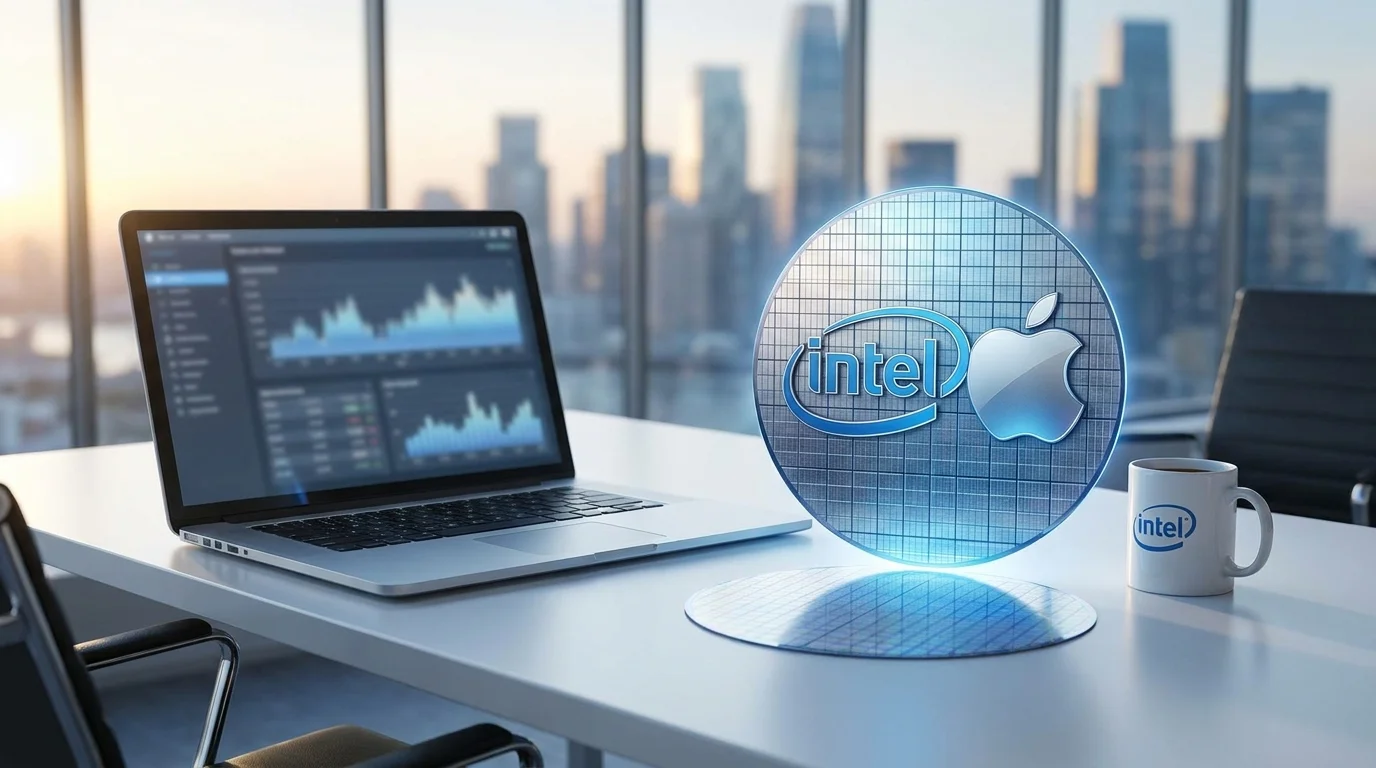
Intel Corporation has emerged as one of the most compelling turnaround stories in the technology sector, with its stock price surging over 240% year-to-date following reports of a preliminary chip manufacturing agreement with Apple. This potential partnership represents far more than a simple supply arrangement—it signals a fundamental repositioning of Intel's business model toward contract manufacturing while validating years of investment in advanced process technology. For investors, the Apple deal offers a tangible catalyst that could transform Intel from a struggling chip designer into a viable foundry competitor to Taiwan Semiconductor Manufacturing Company.
The significance of this development extends beyond Intel's balance sheet. Apple has historically relied almost exclusively on TSMC for its custom silicon, making any diversification effort noteworthy. The preliminary agreement suggests Intel's 18A process technology has reached sufficient maturity to meet Apple's exacting standards, potentially opening the door to additional high-profile foundry customers. However, investors should remain cognizant that the deal remains preliminary, with neither company having provided official confirmation or specific timeline details.

Looking to identify the next big semiconductor opportunity before it makes headlines? Intellectia's AI Screener helps you discover trending stocks with institutional-grade filtering capabilities. Our platform analyzes thousands of data points to surface opportunities that match your investment criteria, giving you the edge in fast-moving markets.
The Apple-Intel Partnership: What We Know
Reports from the Wall Street Journal indicate that Intel and Apple have reached a preliminary agreement for Intel to manufacture certain chips for Apple devices. While specific details remain closely guarded, industry analysts suggest the arrangement likely involves Intel's cutting-edge 18A process node, representing the company's most advanced manufacturing technology. This process utilizes RibbonFET transistor architecture and PowerVia backside power delivery, technologies Intel claims will deliver performance and efficiency competitive with or superior to TSMC's offerings.
For Intel, securing Apple as a foundry customer represents a watershed moment. The company's Intel Foundry Services division has struggled to attract major external customers despite significant capital investment and government support through the CHIPS Act. Apple's reputation for demanding the highest quality standards means its endorsement carries disproportionate weight in the semiconductor industry. If Intel can successfully execute against Apple's requirements, other potential customers—including AMD, Nvidia, and various hyperscalers—may become more willing to engage Intel's manufacturing services.
The strategic implications for Apple are equally significant. The company has faced ongoing supply chain concentration risk through its heavy reliance on TSMC, particularly as geopolitical tensions create uncertainty around Taiwan. Adding Intel as a secondary manufacturing partner reduces this vulnerability while potentially strengthening Apple's negotiating position with TSMC on pricing and capacity allocation. Furthermore, the arrangement aligns with Apple's public commitment to supporting domestic U.S. semiconductor manufacturing.
Intel Stock Analysis: From Value Trap to Momentum Leader
Intel's stock performance in 2026 has defied conventional valuation metrics and surprised many market participants who had written off the company. Trading near $126 after starting the year below $20, Intel has delivered one of the most dramatic rallies in large-cap technology. This surge reflects a fundamental reassessment of the company's prospects rather than mere speculative excess, though current valuations certainly price in substantial future success.
The valuation picture presents a fascinating contradiction. On traditional metrics, Intel appears expensive—a forward P/E ratio exceeding 100x leaves little room for operational disappointment. However, investors evaluating Intel as a foundry business rather than a chip designer might justify these multiples by comparing them to TSMC's historical trading ranges during its growth phase. The foundry model offers fundamentally different economics: higher capital intensity but greater revenue stability, reduced product cycle risk, and the potential for significant operating leverage as capacity utilization improves.
Wall Street analysts remain divided on Intel's prospects despite the stock's impressive run. The consensus price target of approximately $79 sits well below current trading levels, with the rating distribution showing 13 Buy ratings, 30 Hold ratings, and 5 Sell ratings. This divergence between market pricing and analyst sentiment creates an interesting dynamic—either analysts will upgrade their views to match the market's optimism, or the stock will eventually correct toward more conservative valuation levels. The Apple deal provides concrete evidence that could catalyze analyst revisions.
The Foundry Opportunity: Intel's Path Forward
Intel's pivot toward becoming a major semiconductor foundry represents one of the most ambitious strategic transformations in the company's storied history. Under CEO Pat Gelsinger's leadership, Intel has committed over $100 billion to manufacturing capacity expansion across Arizona, Ohio, Oregon, and New Mexico. These investments position Intel to capture a meaningful share of the projected $1 trillion semiconductor market by 2030, with foundry services representing the fastest-growing segment.
The foundry model offers several compelling advantages that differentiate it from Intel's traditional integrated device manufacturer approach. First, foundry revenue tends to be more predictable than product revenue, with customers typically committing to multi-year supply agreements. Second, serving diverse external customers helps Intel amortize massive research and development costs across a broader revenue base. Third, the foundry business reduces Intel's exposure to product cycle risks in specific end markets like personal computers and data centers.
Government support through the CHIPS and Science Act substantially de-risks Intel's manufacturing investments. The company has secured approximately $20 billion in direct grants and loan guarantees, significantly reducing the capital burden of building leading-edge fabs in the United States. This support reflects bipartisan recognition that domestic semiconductor manufacturing represents a strategic priority, particularly given geopolitical tensions with China and Taiwan sovereignty concerns. Intel's position as the only U.S.-based company with leading-edge logic manufacturing capability makes it a critical national asset.
Risks and Considerations for Investors
While the Apple deal represents a significant positive catalyst, investors should maintain perspective regarding the challenges Intel still faces. The semiconductor manufacturing business demands flawless execution—yield issues, process delays, or quality problems can quickly erode customer confidence and financial performance. Intel's historical struggles with 10nm and 7nm node transitions serve as cautionary reminders that manufacturing leadership is never guaranteed, even for companies with Intel's resources and experience.
Competition from TSMC and emerging foundry players like Samsung presents an ongoing threat. TSMC maintains substantial technological and capacity advantages, with a proven track record of delivering for Apple's most demanding products. The Taiwanese giant has announced aggressive expansion plans in the United States, Japan, and Germany, potentially blunting Intel's geographic diversification advantage. Samsung, meanwhile, continues investing heavily in advanced process technology and has already secured some Apple business for memory chips.
The preliminary nature of the reported Apple deal introduces execution risk. Converting preliminary agreements into production revenue requires navigating complex technical validation processes, intellectual property arrangements, and supply chain logistics. Any delays or complications could disappoint investors who have priced in near-term foundry revenue contributions. Additionally, the deal's financial terms remain undisclosed, leaving uncertainty about the margin profile Intel will achieve on Apple production.
Broader Implications for the Semiconductor Industry
The Intel-Apple partnership, if consummated, would reshape competitive dynamics across the semiconductor landscape. For decades, the industry has consolidated around TSMC for leading-edge logic manufacturing, creating potential supply chain vulnerabilities that policymakers and corporate strategists have grown increasingly concerned about. A viable Intel foundry alternative would introduce much-needed competition while supporting geographic diversification of advanced semiconductor production.
Stay ahead of sector rotations and emerging opportunities with Intellectia's AI Stock Picker. Our AI analyzes market sentiment, earnings trends, and technical patterns to identify stocks poised for outperformance. Whether you're tracking semiconductor momentum or exploring new sectors, our platform delivers actionable insights backed by data science.
Equipment suppliers and materials providers stand to benefit from Intel's manufacturing expansion regardless of specific customer outcomes. Companies like Applied Materials, Lam Research, and KLA Corporation should see sustained demand as Intel builds out its fab network. Similarly, specialty chemical suppliers and silicon wafer manufacturers will benefit from increased capacity utilization across the supply chain.
For fabless semiconductor designers, Intel's foundry emergence creates interesting strategic options. Companies historically dependent on TSMC may welcome the opportunity to dual-source production, reducing supply chain concentration risk. However, migrating designs between different process technologies requires substantial engineering effort, meaning any shifts will occur gradually rather than abruptly. Nvidia, AMD, and Qualcomm will likely monitor Intel's Apple engagement closely before making significant commitments.
Conclusion
Intel's reported Apple chip manufacturing deal represents a genuine inflection point for the semiconductor industry's most storied company. After years of manufacturing challenges and market share losses, Intel appears positioned to reclaim its status as a technology leader through the foundry business model. The 240% stock rally reflects investor optimism that this transformation will succeed, though significant execution risks remain.
For investors considering Intel at current levels, the analysis must weigh compelling strategic opportunities against demanding valuation metrics. The Apple deal validates Intel's technology roadmap and provides a reference customer that could attract additional foundry business. However, converting this potential into sustainable profitability requires flawless execution across manufacturing, customer service, and technology development over many years.
The semiconductor industry stands at a fascinating crossroads, with geopolitical considerations, technological transitions, and business model evolution creating both opportunities and uncertainties. Intel's Apple partnership exemplifies these dynamics—representing potential progress toward a more diversified, resilient global chip supply chain while highlighting the competitive intensity that defines this critical industry.
Ready to build your semiconductor investment strategy? Sign up for Intellectia today and access professional-grade analytics, AI-powered screening tools, and real-time market intelligence. Our platform helps you identify opportunities like Intel's turnaround before they become headline news, giving you the analytical edge needed to navigate volatile tech markets with confidence.