
Key Takeaway
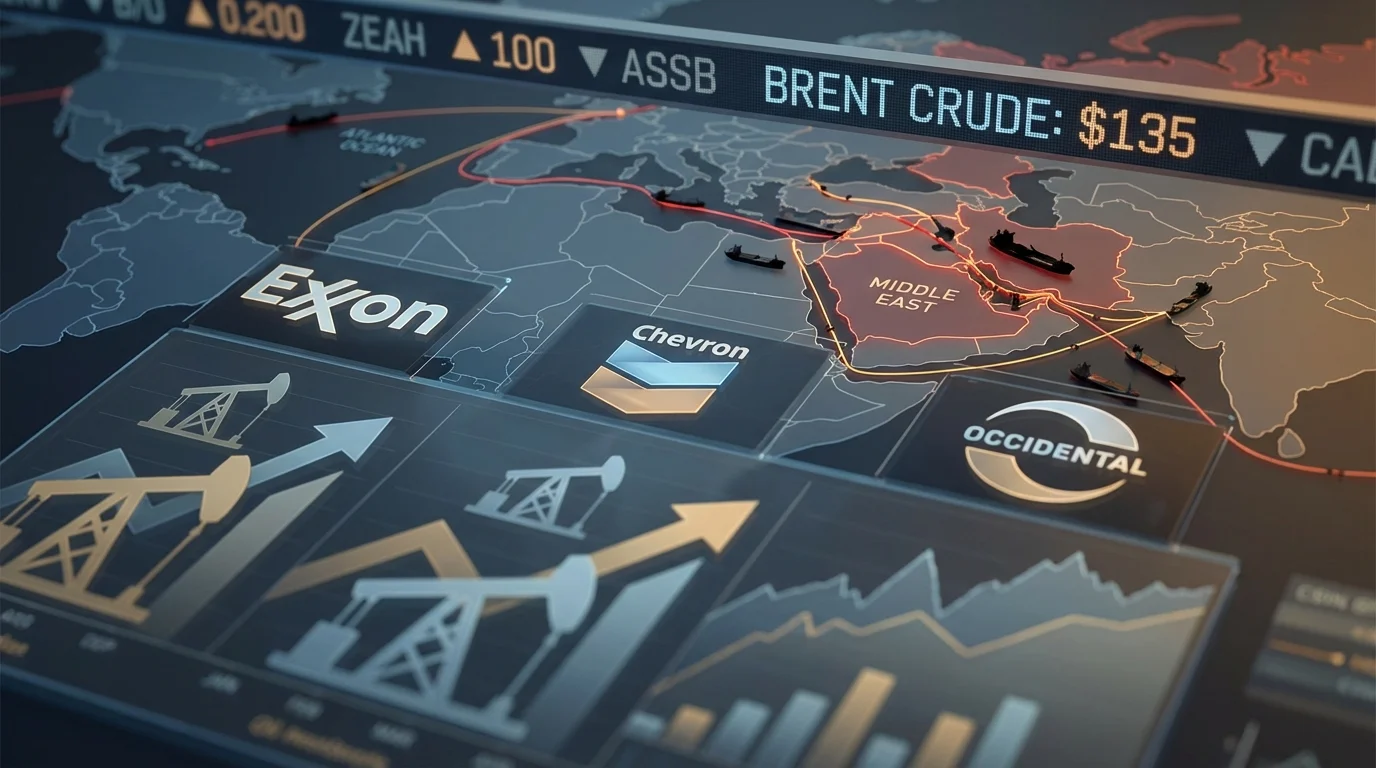
The escalating conflict in the Middle East has created what the International Energy Agency calls the largest oil supply disruption in history, fundamentally reshaping the investment landscape for energy stocks in 2026. With the Strait of Hormuz effectively closed and approximately 20% of global oil supplies at risk, Brent crude prices have surged toward $100 per barrel, with analysts warning of potential spikes to $135 if the situation persists. For investors seeking shelter from market volatility and exposure to the energy sector's resurgence, carefully selected oil stocks offer a compelling combination of capital appreciation potential and dividend income.
The investment thesis for oil stocks in 2026 rests on a simple but powerful dynamic: constrained supply meeting resilient demand. Despite concerns about economic slowdown, global oil consumption is projected to increase by 640,000 barrels per day in 2026 according to IEA forecasts. Meanwhile, the closure of the Strait of Hormuz—the world's most critical oil chokepoint—has removed millions of barrels of daily supply from the market. This supply-demand imbalance creates a favorable pricing environment that should translate into enhanced profitability for well-positioned energy companies.
Leading the pack are the integrated oil majors with diversified operations, strong balance sheets, and proven ability to navigate volatile commodity markets. ExxonMobil and Chevron, the two largest U.S. energy companies, have demonstrated operational excellence and capital discipline that position them to capture maximum value from elevated oil prices. Meanwhile, mid-sized producers like Occidental Petroleum and ConocoPhillips offer greater leverage to commodity prices, potentially delivering outsized returns for investors with higher risk tolerance. The key for portfolio construction is matching individual company characteristics with investment objectives and risk preferences.
Ready to identify the best energy opportunities with professional-grade analysis? Sign up for Intellectia.AI and access our AI-powered stock screening tools that analyze oil stocks across multiple dimensions—from valuation metrics to geopolitical risk exposure.

The Global Oil Crisis: Understanding the Supply Shock
The Middle East conflict has triggered the most severe oil supply disruption in recorded history, surpassing even the 1973 oil embargo and the 1990 Gulf War in terms of immediate market impact. The International Energy Agency has explicitly characterized the current situation as unprecedented, with Iran's closure of the Strait of Hormuz removing approximately 20 million barrels per day of global oil shipments from the market virtually overnight. This represents roughly one-fifth of total global petroleum consumption, creating a supply deficit that cannot be quickly remedied through alternative sources.
The mechanics of the supply shock extend beyond the immediate closure of the Strait of Hormuz. Iran has stepped up attacks on oil and transport facilities across the Middle East, raising fears of prolonged conflict and continued disruptions. Saudi Arabia's Ras Tanura and Qatar's Ras Laffan facilities have both been affected, while tanker traffic through alternative routes remains limited due to security concerns. The cumulative effect has been to concentrate global oil supply risk in ways that make the current crisis potentially more durable than previous disruptions.
The price response to the supply shock has been dramatic and volatile. Brent crude oil prices surged 10-13% to around $80-82 per barrel within days of the conflict escalation, with intraday spikes pushing prices even higher. Energy analysts at Rystad Energy have warned that Brent crude futures could climb to $135 per barrel if the current situation persists for four months—a scenario that would represent a fundamental repricing of global energy markets and have cascading effects across the global economy.
The implications of sustained high oil prices extend far beyond the energy sector. Transportation costs rise, manufacturing becomes more expensive, and consumers have less disposable income after filling their tanks. The IEA has explicitly warned that higher oil prices and a more precarious outlook for the global economy pose further risks to their demand forecasts. For investors, understanding these interconnections is essential for positioning portfolios to weather potential market turbulence while capturing opportunities in the energy sector.
ExxonMobil: The Integrated Giant Poised for Outperformance
ExxonMobil stands as the largest and most diversified U.S. energy company, with operations spanning upstream exploration and production, downstream refining and marketing, and chemicals manufacturing. This integrated business model provides natural hedges against commodity price volatility while creating multiple avenues for value creation. In the current environment of elevated oil prices and supply uncertainty, Exxon's scale and operational excellence position it as a premier choice for investors seeking energy exposure.
The company's fourth quarter 2025 results demonstrated its earnings power even before the full impact of current oil prices was realized. Exxon reported earnings of $6.5 billion on revenue of $82.3 billion, modestly ahead of expectations despite what management described as still-muted crude prices and bottom-of-cycle chemicals margins. With Brent crude now trading significantly higher than the Q4 average, investors can reasonably expect 2026 results to come in materially higher, positioning Exxon as a leveraged play on surging commodity prices.
ExxonMobil's capital allocation strategy reinforces its investment appeal. The company has maintained its dividend through multiple commodity cycles, demonstrating a commitment to returning cash to shareholders that few peers can match. With a current yield exceeding 3% and a track record of dividend growth spanning decades, Exxon offers income investors a compelling combination of current yield and growth potential. The company's share buyback program provides additional support for the stock price and signals management's confidence in underlying value.
Looking ahead, Exxon's investments in low-carbon technologies and carbon capture provide optionality for the energy transition while its core oil and gas business generates the cash flows necessary to fund these initiatives. The company's recent acquisitions in the Permian Basin have expanded its low-cost resource base, positioning it to generate strong returns even if oil prices eventually moderate. For investors seeking exposure to the integrated oil majors with the highest quality assets and strongest balance sheet, ExxonMobil represents a core holding.
Chevron: Quality Assets and Shareholder Returns
Chevron ranks as the second-largest U.S. energy company and offers investors a compelling alternative to ExxonMobil with slightly different characteristics. The company's global asset base includes premier positions in the Permian Basin, Australian LNG, and Kazakhstan's Tengiz field, providing geographic diversification that reduces single-region risk. Chevron's capital discipline and focus on high-return projects have earned it a reputation as one of the best-run majors in the industry.
Chevron's integrated operations span the entire energy value chain, from exploration and production through refining, marketing, and chemicals. The company's refining footprint is particularly valuable in the current environment, as crack spreads—the difference between crude oil prices and refined product prices—have expanded alongside crude price volatility. This downstream exposure provides a partial hedge against crude price fluctuations while capturing value from the company's upstream production.
Shareholder returns have been a consistent priority for Chevron management. The company maintains a robust dividend yield comparable to Exxon's and has been more aggressive with share buybacks in recent years. This capital return strategy aligns management incentives with shareholder interests and provides downside support for the stock price during periods of commodity price weakness. For income-focused investors, Chevron's commitment to the dividend provides confidence in the sustainability of cash returns.
Chevron's strategic positioning extends beyond traditional oil and gas. The company has made significant investments in renewable fuels, hydrogen, and carbon capture, positioning it to participate in the energy transition while maintaining exposure to hydrocarbon cash flows. The company's partnership with CPChem in petrochemicals provides additional diversification and exposure to industrial demand. For investors seeking a high-quality energy major with strong asset base and shareholder-friendly capital allocation, Chevron merits serious consideration.
Occidental Petroleum: Leveraged Play on Oil Prices
Occidental Petroleum offers investors a more concentrated bet on oil prices compared to the integrated majors. As a company focused primarily on exploration and production, Occidental's profitability is more directly tied to crude oil prices, creating greater volatility but also more upside potential when prices rise. The company's Permian Basin assets, acquired through the Anadarko acquisition, provide a low-cost resource base that generates strong cash flows at current price levels.
Warren Buffett's Berkshire Hathaway has accumulated a significant stake in Occidental, providing a vote of confidence from one of the world's most respected investors. Buffett's investment thesis centers on Occidental's attractive assets, disciplined capital allocation, and the potential for sustained high oil prices to generate substantial free cash flow. The Berkshire stake has also provided a floor for the stock price during periods of market weakness, as investors anticipate potential additional purchases.
Occidental's capital allocation strategy has evolved significantly since the Anadarko acquisition. The company has prioritized debt reduction and shareholder returns over aggressive growth spending, a shift that has improved the balance sheet and reduced financial risk. With debt levels now more manageable and oil prices elevated, Occidental has begun returning more cash to shareholders through dividends and buybacks, enhancing total return potential for investors.
The company's carbon capture initiatives, led by its 1PointFive subsidiary, provide an interesting growth option that differentiates Occidental from pure-play oil producers. While these investments are still in early stages, they position Occidental to potentially benefit from carbon pricing and emission reduction mandates. For investors seeking higher-beta exposure to oil prices with the backing of Berkshire Hathaway's endorsement, Occidental Petroleum offers a compelling opportunity.
ConocoPhillips and Phillips 66: Diversified Energy Exposure
ConocoPhillips and Phillips 66 represent two different ways to play the energy sector, each with distinct risk-return profiles. ConocoPhillips, spun off from the integrated ConocoPhillips in 2012, operates as a pure-play exploration and production company with global assets spanning North America, Europe, and Asia. The company's low-cost resource base and disciplined capital allocation have enabled it to generate strong returns across commodity cycles.
ConocoPhillips' acquisition of Marathon Oil in late 2024 significantly expanded its resource base and production capacity. The combined company now ranks as one of the largest independent oil producers globally, with scale advantages that should translate into lower costs and higher margins. The integration has proceeded smoothly, with synergies being realized faster than initially projected, enhancing the value creation potential of the transaction.
Want professional guidance on energy sector investing? Try Intellectia.AI's AI Stock Picker—our platform analyzes oil stocks based on reserve quality, production costs, financial strength, and valuation to identify the most attractive opportunities in the current market environment.

Phillips 66 offers a different approach to energy investing through its focus on refining and marketing rather than oil production. As one of the leading oil refining companies with operations in the U.S. and Europe, Phillips 66 benefits from the spread between crude oil prices and refined product prices. The current environment of crude price volatility has created opportunities for refiners to capture expanded margins, potentially boosting profitability even if absolute crude prices moderate.
Phillips 66's investments in midstream operations and petrochemicals through its CPChem joint venture with Chevron provide additional diversification and exposure to different parts of the energy value chain. The company's disciplined approach to capital allocation and consistent shareholder returns make it an attractive option for investors seeking energy exposure with less commodity price risk than pure-play producers. For investors looking to build a diversified energy portfolio, both ConocoPhillips and Phillips 66 merit consideration.
Investment Risks: What Could Go Wrong
Despite the compelling investment thesis for oil stocks in 2026, investors must remain aware of significant risks that could undermine returns. The most immediate concern is the potential for a negotiated settlement to the Middle East conflict that would reopen the Strait of Hormuz and restore normal oil flows. While such an outcome would be positive for global economic stability, it could trigger a sharp correction in oil prices that would negatively impact energy stock valuations.
Demand destruction represents another material risk. If sustained high oil prices push the global economy into recession, oil consumption could fall faster than supply adjusts, creating a surplus that drives prices lower. The IEA has already warned that higher oil prices pose risks to their demand forecasts, and a severe economic downturn could see these concerns realized. Energy stocks, while potentially benefiting from higher oil prices in the near term, would not be immune to a broad-based market sell-off driven by recession fears.
Policy risks also warrant consideration. The Biden administration has historically favored policies that discourage fossil fuel production, and a political shift toward more aggressive climate action could impact the operating environment for oil companies. Windfall profits taxes, restrictions on drilling, and accelerated energy transition mandates could all negatively impact profitability even if oil prices remain elevated. Investors should monitor political developments and position sizes accordingly.
Finally, the energy transition remains a long-term challenge for the oil sector. While the current crisis has highlighted the continued importance of fossil fuels to global energy security, the trend toward renewable energy and electrification continues. Companies that fail to adapt their business models for a lower-carbon future may face stranded asset risks and declining valuations over time. The best-positioned oil stocks are those that can generate strong returns in the near term while building optionality for the energy transition.
Conclusion: Positioning for Energy Opportunities in 2026
The convergence of supply disruptions, geopolitical tensions, and resilient demand has created a favorable environment for oil stocks that may persist through much of 2026. The integrated majors—ExxonMobil and Chevron—offer investors exposure to this dynamic with the backing of strong balance sheets, diversified operations, and consistent shareholder returns. For those seeking higher-beta exposure, companies like Occidental Petroleum and ConocoPhillips provide greater leverage to oil prices with the backing of high-quality asset bases.
The key to successful energy investing in the current environment is maintaining perspective on both the opportunities and the risks. While elevated oil prices can generate substantial cash flows for well-positioned companies, the sector remains inherently cyclical and vulnerable to demand shocks, policy changes, and geopolitical developments. Investors should size positions appropriately, maintain diversification across the energy value chain, and remain prepared to adjust portfolios as the situation evolves.
For investors willing to navigate these complexities, the current environment offers compelling opportunities in the energy sector. The combination of supply constraints, geopolitical risk premiums, and resilient demand creates a backdrop that should support oil prices and energy company profitability. By focusing on companies with low-cost resources, strong balance sheets, and disciplined capital allocation, investors can position themselves to benefit from the energy sector's resurgence while managing the risks inherent in commodity investing.
Ready to identify the best oil stocks for your portfolio? Start your free trial with Intellectia.AI and unlock AI-powered analysis that helps you navigate the energy sector's complexities. Our platform provides the data-driven insights you need to make informed investment decisions in volatile commodity markets.