

Key Takeaway
Asset tokenization has emerged as the definitive financial trend of 2026, fundamentally transforming how traditional assets are traded, owned, and settled. What began as an experimental blockchain application has evolved into a $27.6 billion market that has captured the attention of Wall Street's most powerful institutions. Tokenized oil futures have become the second-most popular trading product on decentralized exchanges, trailing only Bitcoin itself. Meanwhile, the stablecoin market has swelled to approximately $300 billion, with Treasury Secretary Scott Bessent forecasting it could exceed $1 trillion by year-end.
This convergence of traditional finance and blockchain technology represents more than a passing trend. JPMorgan CEO Jamie Dimon, long skeptical of cryptocurrencies, issued a stark warning in his annual shareholder letter that blockchain-based technologies including tokenization, stablecoins, and smart contracts pose a direct competitive threat to traditional banking models. His response has been clear: JPMorgan must accelerate its own blockchain initiatives through its Kinexys platform or risk being disrupted by a new generation of competitors.
For investors, this shift creates multiple opportunities across the value chain. Companies facilitating tokenization infrastructure, exchanges offering tokenized products, and even traditional financial institutions adapting to this new paradigm all stand to benefit. The key is understanding which players are positioned to capture value as assets worth trillions of dollars migrate onto blockchain rails over the coming decade.
Understanding Asset Tokenization: The New Financial Infrastructure
Asset tokenization refers to the process of converting ownership rights in real-world assets into digital tokens on a blockchain. These tokens represent fractional ownership and can be traded, transferred, or used as collateral with near-instant settlement. The concept applies to virtually any asset class: stocks, bonds, real estate, commodities, art, and even intellectual property.
The breakthrough in 2026 has been the practical implementation at scale. Where early tokenization efforts were limited to niche crypto projects, today's market includes major financial institutions offering tokenized versions of mainstream financial products. BlackRock's BUIDL fund, which invests in tokenized U.S. Treasuries, has accumulated approximately $1.9 billion in assets. JPMorgan's Kinexys platform processes billions in daily volume for institutional clients using blockchain-based settlement.
The mechanics are straightforward but revolutionary. When an asset is tokenized, its ownership is recorded on a blockchain rather than traditional centralized ledgers. This enables 24/7 trading, fractional ownership, programmable compliance, and atomic settlement—meaning the transfer of assets and payment happen simultaneously without counterparty risk. For investors accustomed to T+2 settlement cycles and limited trading hours, these improvements represent a fundamental upgrade to market infrastructure.
Tokenized Oil Futures: The Breakout Product of 2026
Perhaps no single product better illustrates tokenization's potential than the emergence of tokenized oil futures as a major trading category. On the Hyperliquid decentralized exchange, tokenized oil futures for both Brent Crude and West Texas Intermediate have become the second-most traded product, surpassing every cryptocurrency except Bitcoin itself.
This success stems from a perfect confluence of factors. Oil prices have experienced heightened volatility due to ongoing geopolitical tensions in the Middle East, creating strong demand for exposure among traders seeking to hedge or speculate on price movements. Simultaneously, blockchain-based trading platforms offer advantages that traditional commodity exchanges cannot match: 24/7 trading, instant settlement, and accessibility to global retail investors who previously faced significant barriers to entering commodity markets.
The tokenization model allows investors to gain oil exposure without navigating the complexities of traditional futures markets, including margin requirements, contract rollovers, and limited trading hours. Instead, tokenized oil futures function similarly to spot crypto tokens—buyers hold a digital asset whose value tracks the underlying commodity price, with positions that can be opened or closed at any time.
Major exchanges have taken notice of this demand. While Hyperliquid remains the primary venue for these products, established platforms are preparing competitive offerings. The success of tokenized oil futures demonstrates that tokenization's value proposition extends far beyond cryptocurrency natives—it addresses real friction points in traditional markets that have existed for decades.
The Stablecoin Explosion: From $300 Billion to $1 Trillion
Stablecoins have evolved from a crypto market utility into a genuine alternative payment infrastructure, with profound implications for the global financial system. The total stablecoin market now stands at approximately $300 billion, representing a threefold increase from just two years ago. Research firm 21Shares forecasts this figure could exceed $1 trillion by the end of 2026, a projection that increasingly appears conservative as institutional adoption accelerates.
Treasury Secretary Scott Bessent has emerged as a vocal proponent of stablecoin development, arguing that a thriving stablecoin ecosystem would drive private sector demand for U.S. Treasuries—the assets that back most dollar-denominated stablecoins. This perspective aligns with broader administration priorities of maintaining dollar dominance while fostering financial innovation. Bessent has pressed Congress to pass comprehensive stablecoin legislation that would establish clear regulatory frameworks while enabling continued growth.
The use cases driving this expansion extend well beyond cryptocurrency trading. Cross-border payments, remittances, and corporate treasury management are increasingly leveraging stablecoins for their speed and cost advantages. A payment that might take days to clear through traditional correspondent banking networks can settle in minutes using stablecoins, with fees reduced by orders of magnitude. For multinational corporations managing liquidity across dozens of jurisdictions, these efficiencies translate into meaningful cost savings.
JPMorgan's JPM Coin represents the institutional banking sector's response—a bank-issued stablecoin enabling instant transfers for corporate clients. While smaller than market leaders like Tether and USDC, products like JPM Coin signal that traditional banks recognize the threat and opportunity presented by this technology. The question is no longer whether stablecoins will become part of mainstream finance, but which institutions will control the infrastructure.
Wall Street's Response: Major Players Enter The Market
The institutional embrace of tokenization has accelerated dramatically in 2026, with virtually every major financial institution announcing blockchain initiatives. This represents a significant shift from previous years, when experimentation was limited to small pilot programs and largely kept quiet.
Robinhood's June 2025 event in Cannes marked a watershed moment for tokenized equities. The company revealed plans to give European investors the ability to trade U.S. stocks on a 24/7 basis through tokenization. More radically, Robinhood raised the prospect of enabling retail investors to access private company shares—historically restricted to accredited investors and institutions—through tokenized structures. If implemented, this would democratize access to pre-IPO investment opportunities that have generated substantial wealth for a limited segment of the population.
Intercontinental Exchange, parent company of the New York Stock Exchange, announced in March 2026 a strategic investment in and partnership with cryptocurrency exchange OKX. The collaboration aims to offer tokenized NYSE-listed equities to OKX customers as early as the second half of 2026, bringing traditional stocks onto blockchain rails through one of the world's largest crypto exchanges. This partnership between established and crypto-native infrastructure represents a template for how the two worlds may ultimately merge.
BlackRock, the world's largest asset manager, has positioned itself at the forefront of tokenized fund products through its BUIDL fund. By tokenizing money market fund shares, BlackRock enables seamless transfer, collateralization, and trading of what were previously illiquid positions. The fund has accumulated over $1.9 billion in assets, demonstrating genuine institutional demand for these products beyond crypto speculation.
Investment Opportunities Across The Tokenization Ecosystem
Investors seeking exposure to the tokenization trend have multiple avenues to consider, each with distinct risk-reward profiles. Understanding the value chain is essential for identifying which companies are best positioned to capture economic value as this market expands.
Exchange and trading infrastructure providers represent the most direct exposure. Hyperliquid's native HYPE token has appreciated more than 50% in 2026, reflecting the platform's growing volume and market share in tokenized derivatives. While the platform restricts U.S. users from trading, the HYPE token is available on major exchanges including Coinbase, providing American investors indirect exposure to the platform's growth. The success of tokenized oil futures has established Hyperliquid as a leader in this emerging category, with network effects likely to compound its advantage.
Traditional brokers pivoting toward tokenization offer another angle. Robinhood has made tokenized equities a strategic priority, leveraging its retail user base and regulatory relationships to bring these products mainstream. The stock trades at approximately $69-$71 per share with analyst price targets around $90-$110, reflecting expectations that tokenization initiatives will drive user growth and engagement. Similarly, Coinbase at approximately $168 per share with a market cap of $44 billion stands to benefit as both a trading venue and infrastructure provider for tokenized assets.
Even traditional banks like JPMorgan, while not pure-play tokenization investments, must adapt their business models to incorporate blockchain technology. JPMorgan's Kinexys platform, which processes billions in daily volume for institutional clients, demonstrates that major banks are building the infrastructure to compete in this new paradigm. The stock trades at a P/E ratio of approximately 14.7, with blockchain initiatives representing potential upside not fully reflected in traditional valuation metrics.
Regulatory Landscape: Clarity Emerging in 2026
The regulatory environment for tokenized assets has evolved significantly in 2026, with three major U.S. developments providing the framework within which institutional tokenization can operate. The implementation of the GENIUS Act and related regulatory guidance has established clearer boundaries for how tokenized securities, commodities, and payment instruments will be treated under existing law.
Treasury Secretary Bessent has been particularly active in pushing for regulatory clarity around stablecoins, arguing that well-regulated stablecoins could actually strengthen the dollar's position as the global reserve currency by increasing demand for U.S. Treasuries. This perspective has shifted the policy debate from whether to allow stablecoins to how to regulate them effectively without stifling innovation.
The Federal Reserve and SEC have issued interpretive guidance that clarifies how existing securities and banking laws apply to tokenized assets. While compliance remains complex, the direction of travel is toward accommodation rather than prohibition. European regulators have moved even more aggressively, with the MiCA framework providing comprehensive guidelines for crypto assets including tokenized securities.
European banks including ING and BNP Paribas have announced plans to launch euro-denominated stablecoins later in 2026, signaling that major financial institutions are no longer waiting to see whether stablecoins matter—they are positioning to capture market share in what they now view as an inevitable evolution of payment infrastructure.
Risks And Challenges: What Investors Should Watch
Despite the compelling growth narrative, asset tokenization faces meaningful risks that investors must consider. The International Monetary Fund has warned that tokenization could amplify volatility through automated markets and smart contracts, potentially transmitting crypto market turbulence into traditional financial systems at unprecedented speed.
Smart contract vulnerabilities represent a technical risk that has no equivalent in traditional markets. While tokenization enables programmability and efficiency, it also creates new attack surfaces. Exploits of poorly written smart contracts have resulted in billions of dollars in losses across the DeFi ecosystem, and tokenized traditional assets would face similar risks.
Regulatory uncertainty remains despite recent progress. The classification of various tokenized products—are they securities, commodities, or something new entirely—continues to evolve. Changes in regulatory stance could significantly impact the viability of certain business models. The ongoing debate over whether stablecoin issuers should be required to pay interest to holders, for example, could dramatically alter the economics of these products.
Finally, the competitive dynamics of tokenization are still taking shape. While first-movers like Hyperliquid have established strong positions, the entry of well-capitalized traditional players including ICE, JPMorgan, and potentially other major exchanges could reshape market share. The winning platforms may be those that best combine crypto-native innovation with traditional finance's regulatory relationships and institutional trust.
Conclusion: Positioning For The Tokenization Decade
Asset tokenization represents more than a temporary market trend—it is a fundamental restructuring of how financial assets are created, traded, and owned. The $27.6 billion currently tokenized is merely the beginning; projections suggest trillions of dollars in traditional assets could migrate to blockchain rails over the coming decade as infrastructure matures and regulatory frameworks solidify.
For investors, the implications are clear. Companies building tokenization infrastructure, exchanges offering tokenized products, and financial institutions successfully adapting to this new paradigm are positioned for sustained growth. The convergence of traditional finance and blockchain technology creates opportunities that extend well beyond cryptocurrency speculation into the core functions of the global financial system.
The window for early positioning remains open, but it is narrowing. As Jamie Dimon acknowledged, the competitive threat from blockchain-based alternatives is real, and traditional institutions are now moving aggressively to either capture this opportunity or risk being displaced by it. The next several years will determine which companies emerge as the leaders of tokenized finance.
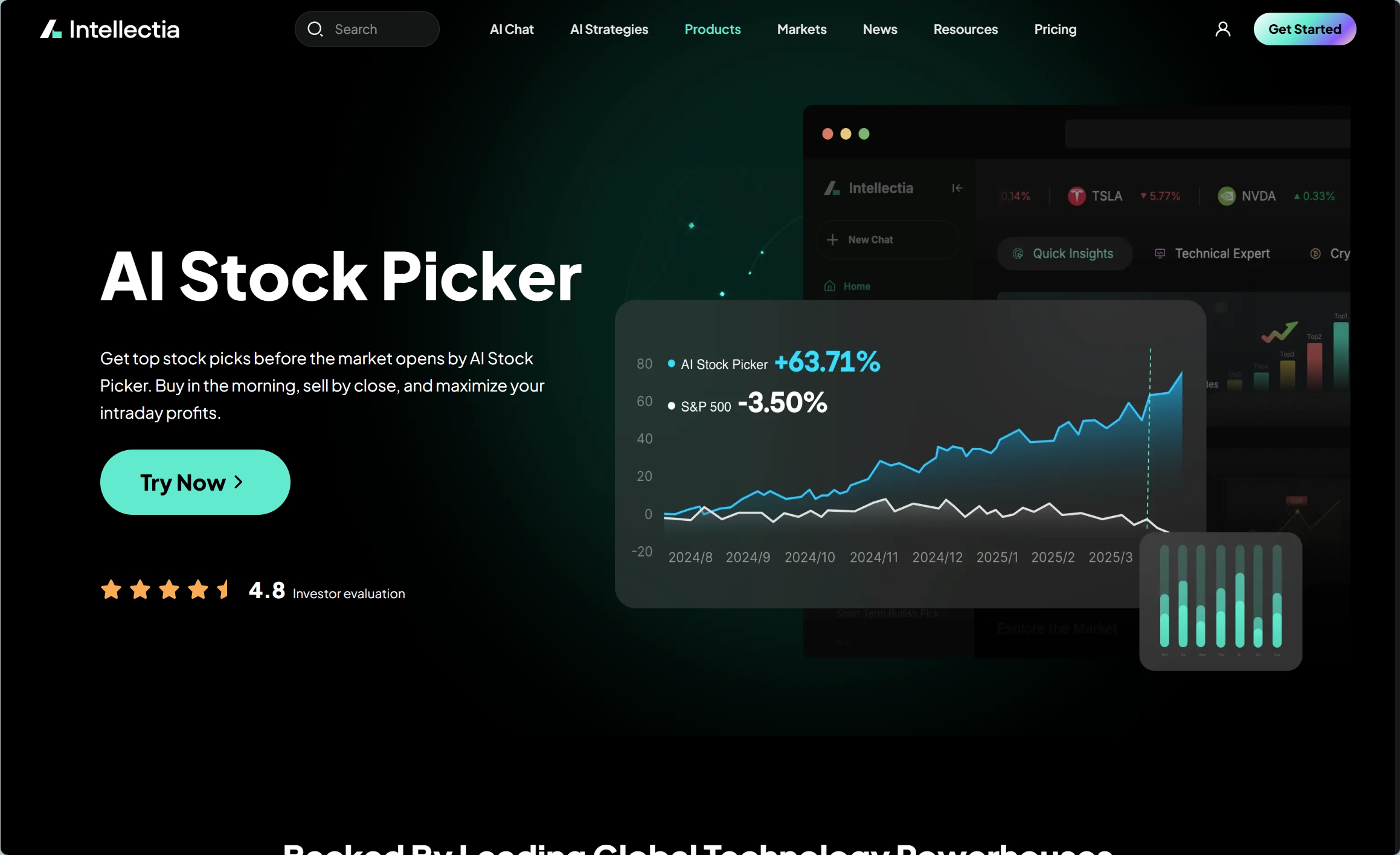
Ready to identify the best-positioned companies in the tokenization space? Intellectia.ai's AI-powered stock analysis helps you evaluate infrastructure plays, exchange stocks, and traditional financial institutions adapting to blockchain disruption. Get real-time ratings, valuation metrics, and analyst consensus to make informed decisions about your tokenization exposure. Sign up today and access professional-grade analysis for the next generation of financial markets.