
Key Takeaway
The artificial intelligence revolution has created an unprecedented demand surge for memory and storage solutions, propelling a select group of semiconductor stocks to remarkable heights. As of April 2026, AI memory stocks have emerged as the market's standout performers, with Seagate Technology surging 65% year-to-date, Western Digital soaring 77%, and SanDisk more than tripling in value--all while the broader S&P 500 struggled with a 3% decline.
This dramatic outperformance reflects a fundamental shift in the technology landscape. Data centers now consume over 50% of the industry's DRAM and NAND bit total addressable market for the first time in history, driven entirely by AI workload requirements. The insatiable appetite for high-bandwidth memory (HBM), enterprise solid-state drives, and nearline hard disk drives has created what analysts are calling the "AI storage supercycle." For investors seeking exposure to the AI boom beyond the overbought mega-cap technology names, memory and storage stocks represent a compelling opportunity with significant runway ahead.
The AI Storage Supercycle Explained
The concept of a supercycle in the semiconductor industry is not new, but the AI-driven storage boom represents something fundamentally different from previous cycles. Traditional memory demand followed predictable patterns tied to consumer electronics and enterprise IT spending. The AI revolution has shattered these patterns, creating demand curves that look more like step-functions than gradual growth trends.
Training large language models and supporting AI inference at scale requires massive data processing capabilities. Each AI training cluster consumes memory resources at orders of magnitude beyond traditional workloads. A single advanced AI model might require hundreds of terabytes of high-speed memory working in parallel, with storage systems capable of feeding data at unprecedented speeds. This architectural requirement has transformed memory from a commodity component into a strategic bottleneck for AI advancement.
The supply response has been constrained by manufacturing complexity. High-bandwidth memory requires advanced packaging technologies, with HBM4 modules now featuring 36GB capacities and 12-layer stacks. These advanced packages command premium pricing--often 3-4x standard DRAM prices--with margins that have transformed the economics of memory manufacturers. The result is a favorable supply-demand dynamic that supports both volume growth and margin expansion, a rare combination in the historically cyclical memory business.
Micron Technology: The HBM Leader
Micron Technology has positioned itself at the epicenter of the AI memory revolution, with its stock gaining 32% year-to-date as investors recognize its dominant position in high-value AI memory products. The company's fiscal Q2 2026 results delivered a stunning validation of this thesis, with revenue surging to $13.64 billion--a remarkable 57% year-over-year increase that shattered analyst expectations.
The earnings report revealed the true scale of Micron's AI transformation. Net income climbed to $13.8 billion, or $12.07 per share, compared to just $1.58 billion ($1.41 per share) in the same quarter last year. This nine-fold increase in profitability stems from the company's strategic pivot toward AI-optimized products. Cloud memory revenue, which serves data center customers directly, exploded 160% to reach $7.75 billion--demonstrating how quickly AI demand is reshaping Micron's business mix.
Perhaps most significantly, Micron's HBM4 36GB 12-layer products have begun shipping for next-generation AI platforms. The company announced that its entire 2026 HBM capacity is fully committed through non-cancellable contracts, providing visibility that extends well beyond normal planning horizons. This contracted demand insulates Micron from the pricing volatility that has historically plagued memory markets.
Management's guidance for fiscal Q2 projects revenue of $18.7 billion with gross margins approaching 68%--levels that would have seemed impossible just two years ago. Full-year consensus estimates now call for approximately $76 billion in revenue with earnings per share around $34, figures that would represent transformational growth for the decades-old memory specialist.
The investment case for Micron extends beyond near-term earnings momentum. As AI adoption broadens across enterprises and consumer applications, memory content per device continues growing exponentially. Micron's technological leadership in advanced packaging and its integrated manufacturing capabilities position it to capture disproportionate value from this trend. For investors seeking pure-play exposure to AI infrastructure build-out, Micron represents the most direct route to participating in memory demand growth.
Ready to identify the next generation of AI winners? Intellectia's AI-powered stock screener analyzes thousands of data points to surface opportunities before they hit mainstream radar. Start your free trial today and discover how our AI tools can enhance your investment research.

Seagate Technology: Morgan Stanley's Top Pick
While Micron dominates the headlines with its HBM breakthroughs, Seagate Technology has quietly emerged as one of 2026's most impressive stock market stories. With shares up 65% year-to-date and recently hitting all-time highs, Seagate has captured institutional attention--including a coveted "top pick" designation from Morgan Stanley's hardware analysts.
Seagate's resurgence reflects the often-overlooked importance of hard disk drives in AI infrastructure. While flash storage grabs attention for performance, AI training and inference generate enormous datasets that require cost-effective long-term storage. Nearline hard drives--the high-capacity drives designed for data center applications--have become essential infrastructure for AI workloads, and Seagate has established market leadership in this category.
The company's fiscal Q2 2026 results validated this positioning. Earnings per share reached $3.11, beating analyst estimates by more than 9% and demonstrating the operational leverage inherent in the business model. Revenue of $9.1 billion represented a 39% increase from the prior year, with data center customers driving the majority of growth. The 52-week low of $63.19 now seems like a distant memory as shares have more than doubled from those levels.
What distinguishes Seagate from other storage plays is the durability of its competitive position. Hard drive manufacturing requires specialized expertise and massive capital investment that creates formidable barriers to entry. With only two major competitors globally--Western Digital and Toshiba--Seagate operates in a rational oligopoly where supply discipline supports healthy pricing. As AI-generated data volumes explode, the total addressable market for nearline storage expands accordingly.
Morgan Stanley's endorsement carries weight because it reflects a broader institutional recognition that AI infrastructure extends beyond GPUs and high-performance memory. The "pick and shovel" investment thesis--buying the companies supplying essential tools to gold miners--applies perfectly to Seagate's position in the AI value chain. Every AI data center requires massive storage infrastructure, and Seagate is the leading pure-play supplier to this market.
Western Digital: The Turnaround Story
Western Digital offers perhaps the most intriguing risk-reward profile among AI memory stocks. After years of operational challenges and strategic uncertainty, the company has emerged as a focused pure-play storage company following its flash memory business spinoff. Shares have responded with a 77% year-to-date gain, yet analysts suggest significant upside remains as the turnaround story unfolds.
The investment case centers on Western Digital's dominant position in nearline hard drives for data center applications. The company holds an estimated 52% market share in this high-growth segment, with products optimized for the specific requirements of AI workloads. Nearline drives differ from consumer hard drives in their reliability specifications, power efficiency, and capacity--attributes that command premium pricing and generate superior margins.
Western Digital's transformation extends beyond portfolio simplification. The company has aggressively reduced manufacturing costs while redirecting research and development toward AI-optimized products. New drive architectures specifically designed for AI training clusters offer higher throughput and better thermal characteristics than legacy designs. These product improvements support pricing power in a market where performance matters more than incremental cost savings.
The competitive dynamics favor Western Digital's continued success. The hard drive industry has consolidated to just three global players, with Western Digital and Seagate together controlling the vast majority of data center shipments. This concentrated market structure enables rational pricing behavior and supports returns on invested capital that exceed historical norms. For investors seeking exposure to AI infrastructure with less volatility than semiconductor pure-plays, Western Digital offers an attractive middle ground.
SanDisk: The Forgotten Memory Play
SanDisk represents perhaps the most dramatic performance story among AI memory stocks, with shares more than tripling in value since the beginning of 2026. This extraordinary gain reflects both company-specific catalysts and broader market recognition of NAND flash memory's critical role in AI infrastructure.
Following its separation from Western Digital, SanDisk emerged as a standalone pure-play NAND flash manufacturer with significant scale advantages. The company's enterprise SSD products have become essential components in AI data centers, where they serve as high-speed cache layers between DRAM and traditional hard drives. This architectural role--often called the "storage hierarchy"--ensures consistent demand growth as AI workloads expand.
The NAND flash market has experienced favorable supply-demand dynamics throughout 2026. Manufacturing transitions to advanced process nodes have temporarily constrained supply growth, while AI-driven demand continues accelerating. This imbalance has supported pricing that exceeds manufacturing costs by healthy margins, generating cash flows that SanDisk has directed toward debt reduction and strategic investments.
Investors should note that SanDisk's extreme performance reflects both fundamental improvement and valuation expansion. Shares that seemed cheap at the beginning of the year now trade at multiples that embed significant growth expectations. While the AI memory thesis remains intact, SanDisk may offer less compelling risk-reward than earlier in the cycle. Consider position sizing carefully and maintain awareness that volatile stocks can experience sharp corrections even within strong uptrends.
The Investment Case for AI Memory Stocks
The collective performance of AI memory stocks reflects a genuine structural shift rather than speculative excess. Several fundamental factors support continued investment in this sector, even after significant price appreciation. Understanding these drivers helps investors evaluate whether the rally has further to run or if the easy gains have been captured.
First, AI adoption is still in early innings. While large technology companies have invested heavily in AI infrastructure, enterprise adoption remains in the pilot phase for most organizations. As AI applications prove their value and deployment scales beyond technology pioneers, memory and storage requirements will multiply accordingly. This demand visibility extends several years into the future, providing earnings predictability that supports premium valuations.
Second, the supply side remains constrained. Building memory fabrication facilities requires $10-20 billion investments and 3-4 year construction timelines. Current capacity expansion plans are insufficient to meet projected AI-driven demand growth, suggesting a favorable pricing environment will persist. The memory industry's historical boom-bust cycles may moderate as demand growth becomes more predictable and supply responses remain measured.
Third, product mix improvements support margin expansion across the sector. Advanced products like HBM, enterprise SSDs, and nearline hard drives command pricing premiums that far exceed their manufacturing cost premiums. As these high-value products comprise a growing share of revenue, gross margins expand even without end-market pricing increases. This mix effect provides earnings leverage that amplifies revenue growth.
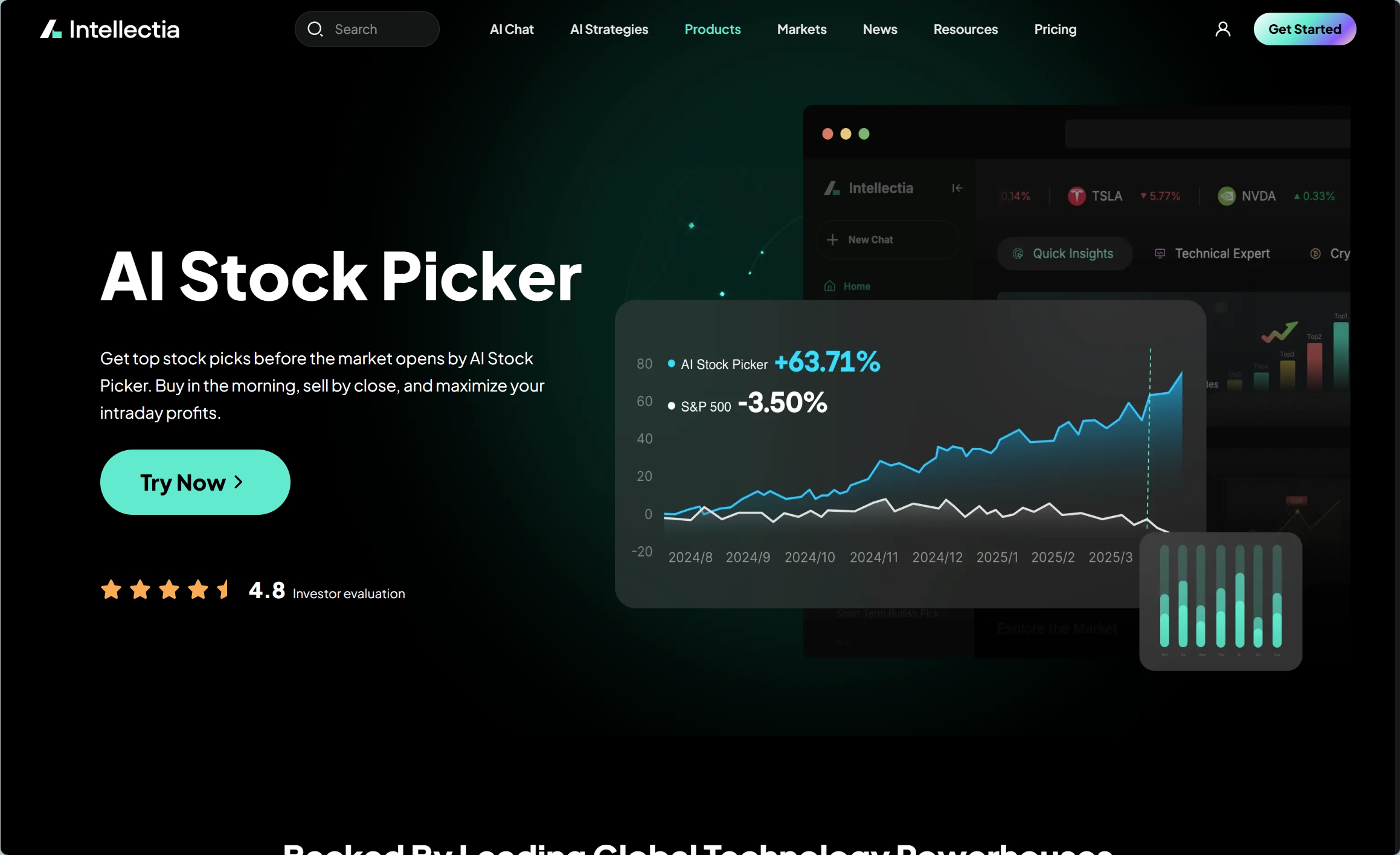
Want to track these AI memory stocks in real-time? Intellectia's AI stock picker continuously monitors analyst ratings, earnings revisions, and technical patterns to identify optimal entry points. Join thousands of investors using our platform to stay ahead of market moves.
Risks and Considerations
Despite the compelling bull case, AI memory stocks carry risks that prudent investors must consider. The semiconductor industry has a well-documented history of cyclicality, and memory markets have historically been the most volatile segment. While AI demand appears structural rather than cyclical, industry capacity responses could eventually create oversupply conditions that pressure pricing and margins.
Technology transitions present another risk factor. New memory architectures--such as MRAM, ReRAM, or advanced storage-class memory--could eventually displace traditional DRAM and NAND in certain applications. While these alternatives remain years away from mainstream adoption in AI data centers, breakthrough advances could alter the competitive landscape. Investors should monitor research and development trends for signs of disruptive change.
Customer concentration represents a specific concern for AI memory suppliers. A relatively small number of hyperscale cloud providers--Amazon, Microsoft, Google, and Meta--account for a disproportionate share of AI infrastructure spending. Any slowdown in their capital expenditure plans would immediately impact memory demand. Recent earnings calls from these technology giants have emphasized continued AI investment, but macroeconomic conditions or strategic shifts could change these plans quickly.
Finally, valuation expansion has occurred rapidly across the sector. Stocks that appeared reasonably priced six months ago now trade at multiples that embed significant growth expectations. While earnings growth may justify these valuations over time, short-term volatility is likely as investors debate appropriate multiples for AI infrastructure plays. Consider dollar-cost averaging rather than concentrated positions, and maintain appropriate portfolio diversification.
Market Outlook for 2026 and Beyond
The AI memory supercycle shows no signs of abating as we move through 2026. Analysts at major investment banks have been steadily raising estimates for memory companies, with many now projecting multi-year growth cycles rather than traditional 12-18 month upturns. This extended duration reflects the infrastructure-intensive nature of AI deployment, where capacity build-outs span years rather than quarters.
Technical indicators suggest the rally has further room to run. Despite impressive year-to-date gains, institutional ownership of memory stocks remains below historical peaks. As more portfolio managers recognize the structural nature of AI-driven demand, inflows from underweight positions could drive continued appreciation. The upgrade cycle among sell-side analysts also appears incomplete, with additional rating increases and estimate revisions likely through year-end.
The competitive landscape continues evolving in ways that favor established leaders. The capital requirements for advanced memory manufacturing have created insurmountable barriers for potential new entrants. Existing players are consolidating their advantages through proprietary packaging technologies and supply chain relationships. This concentration supports the oligopolistic pricing dynamics that have enabled margin expansion across the sector.
For investors positioning for the next phase of the AI memory cycle, focus on companies with demonstrated technology leadership and strong balance sheets. Micron's HBM dominance, Seagate's nearline HDD market position, and Western Digital's turnaround momentum each offer distinct risk-reward profiles. Consider building exposure across multiple names to diversify company-specific risks while maintaining thematic positioning.
Conclusion
The AI memory stock rally of 2026 represents one of the most significant investment themes to emerge from the artificial intelligence revolution. Companies supplying the essential memory and storage components for AI infrastructure have dramatically outperformed broader markets, with gains of 32% to over 300% across leading names. This outperformance reflects genuine fundamental improvement rather than speculative excess, as AI-driven demand creates supply constraints and pricing power unseen in previous cycles.
Looking forward, the investment case remains compelling despite significant price appreciation. AI adoption continues accelerating across enterprises, creating demand visibility that extends years into the future. Supply constraints from manufacturing complexity and capital intensity support favorable pricing dynamics. Product mix shifts toward higher-value offerings enable margin expansion that amplifies earnings growth.
For investors seeking exposure to AI infrastructure without paying extreme valuations for mega-cap technology names, memory and storage stocks offer an attractive alternative. Micron, Seagate, Western Digital, and SanDisk each provide distinct ways to participate in the data center supercycle. As always, position sizing and diversification remain essential, but the structural tailwinds supporting these businesses suggest the multi-year uptrend has further to run.
Ready to build your AI investment portfolio? Intellectia's platform provides comprehensive analysis tools, real-time alerts, and AI-powered insights to help you navigate the fast-moving technology sector. Sign up today and join the community of investors capitalizing on the AI revolution.