
Key Takeaway
The artificial intelligence infrastructure buildout of 2026 represents the single largest corporate capital expenditure cycle in recorded history. The four largest hyperscalers—Amazon, Google, Microsoft, and Meta—are collectively planning 25 billion in capital expenditures this year, a staggering 77% surge from the prior year's 10 billion record. Approximately 60–490 billion of this spending is directly attributed to AI infrastructure, including data centers, GPUs, servers, and networking equipment. This unprecedented investment wave is creating massive opportunities across the technology supply chain, from semiconductor manufacturers like NVIDIA to industrial companies providing power infrastructure and cooling systems. However, investors must also consider the risks: questions about return on investment, potential capex fatigue, and the transition from AI training to inference workloads could reshape the competitive landscape.
The Scale of the 2026 AI Infrastructure Buildout
Understanding the 25 Billion Hyperscaler Commitment
The numbers coming out of Big Tech's 2026 capital expenditure plans are difficult to comprehend in their sheer magnitude. According to Axis Intelligence Research, the four largest hyperscalers—Amazon, Google, Microsoft, and Meta—collectively plan to spend 25 billion in 2026, up from 10 billion in 2025. This represents a year-over-year increase of 77%, making it the fastest expansion of infrastructure investment in corporate history. To put this in perspective, this level of spending exceeds the annual GDP of most countries and represents roughly four times the entire annual capital investment of the US energy sector.
Breaking down the individual commitments reveals the intensity of this AI arms race. Amazon has projected approximately 00 billion in full-year 2026 capex, up from 31 billion in 2025. Alphabet has guided to between 75 billion and 85 billion. Meta has estimated 15 billion to 35 billion. Microsoft, whose fiscal year ends in June, is expected to announce similarly aggressive spending levels. The combined first-quarter 2026 capital expenditure alone exceeded 30 billion across these four companies, confirming that the full-year projection is not merely a forecast but a trajectory already in motion.
The AI-Attributed Share of Infrastructure Spending
Not all of this 25 billion will go directly toward artificial intelligence capabilities. However, according to Axis Intelligence Research analysis, approximately 60–490 billion—or roughly 65-70%—is directly tied to AI infrastructure rather than traditional cloud computing. This includes investments in specialized AI data centers, GPU clusters, high-bandwidth networking equipment, and the power infrastructure required to support these facilities. The distinction matters because AI workloads require fundamentally different infrastructure than traditional cloud services, with significantly higher power density and cooling requirements.
The shift toward AI-specific infrastructure represents a structural transformation in how these technology giants allocate capital. Traditional cloud computing investments focused on general-purpose servers and storage. In contrast, AI infrastructure requires specialized accelerators—primarily GPUs from NVIDIA, but increasingly custom silicon developed in-house by the hyperscalers themselves. This transition is reshaping supply chains, with demand for high-bandwidth memory, advanced packaging, and specialized cooling solutions surging alongside the more visible GPU orders.
Market Performance: The AI Premium in Action
Nasdaq Outperformance Reflects Investor Conviction
The divergence in market performance between technology-heavy indices and traditional industrial benchmarks in 2026 tells a clear story about investor preferences. The Nasdaq Composite has pushed to new highs, recently closing above 26,400, while the Dow Jones Industrial Average has struggled to maintain momentum. This split reflects investors' overwhelming preference for companies tied to AI compute capacity, cloud expansion, and semiconductor innovation over traditional industrial equities.
The performance differential is not merely a reflection of speculative enthusiasm. Companies directly exposed to the AI infrastructure buildout are delivering fundamental earnings growth that justifies premium valuations. NVIDIA, the primary supplier of AI accelerators, reported data center revenue of 2.3 billion in Q4 FY2026 alone—up 75% year-over-year—with full fiscal year 2026 data center revenue totaling approximately 93.7 billion. This is not hypothetical future growth; this is revenue being recognized today from orders placed yesterday.
Wall Street's Divided Reaction to Spending Plans
Despite the clear momentum behind AI infrastructure investment, Wall Street's reaction to hyperscaler earnings has been notably divided. When Meta and Microsoft reported their aggressive AI spending plans, their shares initially declined as investors focused on the scale of investment relative to near-term revenue visibility. In contrast, Alphabet and Amazon rose on strong cloud growth that gave investors confidence the infrastructure spending is translating into commercial returns.
This divergence in market reaction reflects a genuine analytical debate about the timing and magnitude of AI infrastructure returns. Every major hyperscaler has signaled sustained high levels of investment with no near-term reduction in sight. Only Alphabet has explicitly pointed to further spending increases beyond 2026. The others have indicated that current spending levels will be maintained or increased as demand for AI infrastructure continues to grow. For investors, the critical question is not whether AI infrastructure spending will continue—it will—but whether the returns on these investments will materialize quickly enough to justify the capital intensity.
The Supply Chain Ecosystem: Who Benefits from the Supercycle
NVIDIA: The Indispensable Infrastructure Provider
At the center of the AI infrastructure supercycle sits NVIDIA Corporation, whose graphics processing units have become the gold standard for AI training and inference workloads. The company's market capitalization has swelled to approximately trillion, reflecting its dominant position in the AI accelerator market. NVIDIA's data center revenue reached 2.3 billion in Q4 FY2026 alone, and the company's full fiscal year 2026 data center revenue totaled approximately 93.7 billion.
NVIDIA's competitive position extends beyond hardware. The company's CUDA software ecosystem has created significant barriers to entry, making it difficult for competitors to gain traction even when they offer competitive hardware. The company's Blackwell architecture, launched in late 2025, continues to see strong demand, while the upcoming Rubin platform—expected to begin sampling in Q4 2026—promises another significant performance leap. With 41 out of 43 analysts rating the stock a Buy and an average price target implying 35-45% upside, Wall Street's conviction in NVIDIA's continued leadership remains nearly unanimous.
The Expanding Universe of AI Infrastructure Suppliers
While NVIDIA captures the headlines, the AI infrastructure supercycle is creating opportunities across a broad ecosystem of suppliers. Taiwan Semiconductor Manufacturing Company (TSMC) serves as the primary foundry for advanced AI chips, with its manufacturing capabilities representing a critical bottleneck in the supply chain. High-bandwidth memory suppliers like Micron Technology are experiencing surging demand as AI accelerators require exponentially more memory bandwidth than traditional processors.
Broadcom and Marvell Technology are capitalizing on the trend toward custom silicon, partnering with hyperscalers to design application-specific integrated circuits (ASICs) optimized for specific AI workloads. These custom chips, while not as flexible as NVIDIA's GPUs, offer superior performance per watt for specific applications. Industrial companies supplying power infrastructure, cooling systems, and data center construction services are also experiencing unprecedented demand. Vertiv Holdings, a leading provider of critical digital infrastructure and continuity solutions, has seen its order book swell as data center operators race to deploy capacity.
The Energy Challenge: Powering the AI Revolution
Data Center Power Demand Surge
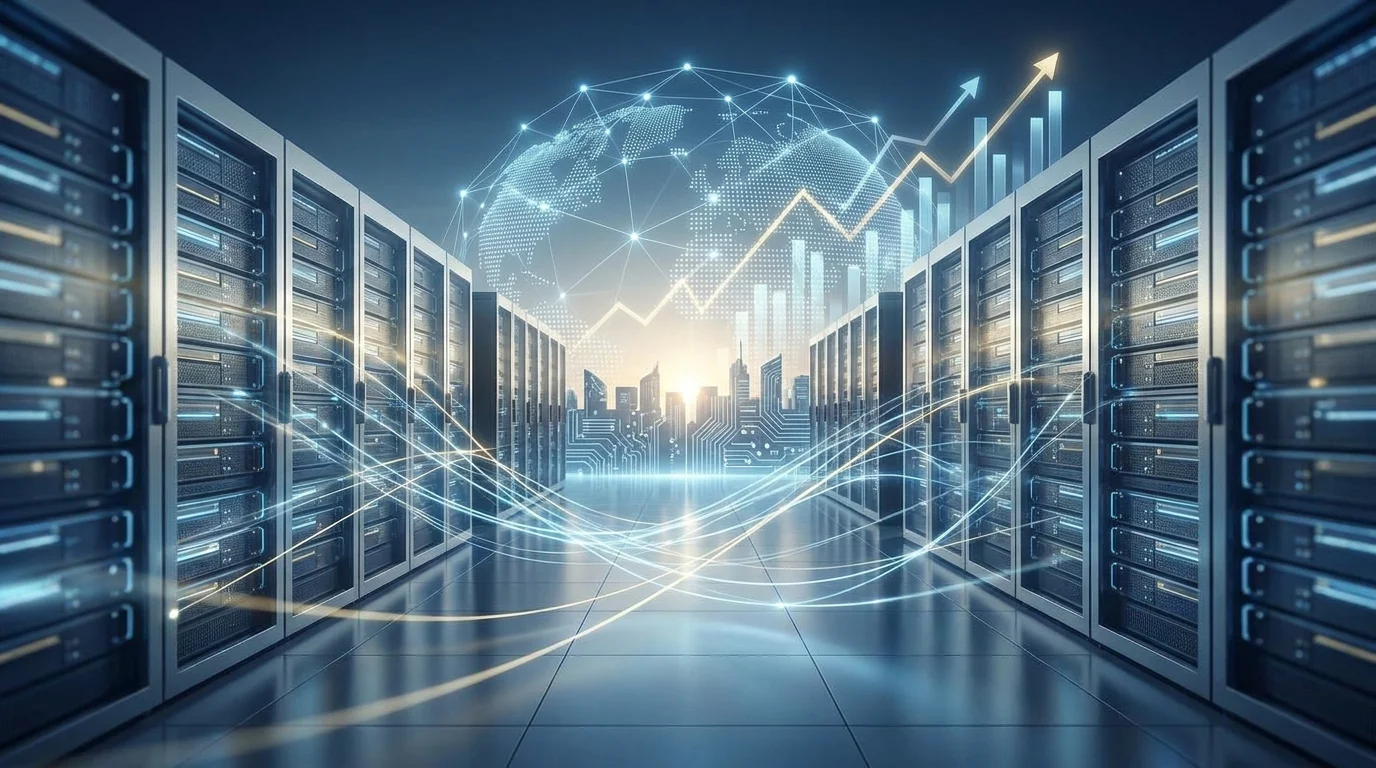
The AI infrastructure buildout is creating unprecedented strain on electrical grids. According to industry estimates, global hyperscale data center capacity dedicated to AI workloads will expand from approximately 11.5 GW in 2026 to 43.6 GW by 2031—a compound annual growth rate of roughly 30.5%. This rapid expansion is already causing power constraints in key markets. Northern Virginia, the world's largest data center market, is facing capacity limitations that are forcing operators to look to secondary markets.
The power intensity of AI workloads far exceeds traditional computing. A single AI training cluster can consume as much electricity as a small city. This has implications not only for data center operators but also for utilities, renewable energy developers, and natural gas suppliers. Some hyperscalers are signing long-term power purchase agreements with renewable energy developers to secure clean power for their facilities, while others are exploring on-site generation and battery storage solutions.
Geographic Expansion and Infrastructure Constraints
The constraints in established data center markets are driving geographic expansion into new regions. Texas, Arizona, Ohio, and emerging Midwest and Southeast markets are seeing significant data center development activity. These locations offer advantages in terms of power availability, land costs, and tax incentives. However, they also require significant investment in transmission infrastructure to support the power demands of AI facilities.
The infrastructure buildout extends beyond power to include water and fiber connectivity. AI data centers require substantial cooling capacity, and water scarcity is becoming an increasingly important consideration in site selection. Communities are increasingly pushing back against large-scale data center developments due to concerns about power usage, water consumption, environmental impact, and the strain on local infrastructure. These concerns could slow the pace of deployment and increase costs for operators.
Investment Implications: Positioning for the Supercycle
Direct Exposure to AI Infrastructure Spending
For investors seeking exposure to the AI infrastructure supercycle, the most direct plays remain the hyperscalers themselves and their key suppliers. Amazon, Microsoft, Alphabet, and Meta are investing unprecedented capital to capture the economic opportunity presented by AI. While their shares have performed well, the magnitude of their spending raises questions about near-term returns on investment. Investors must weigh the potential for continued growth against the risk of capex fatigue or disappointing monetization.
NVIDIA remains the most direct way to play AI infrastructure demand, though its premium valuation reflects high expectations. The stock trades at a forward P/E of approximately 20, suggesting that Wall Street expects earnings to increase significantly over the next fiscal year. The company's 7 billion in annual free cash flow provides substantial financial flexibility for research and development, acquisitions, and shareholder returns. However, investors must also consider risks including China export restrictions, competition from custom silicon, and the potential for hyperscaler capex to moderate.
Secondary Opportunities in the AI Supply Chain
Beyond the most obvious names, the AI infrastructure supercycle is creating opportunities in less visible parts of the supply chain. Companies providing data center infrastructure—power distribution, cooling systems, and physical security—are experiencing surging demand. Vertiv, Schneider Electric, and Eaton Corporation are all benefiting from the need to power and cool AI facilities. These companies offer exposure to the infrastructure buildout with potentially less valuation risk than the semiconductor names.
Utilities with exposure to data center demand are also worth consideration. Dominion Energy, the primary utility serving Northern Virginia's data center alley, has seen demand growth that is reshaping its capital allocation plans. Renewable energy developers with long-term power purchase agreements with hyperscalers offer another angle on the theme. NextEra Energy, the largest renewable developer in the United States, has secured substantial contracts with technology companies seeking clean power for their operations.
Risks and Challenges: What Could Derail the Supercycle
The Return on Investment Question
The most significant risk to the AI infrastructure supercycle is the possibility that the returns on these massive investments fail to materialize as quickly or as substantially as expected. Hyperscalers are spending hundreds of billions of dollars on AI infrastructure based on the assumption that demand for AI services will continue to grow exponentially. If enterprise adoption of AI tools slows, or if the monetization of AI services proves more difficult than anticipated, these investments could weigh on profitability for years.
The transition from AI training to inference workloads could also reshape the competitive landscape. Training large AI models requires massive computational resources and has driven much of the demand for NVIDIA's highest-end GPUs. However, inference—running trained models to generate responses—can often be done on less specialized, more cost-effective hardware. As the AI market matures and the mix shifts toward inference, demand for the most expensive AI accelerators could moderate.
Geopolitical and Regulatory Risks
The AI infrastructure buildout is not occurring in a vacuum. Geopolitical tensions, particularly between the United States and China, are creating risks for companies in the AI supply chain. Export controls on advanced semiconductors have already affected NVIDIA's ability to sell certain products to China, and further restrictions could impact additional markets. Rare earth elements, critical for semiconductor manufacturing, are predominantly sourced from China, creating supply chain vulnerabilities.
Regulatory scrutiny of AI is also increasing. Concerns about AI safety, data privacy, and the concentration of AI capabilities in a small number of companies could lead to regulations that affect the economics of AI infrastructure. The European Union's AI Act and similar regulatory initiatives in other jurisdictions could impose compliance costs and operational constraints on AI service providers.
Competition and Technological Disruption
While NVIDIA currently dominates the AI accelerator market, competition is intensifying. AMD's MI300X and upcoming MI400 chips represent increasingly credible alternatives, with AMD reportedly securing a 0 billion deal with Meta. Intel is investing heavily in its Gaudi line of AI accelerators. Perhaps more significantly, the hyperscalers themselves are developing custom silicon optimized for their specific workloads. Google's TPUs, Amazon's Trainium and Inferentia chips, and Microsoft's Maia processors all represent potential long-term threats to NVIDIA's market share.
Technological disruption is another risk. New approaches to AI computation, such as neuromorphic computing or quantum computing, could eventually challenge the dominance of GPU-based architectures. While these technologies are not yet mature enough to threaten NVIDIA's position, the history of technology markets suggests that dominant architectures can be displaced more quickly than incumbents expect.
Conclusion: Navigating the AI Infrastructure Opportunity
The AI investment supercycle of 2026 represents a transformative moment for the technology industry and the broader economy. The 25 billion that hyperscalers plan to spend on infrastructure this year will reshape supply chains, create new industrial leaders, and potentially deliver substantial returns for investors who position correctly. The magnitude of this spending reflects a genuine belief among technology leaders that artificial intelligence will be as transformative as the internet or mobile computing—and that the companies that control AI infrastructure will capture disproportionate value.
For investors, the challenge is to balance the opportunity against the risks. The companies most directly exposed to AI infrastructure demand—NVIDIA, the hyperscalers themselves, and key suppliers—have already seen substantial appreciation. While the fundamental demand story remains compelling, valuations reflect high expectations. Investors should consider diversifying their exposure across the AI supply chain, including less obvious beneficiaries like industrial infrastructure providers and utilities.
The AI infrastructure buildout is still in its early stages. Gartner forecasts that worldwide data center systems spending will exceed 50 billion in 2026, growing at 31.7% year-over-year—faster than any other IT segment. This spending is laying the groundwork for the next generation of AI applications, from autonomous systems to scientific discovery to personalized medicine. Whether this investment delivers the returns that investors and technology leaders expect will determine the shape of the technology landscape for decades to come.
If you are looking to capitalize on the AI infrastructure boom, consider using Intellectia's AI Stock Picker to identify the most promising opportunities in this rapidly evolving sector. Our AI-powered analysis can help you navigate the complex landscape of AI infrastructure investments and find the stocks best positioned to benefit from this historic capital expenditure cycle.