
Key Takeaway
The artificial intelligence revolution is driving what experts are calling the largest peacetime investment project in human history. By 2030, global data center capital expenditures are projected to reach between $3 trillion and $4 trillion, representing a seismic shift in how technology infrastructure is financed, built, and operated. This unprecedented build-out is being led by tech giants including Alphabet, Amazon, Meta, and Microsoft, which collectively plan to invest more than $650 billion in 2026 alone to expand their AI computing capacity.
For investors, this massive capital deployment creates multiple entry points across the value chain. From semiconductor manufacturers like Nvidia and AMD to data center REITs, utility providers, and specialized infrastructure companies, the AI data center boom is generating opportunities that extend far beyond the obvious tech names. However, the complexity of financing structures, potential supply chain bottlenecks, and the sheer scale of capital requirements also introduce risks that demand careful analysis. Understanding which companies are best positioned to capture value from this trillion-dollar trend is essential for portfolio positioning in 2026 and beyond.
The Scale of the AI Infrastructure Build-Out
Understanding the $3 Trillion Forecast
The magnitude of projected AI data center investment defies easy comparison. When Nvidia executives forecast that global data center capital expenditures will rise to $3-4 trillion by 2030, they are describing a transformation that rivals the entire industrialization cycles of the past century. To put this in perspective, this represents a multi-fold increase from current spending levels and exceeds the annual GDP of most countries on Earth.
This spending surge reflects the computational demands of modern AI systems. Training large language models and maintaining the infrastructure for AI inference requires massive clusters of specialized chips, cooling systems, power generation, and physical facilities. Each hyperscale data center can cost billions of dollars and consume electricity equivalent to a small city. As AI models grow more sophisticated and deployment scales increase, the infrastructure requirements compound exponentially rather than linearly.
The geographic distribution of this investment is equally significant. While the United States remains the primary destination for data center construction, major investments are flowing into India, the Middle East, Europe, and Southeast Asia. Microsoft's recent announcement of $17.5 billion in AI and cloud infrastructure investment across India from 2026 to 2029 exemplifies how this build-out is becoming truly global in scope.
The Hyperscaler Spending Surge
Alphabet, Amazon, Meta, and Microsoft represent the vanguard of AI infrastructure investment. These four companies alone are expected to deploy more than $650 billion in capital expenditures during 2026, with the majority directed toward AI data center capacity. This represents a historic concentration of capital allocation toward a single technological purpose.
Microsoft's capital expenditure trajectory illustrates the scale of this transformation. The company has steadily increased its infrastructure investments, with AI data centers representing an ever-larger share of total spending. Similarly, Amazon Web Services continues expanding its global footprint to meet accelerating demand for AI computing resources. Meta's investments in AI infrastructure support both its advertising business and its metaverse ambitions, while Alphabet's Google Cloud division is racing to capture enterprise AI workloads.
Oracle provides perhaps the most dramatic example of strategic prioritization. The company announced plans to cut approximately 30,000 jobs while simultaneously increasing capital expenditure from approximately $8 billion in fiscal year 2024 to over $30 billion in fiscal year 2026. This restructuring underscores how seriously traditional tech companies are taking the AI infrastructure imperative, reallocating resources aggressively to compete in the new paradigm.
Investment Opportunities Across the Value Chain
Semiconductor and Hardware Manufacturers
At the foundation of every AI data center are the specialized chips that make artificial intelligence possible. Nvidia has established itself as the dominant supplier of AI accelerators, with its GPUs becoming the industry standard for training and inference workloads. The company's data center revenue has grown exponentially, reflecting insatiable demand from cloud providers and enterprises building AI capabilities.
However, Nvidia is not the only beneficiary. AMD has emerged as a credible competitor with its MI300 series accelerators, capturing significant market share in the data center segment. Traditional CPU manufacturers like Intel are adapting their product lines to address AI workloads, while specialized chip designers are creating purpose-built accelerators for specific AI applications. The competitive dynamics in this space are intensifying, with each generation of chips bringing dramatic performance improvements.
Beyond processors, the AI data center build-out supports demand for memory chips, networking equipment, storage systems, and specialized cooling hardware. Companies supplying these components are experiencing growth tailwinds as data center construction accelerates globally. The complexity of modern AI infrastructure creates opportunities across the entire hardware stack, from the most advanced semiconductors to the physical racks and power distribution systems that house them.
Data Center REITs and Infrastructure Providers
Real estate investment trusts specializing in data centers have emerged as direct beneficiaries of the AI infrastructure boom. These companies own and operate the physical facilities that house the computing equipment powering artificial intelligence applications. As demand for data center capacity outpaces supply, rental rates have increased while vacancy rates remain near historic lows.
The capital intensity of AI data centers actually strengthens the position of established data center operators. Building a hyperscale facility requires hundreds of millions of dollars in upfront investment, specialized expertise in power and cooling systems, and long-term relationships with hyperscaler customers. These barriers to entry protect incumbent players while creating opportunities for expansion.
Specialized infrastructure companies are also capturing value from the AI boom. Power generation and distribution systems, cooling technologies, and data center construction services are all experiencing increased demand. Some companies are investing nearly 60% of their revenue into technology and infrastructure to position for AI data center opportunities, accepting near-term losses in pursuit of long-term market positioning.
Energy and Utility Companies
AI data centers are extraordinarily power-hungry. A single large facility can consume hundreds of megawatts of electricity, and the aggregate demand from the projected build-out represents a significant percentage of total global electricity consumption. This creates direct opportunities for utility companies, renewable energy providers, and alternative power generation technologies.
Bloom Energy and other specialized energy providers have established partnerships with major technology companies to supply power for data center operations. These relationships can transform relatively unknown companies into essential infrastructure providers for the AI economy. As data center operators seek to meet sustainability commitments while scaling capacity, demand for clean energy solutions is accelerating investment in solar, wind, and next-generation nuclear technologies.
The interconnection between AI infrastructure and energy markets is bidirectional. While data centers drive demand for power, they also create opportunities for grid stabilization services and energy storage applications. Companies that can provide reliable, sustainable, and cost-effective power solutions for AI data centers are positioned to capture significant value as the build-out continues.
Financing Structures and Risk Considerations
The Off-Balance-Sheet Financing Challenge
One of the most significant but underappreciated aspects of the AI data center boom is how these massive investments are being financed. Legal experts who worked on structured finance litigation following the 2008 financial crisis have raised concerns about the transparency of current financing arrangements. Much of the capital flowing into AI infrastructure is being deployed through complex off-balance-sheet structures that make it difficult to assess true risk exposure.
The scale of investment is genuinely astronomical, with trillions of dollars being deployed across multiple financing mechanisms. Some arrangements involve GPU-backed debt instruments, where the specialized chips themselves serve as collateral for loans. As repayment schedules begin in 2026, there is legitimate concern about what happens if GPU values decline or if AI demand growth slows unexpectedly.
For investors, understanding these financing structures is essential for risk assessment. Companies with significant off-balance-sheet obligations may have different risk profiles than their headline financial statements suggest. The complexity of these arrangements creates potential for systemic risks that could cascade through financial markets if conditions change rapidly.
Supply Chain and Construction Bottlenecks
Despite the unprecedented investment commitments, the AI data center build-out faces significant practical constraints. Approximately half of planned U.S. data center builds have been delayed or canceled due to shortages of power infrastructure and critical components from China. These bottlenecks highlight the physical reality that capital alone cannot instantly create new capacity.
Power infrastructure represents perhaps the most significant constraint. Building new transmission lines, substations, and generation capacity requires regulatory approvals, environmental reviews, and years of construction time. In many desirable locations, the local grid simply cannot support additional large-scale data center development. This is forcing companies to seek alternative locations or invest in dedicated power generation facilities.
The specialized equipment required for AI data centers also faces supply constraints. Advanced cooling systems, high-capacity networking equipment, and the specialized chips themselves are all in short supply relative to demand. These constraints may limit how quickly the industry can scale to meet projected capacity needs, potentially affecting the returns on committed capital.
Portfolio Positioning for the AI Infrastructure Boom
Direct Exposure Through Tech Giants
For investors seeking exposure to the AI data center investment theme, the most straightforward approach is through the hyperscalers themselves. Microsoft, Amazon, Alphabet, and Meta are all deploying massive capital into AI infrastructure while generating substantial cash flows from their existing businesses. These companies offer diversified exposure to AI growth while maintaining business models that can support continued investment.
However, this approach comes with caveats. The scale of capital deployment is so large that it may pressure near-term free cash flow and returns on invested capital. Additionally, these companies face intense competition for AI talent, regulatory scrutiny, and the ever-present risk that technological shifts could render current investments obsolete. Investors must weigh the growth potential against these execution risks.
The semiconductor suppliers offer more concentrated exposure to AI infrastructure growth. Nvidia and AMD have both demonstrated explosive revenue growth driven by data center demand. These companies trade at premium valuations that reflect high growth expectations, meaning any disappointment in execution or demand could result in significant share price volatility.
Infrastructure and Ancillary Plays
Data center REITs provide exposure to the physical infrastructure supporting AI computing with potentially more stable cash flows than pure technology plays. These companies typically operate under long-term leases with creditworthy tenants, generating predictable rental income streams. The supply-demand imbalance in data center capacity supports pricing power and occupancy rates.
For investors seeking differentiation, specialized infrastructure companies offer exposure to specific aspects of the AI build-out. Power generation and distribution equipment manufacturers, cooling system providers, and data center construction companies all stand to benefit from continued investment. These companies may offer more attractive valuations than the headline tech names while still capturing significant upside from the infrastructure boom.
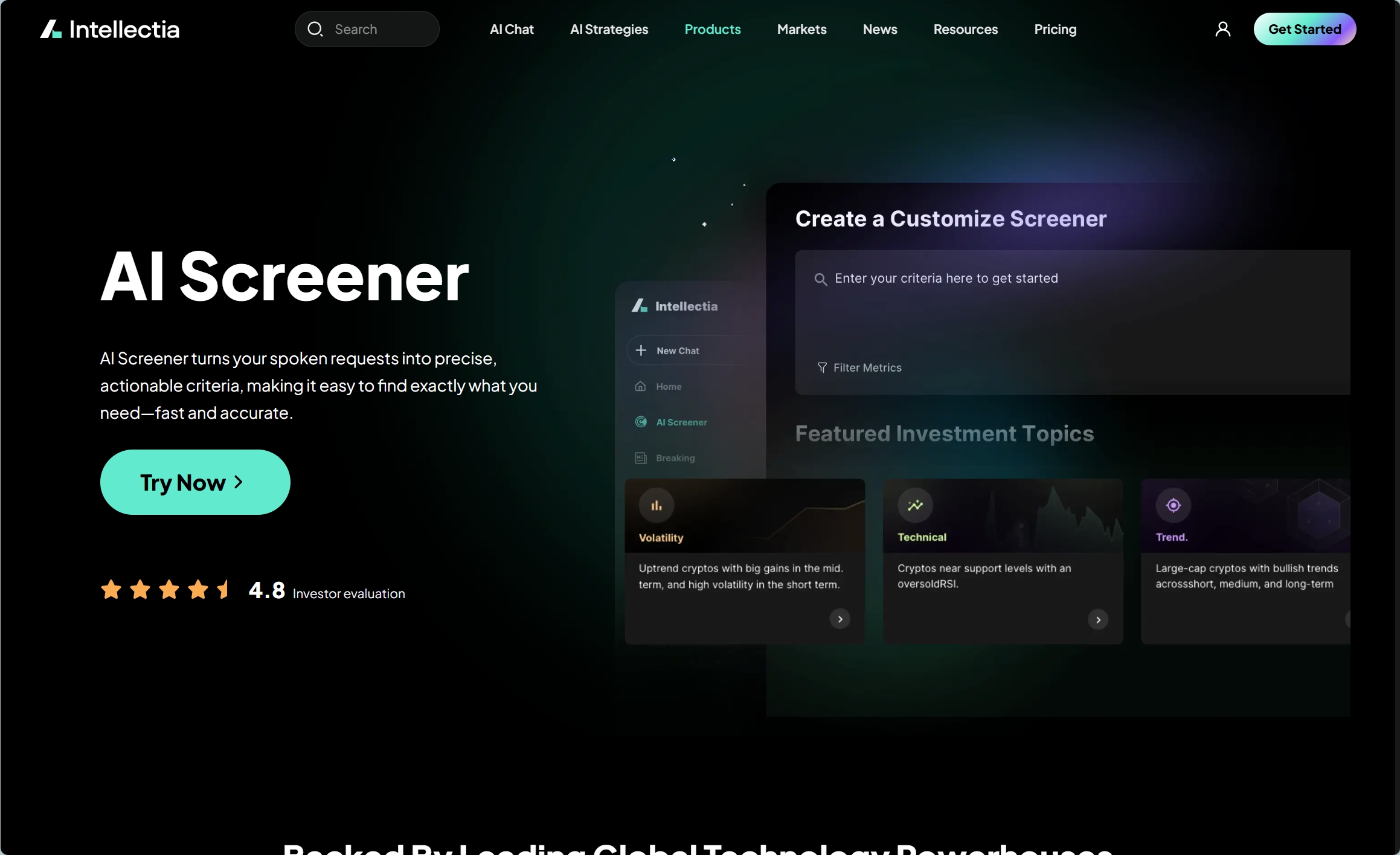
Looking to identify the best-positioned companies for the AI infrastructure boom? Intellectia's AI-powered stock screener helps you filter and analyze stocks across the data center value chain, from semiconductors to REITs to utility providers. Our platform identifies companies with strong fundamentals and exposure to high-growth AI infrastructure trends.
Diversification and Risk Management
Given the complexity and scale of the AI data center investment theme, diversification across multiple exposure points makes sense for most portfolios. Rather than concentrating in a single company or subsector, investors might consider allocations across hyperscalers, semiconductor manufacturers, data center operators, and infrastructure providers.
The cyclical nature of technology investment and the potential for supply chain disruptions or demand shifts suggest maintaining some portfolio flexibility. While the long-term trajectory of AI infrastructure investment appears strongly positive, the path may include periods of volatility as the market digests rapid changes in supply, demand, and competitive dynamics.
Risk management also requires attention to valuation levels. Many companies benefiting from AI data center demand trade at elevated multiples that assume continued growth acceleration. Investors should ensure their portfolio allocations reflect not just the growth potential but also the downside risks if growth slows or competitive dynamics shift.
The Global Dimension of AI Infrastructure
International Investment Flows
While the United States remains the epicenter of AI data center investment, the build-out is increasingly global in scope. Microsoft's $17.5 billion commitment to India represents just one example of how major technology companies are distributing AI infrastructure across multiple continents. This geographic diversification reflects both risk management considerations and the need to locate computing capacity closer to end users.
International data center development creates opportunities for local construction companies, utility providers, and real estate developers. It also raises complex regulatory and geopolitical considerations, as governments seek to ensure domestic access to AI computing resources while managing energy consumption and data sovereignty concerns. The countries and regions that successfully attract AI data center investment may gain significant economic advantages in the emerging AI economy.
The global distribution of AI infrastructure also affects competitive dynamics among technology companies. Access to cost-effective power, favorable regulatory environments, and skilled construction labor can provide meaningful advantages in the race to build AI capacity. Companies with established presences in attractive international markets may have deployment advantages over competitors concentrated in higher-cost locations.
Geopolitical and Regulatory Considerations
The strategic importance of AI infrastructure has not escaped the attention of policymakers. Export controls on advanced semiconductors, data localization requirements, and national security reviews of foreign investment all affect how and where AI data centers can be built. These regulatory considerations add complexity to investment planning and may favor established players with regulatory expertise over new entrants.
Energy policy represents another significant variable. As data center power consumption grows, governments are increasingly focused on ensuring grid stability and managing environmental impacts. Carbon emission regulations, renewable energy mandates, and electricity pricing policies all affect the economics of data center operations and development. Companies that proactively address these considerations may enjoy regulatory advantages and stronger community relationships.
Want to stay ahead of regulatory developments affecting AI infrastructure stocks? Sign up for Intellectia to receive AI-powered analysis of policy changes and their investment implications. Our platform monitors regulatory filings, news flows, and market data to identify risks and opportunities before they become widely recognized.
Looking Ahead: The Future of AI Infrastructure
Technological Evolution and Investment Implications
The current wave of AI data center investment is built on specific technological assumptions about how artificial intelligence will be developed and deployed. However, the field is evolving rapidly, and breakthroughs in model efficiency, chip architecture, or computing paradigms could significantly alter infrastructure requirements. Investors must remain attentive to technological developments that could affect the returns on trillions of dollars of committed capital.
Some experts believe that more efficient AI models could reduce the computational intensity of AI applications, potentially moderating demand for data center capacity. Others anticipate that AI workloads will continue growing exponentially, requiring sustained infrastructure investment for decades. The truth likely lies somewhere between these extremes, with efficiency gains partially offset by demand growth as AI becomes more deeply integrated into economic activity.
The transition from training-focused to inference-focused AI workloads may also shift infrastructure requirements. While training large models requires massive concentrated computing power, deploying these models for practical applications may favor distributed edge computing architectures. Companies that anticipate and adapt to these shifts may capture disproportionate value from continued AI investment.
Sustainability and the Path Forward
The environmental impact of AI data centers has become a significant concern for both investors and society. The energy consumption of AI infrastructure rivals that of small countries, and much of that power currently comes from carbon-emitting sources. Addressing these concerns is not merely a matter of corporate responsibility but also a business imperative as customers and regulators demand sustainable operations.
Leading technology companies have made substantial commitments to renewable energy and carbon neutrality. These commitments are driving investment in solar, wind, and next-generation nuclear technologies specifically sized for data center applications. Companies that successfully decarbonize their AI infrastructure may enjoy cost advantages, regulatory benefits, and stronger customer relationships.
The sustainability challenge also creates opportunities for specialized technology providers. Advanced cooling systems, energy-efficient chip designs, and AI-optimized power management all address critical needs in the industry. Companies developing these solutions may capture significant value as the industry prioritizes environmental performance alongside computational capability.
Conclusion
The AI data center investment boom represents one of the most significant capital deployment cycles in economic history. With projections of $3-4 trillion in global investment by 2030, this build-out is reshaping technology markets, energy systems, and infrastructure industries worldwide. The opportunities for investors span the entire value chain, from semiconductor manufacturers and hyperscale technology companies to data center REITs, utility providers, and specialized infrastructure suppliers.
However, the scale and complexity of this transformation also introduce significant risks. Financing structures that lack transparency, supply chain constraints, regulatory uncertainties, and the possibility of technological disruption all require careful consideration. Investors who understand these dynamics and position thoughtfully across multiple exposure points are best positioned to capture value while managing risk.
As AI continues to transform every aspect of the economy, the infrastructure supporting these capabilities will remain a critical area of investment and innovation. The companies that successfully navigate this transition will likely become the foundational enterprises of the next era of technological progress. For investors willing to do the work of understanding this complex landscape, the AI data center boom offers opportunities for substantial returns alongside meaningful participation in one of the defining technological shifts of our time.
Ready to build your AI infrastructure investment strategy? Get started with Intellectia's AI stock picker to identify the companies best positioned for the data center boom. Our AI-powered analysis evaluates fundamentals, growth prospects, and valuation metrics across the entire AI infrastructure value chain, helping you make informed investment decisions in this rapidly evolving sector.