
Key Takeaway
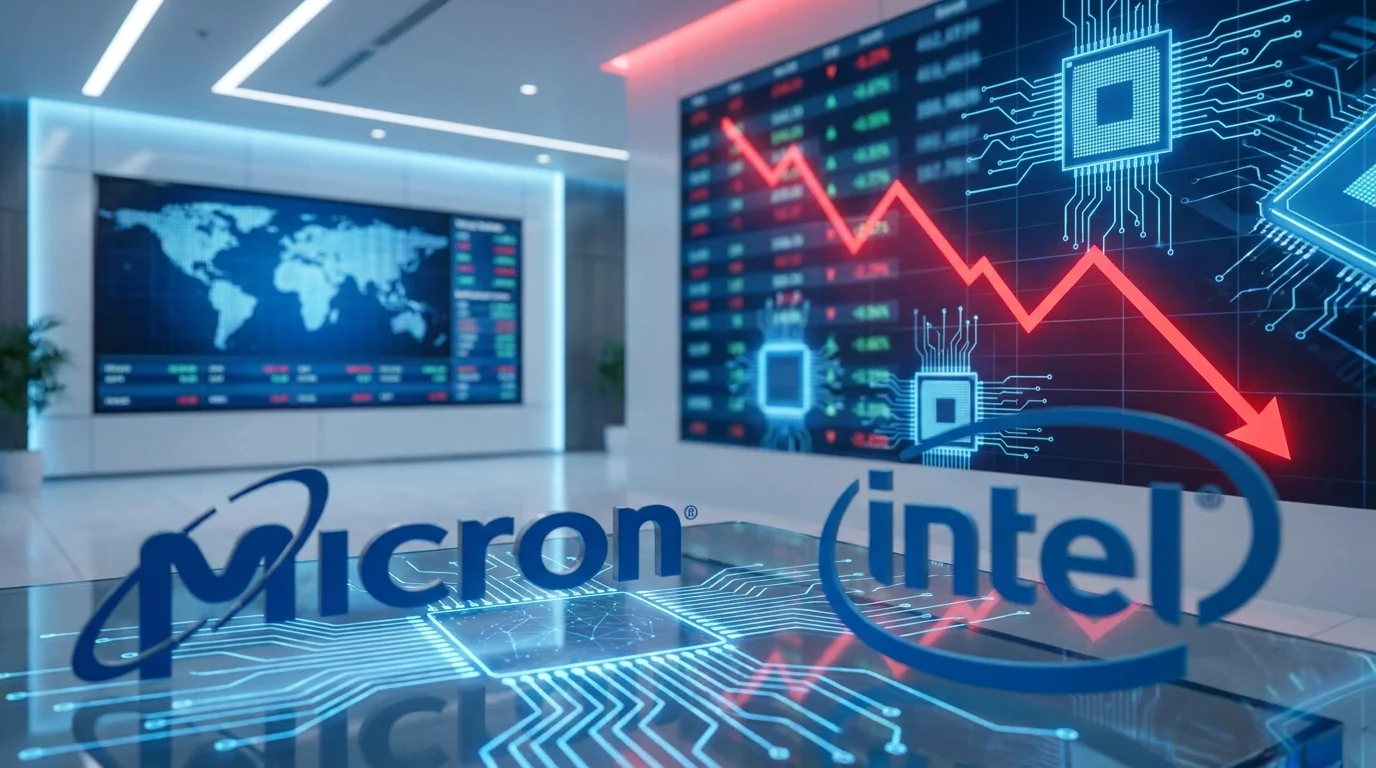
The semiconductor sector experienced a dramatic reversal in early July 2026 as AI chip stocks plunged amid mounting valuation concerns. Micron Technology led the decline with a staggering 13% drop, erasing approximately $138 billion in market value in a single trading session. Intel and Advanced Micro Devices followed suit, falling 9% and 7% respectively, while the VanEck Semiconductor ETF (SMH) shed 5% after posting a record 71% gain in the second quarter.
This sharp selloff represents a critical inflection point for the AI-driven semiconductor boom that has captivated investors since OpenAI's ChatGPT launch in late 2022. The catalysts behind this reversal are multifaceted: reports of SK Hynix slowing its high-bandwidth memory (HBM) production expansion, growing skepticism about whether massive AI infrastructure investments will generate commensurate returns, and the Federal Reserve's increasingly hawkish stance under new Chairman Kevin Warsh. For investors who have ridden the AI wave to substantial gains, the question now is whether this represents a healthy correction or the beginning of a more profound reassessment of AI chip valuations.
The timing of this selloff is particularly noteworthy as it coincides with the start of the third quarter, traditionally a period when institutional investors rebalance portfolios and reassess sector allocations. The concentration of selling pressure in chip stocks that had delivered extraordinary returns suggests profit-taking may have triggered a broader reassessment of risk-reward profiles in the sector.

The Anatomy of the Semiconductor Selloff
Memory Chip Concerns Trigger Global Rout
The semiconductor selloff originated in Asia before cascading through global markets. South Korea's Kospi Composite index plummeted 10% intraday, triggering circuit breakers, as SK Hynix and Samsung Electronics each plunged approximately 12%. The trigger was a report suggesting SK Hynix plans to slow the expansion of its high-bandwidth memory (HBM) production and potentially shift focus toward lower-cost commodity DRAM products.
This development carries significant implications for the AI ecosystem. HBM is a critical component in advanced AI chips, including Nvidia's market-leading AI processors. Any slowdown in HBM production expansion raises questions about the supply chain's ability to meet the explosive demand growth that has underpinned bullish valuations across the semiconductor sector. The fact that SK Hynix, one of the world's leading memory manufacturers, is considering a strategic pivot suggests industry insiders may be seeing demand signals that conflict with the optimistic projections priced into chip stocks.
The ripple effects were immediate and severe. Japan's Nikkei 225 dropped 3.6%, while Hong Kong's Hang Seng declined 1.8%. When U.S. markets opened, the selling pressure continued unabated. The tech-heavy Nasdaq Composite fell 2.2%, while the S&P 500 lost 1.5%, demonstrating how semiconductor weakness can drag broader market indices lower given the sector's substantial weighting in benchmark indexes.
Valuation Reality Check
The magnitude of gains preceding this correction provides essential context for understanding current valuation concerns. Micron's share price had surged an extraordinary 884% over the past year, pushing its market capitalization above the $1 trillion mark. This meteoric rise was driven by investor enthusiasm for AI-related memory demand and the company's positioning as a key supplier to the burgeoning AI infrastructure buildout.
However, such parabolic price movements inevitably create vulnerability to sentiment shifts. When stocks discount years of optimistic growth assumptions, even minor cracks in the bullish narrative can trigger substantial price adjustments. The current selloff appears to represent precisely such a reassessment, as investors grapple with whether the extraordinary capital expenditures flowing into AI infrastructure will generate returns sufficient to justify current valuations.
Hyperscalers including Amazon, Google, Microsoft, and Meta have committed hundreds of billions of dollars collectively to expanding their AI infrastructure. This spending has created a revenue windfall for semiconductor companies, but investors are increasingly questioning the timeline and magnitude of returns these hyperscalers will realize from their massive investments. If AI monetization progresses more slowly than anticipated, the virtuous cycle of demand that has driven chip stocks higher could face significant headwinds.
Federal Reserve Policy Adds Pressure
Kevin Warsh's Hawkish Tilt
The semiconductor selloff occurs against a backdrop of shifting monetary policy expectations. Federal Reserve Chairman Kevin Warsh, who assumed leadership in May 2026, has signaled a markedly different approach from his predecessors. At his first FOMC meeting in June, Warsh maintained the federal funds rate at 3.50% to 3.75% but introduced significant changes to the Fed's communication strategy and policy outlook.
Most notably, the Fed's quarterly projections revealed that nine of eighteen policymakers now support higher rates this year, with six anticipating two or more quarter-point increases. This represents a dramatic shift from March, when no policymakers penciled in hikes and the committee collectively forecast one rate cut in 2026. The change reflects heightened concerns about persistent inflation, which has accelerated to a three-year high of 4.2% amid elevated energy costs.
Warsh has also introduced five new task forces focused on monetary policy and central bank operations, supported shorter policy statements, and suggested the Fed may reduce its emphasis on forward guidance. Perhaps most significantly, he chose not to submit his own forecast in the dot plot, signaling a preference for data-dependent decision-making rather than long-term public commitments.
Interest Rate Sensitivity
Higher interest rates pose particular challenges for growth-oriented technology stocks whose valuations depend heavily on future earnings expectations. The 10-year Treasury yield, which influences borrowing costs across the economy, recently traded around 4.48%, up from 4.38% just days earlier. This upward trajectory in yields increases the discount rate applied to future cash flows, mechanically reducing the present value of growth companies' expected earnings.
For semiconductor stocks that have traded at elevated multiples based on optimistic long-term AI demand projections, this repricing dynamic creates substantial vulnerability. The combination of valuation concerns specific to the AI sector and broader monetary policy headwinds has created a challenging environment that may persist until investors gain greater clarity on both fronts.
Company-Specific Developments
Micron's Critical Juncture
Micron Technology finds itself at the center of the storm, with its stock experiencing the most severe decline among major chipmakers. The company's exposure to both traditional memory markets and AI-specific HBM products makes it particularly sensitive to shifts in investor sentiment regarding AI infrastructure spending. The reported slowdown in SK Hynix's HBM expansion plans directly impacts Micron's competitive positioning and market opportunity assessment.
Investors are closely watching Micron's upcoming earnings report for guidance on AI memory demand trends and the company's strategic response to evolving market conditions. Options markets are pricing in substantial volatility expectations, with implied moves suggesting traders anticipate significant price swings following the earnings release. The company's commentary on HBM production plans, pricing trends, and customer demand will be scrutinized for clues about the sector's trajectory.
Intel's Ongoing Transformation
Intel's 9% decline reflects both sector-wide pressures and company-specific challenges as the semiconductor giant executes its ambitious turnaround strategy. Under CEO Pat Gelsinger, Intel has pursued an aggressive capital expenditure program aimed at regaining manufacturing leadership and capturing share in the foundry market. However, this transformation requires massive investments that pressure near-term profitability while the company works to execute its technological roadmap.
The AI chip market represents both an opportunity and a challenge for Intel. While the company has made progress with its Gaudi AI accelerators and established partnerships with major cloud providers, it remains a distant competitor to Nvidia in the AI training and inference markets. The current valuation concerns across the sector may actually benefit Intel's relative positioning if investors shift preference toward more conservatively valued semiconductor names with diversified revenue streams.
AMD's Competitive Positioning
Advanced Micro Devices has emerged as a credible challenger to Nvidia in certain AI workloads, with its MI300 series accelerators gaining traction among hyperscale customers. However, the company's 7% decline demonstrates that even strong competitive positioning cannot insulate stocks from broad sector repricing when valuation concerns take hold.
AMD's strategic partnerships with Microsoft and Meta for AI infrastructure deployments have driven significant revenue growth, with data center segment sales expanding rapidly. The company's ability to offer competitive performance at potentially lower price points than Nvidia has attracted customers seeking to diversify their AI chip suppliers and reduce dependency on a single vendor. Nevertheless, AMD's valuation had risen substantially alongside the broader AI trade, creating vulnerability to the current correction.
Meta's Cloud Computing Ambitions
Adding another layer of complexity to the sector outlook, reports emerged that Meta Platforms is building a cloud computing business to sell AI computing power to external customers. This development, which drove Meta shares up nearly 9%, introduces potential competitive dynamics that could reshape the AI infrastructure landscape.
If Meta successfully monetizes its substantial AI infrastructure investments through cloud services, it could create additional demand for AI chips while also potentially contributing to supply constraints if hyperscalers compete more aggressively for limited semiconductor supply. Conversely, if Meta's cloud ambitions signal that hyperscalers are seeking new revenue streams to justify their massive AI capital expenditures, it could reinforce concerns about the pace of AI monetization across the industry.

Investment Implications and Strategic Considerations
Navigating Volatility
The current semiconductor volatility presents both risks and opportunities for investors. For those with substantial gains from the AI trade, the correction offers a moment to reassess position sizing and risk tolerance. The sector's extraordinary run had created significant concentration risk for many portfolios, and the current selloff may prompt prudent rebalancing.
For investors seeking exposure to AI-driven growth, the correction may eventually create more attractive entry points. However, timing such entries requires careful consideration of the fundamental factors driving the selloff. If the concerns about AI infrastructure returns and memory chip demand prove well-founded, valuations could have further room to adjust before reaching attractive levels.
Differentiating Winners and Losers
Not all semiconductor companies face identical prospects in the evolving AI landscape. Companies with diversified revenue streams beyond AI, such as those serving automotive, industrial, and consumer markets, may prove more resilient if AI-specific demand growth moderates. Similarly, companies with strong positions in the foundry and manufacturing segments could benefit from continued capacity expansion even if AI chip demand growth slows.
The current market environment may favor a more selective approach to semiconductor investing, focusing on companies with demonstrated profitability, reasonable valuations, and sustainable competitive advantages rather than speculative plays on AI demand growth. As the sector matures, fundamentals such as free cash flow generation, return on invested capital, and balance sheet strength may regain importance relative to growth narratives.
Conclusion
The July 2026 semiconductor selloff represents a significant inflection point for the AI-driven chip sector. After years of extraordinary gains fueled by optimism about artificial intelligence demand, investors are reassessing whether valuations have run ahead of fundamentals. The combination of specific concerns about HBM production plans, broader questions about AI infrastructure returns, and a less accommodative Federal Reserve has created a challenging environment for chip stocks.
For investors, the key question is whether this correction represents a buying opportunity in a secular growth trend or a more fundamental repricing of AI-related growth expectations. The answer will likely depend on how quickly AI applications generate meaningful revenue for hyperscalers and whether semiconductor companies can maintain pricing power and margins as competition intensifies and supply expands.
Those seeking to navigate this volatile environment can benefit from sophisticated analytical tools that help identify value opportunities and manage risk. Intellectia.AI's AI-powered stock screener provides real-time analysis of valuation metrics, technical indicators, and fundamental data to help investors make informed decisions in rapidly changing markets. Additionally, the platform's AI stock picker leverages machine learning to identify potential winners across market cycles, helping investors stay ahead of sector rotations and emerging trends.
As the semiconductor sector works through this period of uncertainty, maintaining a disciplined approach to risk management and valuation analysis will be essential for preserving capital and positioning for the next phase of the AI revolution.