xAI Implements New Restrictions on Grok to Prevent Explicit Image Generation
Written by Emily J. Thompson, Senior Investment Analyst
Updated: Jan 15 2026
0mins
Should l Buy TSLA?
Source: seekingalpha
- Technological Update: xAI announced new technological measures for its AI chatbot Grok, prohibiting the generation of images of real people in revealing clothing such as bikinis, ensuring that all users, including paid subscribers, are subject to this restriction to mitigate abuse risks and enhance compliance.
- Paid User Limitation: The image creation and editing features of the Grok account are now limited to paid users, a strategy aimed at ensuring accountability for abusers while improving the platform's content management capabilities to prevent misconduct.
- Geoblocking Measures: xAI has implemented geoblocking to restrict all users from generating images of real people in bikinis and underwear in jurisdictions where it is illegal, responding to global outrage over non-consensual deepfake images and demonstrating the company's commitment to legal compliance.
- Legal Compliance Commitment: Musk emphasized that Grok's operating principle is to obey the laws of each country, and any requests to generate illegal content will be refused, which not only protects users' legal rights but also provides legal safeguards for the company's operations globally.
Trade with 70% Backtested Accuracy
Stop guessing "Should I Buy TSLA?" and start using high-conviction signals backed by rigorous historical data.
Sign up today to access powerful investing tools and make smarter, data-driven decisions.
Analyst Views on TSLA
Wall Street analysts forecast TSLA stock price to fall over the next 12 months. According to Wall Street analysts, the average 1-year price target for TSLA is 401.93 USD with a low forecast of 25.28 USD and a high forecast of 600.00 USD. However, analyst price targets are subjective and often lag stock prices, so investors should focus on the objective reasons behind analyst rating changes, which better reflect the company's fundamentals.
30 Analyst Rating
12 Buy
11 Hold
7 Sell
Hold
Current: 421.810

Low
25.28
Averages
401.93
High
600.00
Current: 421.810
Low
25.28
Averages
401.93
High
600.00
About TSLA
Tesla, Inc. designs, develops, manufactures, sells and leases high-performance fully electric vehicles and energy generation and storage systems, and offers services related to its products. Its segments include automotive, and energy generation and storage. The automotive segment includes the design, development, manufacturing, sales and leasing of high-performance fully electric vehicles, and sales of automotive regulatory credits. It also includes sales of used vehicles, non-warranty maintenance services and collisions, part sales, paid supercharging, insurance services revenue and retail merchandise sales. The energy generation and storage segment include the design, manufacture, installation, sales and leasing of solar energy generation and energy storage products and related services and sales of solar energy systems incentives. Its consumer vehicles include the Model 3, Y, S, X and Cybertruck. Its lithium-ion battery energy storage products include Powerwall and Megapack.
About the author

Emily J. Thompson
Emily J. Thompson, a Chartered Financial Analyst (CFA) with 12 years in investment research, graduated with honors from the Wharton School. Specializing in industrial and technology stocks, she provides in-depth analysis for Intellectia’s earnings and market brief reports.
Tesla Reports 2025 Results Amid Declining EV Sales and Future Prospects

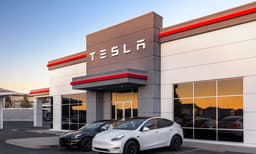
- Declining EV Sales: Tesla's electric vehicle sales fell to 1.63 million in 2025, a 9% drop year-over-year, raising alarms for investors as EV sales constitute 73% of total revenue, indicating potential financial strain ahead.
- Increased Competitive Pressure: The company faces fierce competition from legacy automakers and China's BYD, which saw a 228% sales increase in Europe while Tesla's sales plummeted by 37%, highlighting a significant loss of market share.
- Strategic Shift: To free up manufacturing capacity, Tesla will discontinue the Model S and Model X, focusing instead on the development of the humanoid robot Optimus, which Musk believes could generate $10 trillion in revenue over the long term, reflecting the company's commitment to future technologies.
- Autonomous Taxi Prospects: Tesla plans to launch the Cybercab autonomous taxi in 2026, and while it has yet to receive regulatory approval, successful deployment could create new revenue streams to offset declining EV sales, emphasizing the need for timely execution.
See More

Lucid Group Faces Deepening Financial Crisis
- Weak Revenue Growth: Lucid Group reported $337 million in revenue for Q3 2025, a 68.5% increase from Q3 2024, but new vehicle deliveries only rose by 47% year-over-year, indicating insufficient market demand to sustain growth.
- Cash Flow Crisis: The company burned through nearly half of its cash reserves in 2025, starting the year with over $5 billion and dropping to $2.9 billion by September 30, coupled with $2.8 billion in debt, raising concerns about future operations.
- Out-of-Control Costs: Despite a $136 million revenue increase, costs surged by $257.7 million, leading to only a slight reduction in net losses from $992.5 million in Q3 2024 to $978.4 million in Q3 2025, highlighting ongoing profitability issues.
- Competitive Market Pressure: Lucid's Gravity SUV is priced higher than the Tesla Model Y, and the lack of a competitor to the Model 3 diminishes its appeal to price-sensitive consumers, resulting in a bleak outlook for future sales.
See More

Lucid Group's Financial Troubles Raise Concerns
- Weak Revenue Growth: In Q3 2025, Lucid Group reported revenue of $337 million, a 68.5% increase year-over-year; however, rising costs of $257.7 million offset this growth, indicating ongoing deterioration in profitability.
- Cash Flow Crisis: As of September 30, 2025, Lucid's cash reserves plummeted from over $5 billion at the start of the year to $2.9 billion, nearly halving, while total debt reached $2.8 billion, highlighting severe liquidity risks.
- Deepening Losses: Although Lucid's net loss decreased from $992.5 million in Q3 2024 to $978.4 million in Q3 2025, its free cash flow losses worsened from -$622.5 million to -$955.5 million, demonstrating the company's inability to control costs effectively.
- Competitive Market Pressure: Lucid's Gravity SUV is priced higher than Tesla's Model Y, and while the Air is cheaper than the Model S, it lacks a competitor to the Model 3, leading to decreased consumer interest and exacerbating sales challenges.
See More

Musk: College Skills May Not Be Necessary in Future Due to AI Revolution

- Necessity of College Education: Musk stated on a podcast that the skills taught in college may become unnecessary due to the AI revolution, although he acknowledges that college can help develop social skills.
- Future of Skills: He mentioned that many skills might become 'useless' with the rise of AI and encouraged students to learn broadly in college to adapt to future changes.
- Impact of AI on Employment: According to workforce consulting firm Challenger Gray & Christmas, approximately 55,000 layoffs last year were attributed to AI, highlighting the profound impact of technology on the labor market.
- Potential Risks of AI: Musk warned that artificial intelligence could be destructive, especially if humans force it to accept lies, emphasizing the importance of ensuring AI seeks truth to avoid negative outcomes.
See More

SpaceX Valued at $1.25 Trillion Following xAI Merger

- Valuation Shift: Following the merger with xAI, SpaceX is valued at $1.25 trillion, only 26% below Tesla's $1.58 trillion market cap, indicating a significant shift in Musk's wealth sources.
- Equity Structure: Musk holds a 43% stake in SpaceX compared to just 13% in Tesla, meaning SpaceX constitutes over half of his paper wealth, which has ballooned to over $852 billion.
- Market Challenges: Despite SpaceX's leading position in the orbital launch services market, it faces challenges including the hefty infrastructure costs of xAI and legal risks that could impact profitability and investor confidence.
- Future Outlook: SpaceX is reportedly pursuing an IPO, but it must address regulatory issues and capital needs associated with xAI to ensure its high public market valuation can be sustained.
See More

2026 Tech Investment Outlook: AI and Market Trends

- Optimistic Tech Market: Denny Fish emphasizes that being overweight in tech since 2005 has been crucial for investors, as the ongoing developments in cloud, social, and mobile technologies have laid the groundwork for AI, which is expected to continue driving market growth.
- Strong AI Infrastructure: The AI semiconductor ecosystem has shown impressive performance over the past three years, with many stocks rising without significant increases in their multiples, indicating robust fundamentals and earnings, suggesting investors should focus on this sector's sustained health.
- Software Sector Divergence: While large tech companies continue to show healthy earnings growth, the software industry faces challenges due to a lack of accelerating fundamentals and perceived threats from AI disruption, leading to greater performance dispersion within the sector.
- Investment Strategy Adjustments: Fish notes that Janus Henderson's portfolio will adjust based on different phases of AI adoption, focusing on companies that are expected to benefit in the coming years, ensuring resilience and flexibility in their investment approach.
See More
Tesla Reports 2025 Results Amid Declining EV Sales and Future Prospects
- Declining EV Sales: Tesla's electric vehicle sales fell to 1.63 million in 2025, a 9% drop year-over-year, raising alarms for investors as EV sales constitute 73% of total revenue, indicating potential financial strain ahead.
- Increased Competitive Pressure: The company faces fierce competition from legacy automakers and China's BYD, which saw a 228% sales increase in Europe while Tesla's sales plummeted by 37%, highlighting a significant loss of market share.
- Strategic Shift: To free up manufacturing capacity, Tesla will discontinue the Model S and Model X, focusing instead on the development of the humanoid robot Optimus, which Musk believes could generate $10 trillion in revenue over the long term, reflecting the company's commitment to future technologies.
- Autonomous Taxi Prospects: Tesla plans to launch the Cybercab autonomous taxi in 2026, and while it has yet to receive regulatory approval, successful deployment could create new revenue streams to offset declining EV sales, emphasizing the need for timely execution.
See More
Lucid Group Faces Deepening Financial Crisis
- Weak Revenue Growth: Lucid Group reported $337 million in revenue for Q3 2025, a 68.5% increase from Q3 2024, but new vehicle deliveries only rose by 47% year-over-year, indicating insufficient market demand to sustain growth.
- Cash Flow Crisis: The company burned through nearly half of its cash reserves in 2025, starting the year with over $5 billion and dropping to $2.9 billion by September 30, coupled with $2.8 billion in debt, raising concerns about future operations.
- Out-of-Control Costs: Despite a $136 million revenue increase, costs surged by $257.7 million, leading to only a slight reduction in net losses from $992.5 million in Q3 2024 to $978.4 million in Q3 2025, highlighting ongoing profitability issues.
- Competitive Market Pressure: Lucid's Gravity SUV is priced higher than the Tesla Model Y, and the lack of a competitor to the Model 3 diminishes its appeal to price-sensitive consumers, resulting in a bleak outlook for future sales.
See More
Lucid Group's Financial Troubles Raise Concerns
- Weak Revenue Growth: In Q3 2025, Lucid Group reported revenue of $337 million, a 68.5% increase year-over-year; however, rising costs of $257.7 million offset this growth, indicating ongoing deterioration in profitability.
- Cash Flow Crisis: As of September 30, 2025, Lucid's cash reserves plummeted from over $5 billion at the start of the year to $2.9 billion, nearly halving, while total debt reached $2.8 billion, highlighting severe liquidity risks.
- Deepening Losses: Although Lucid's net loss decreased from $992.5 million in Q3 2024 to $978.4 million in Q3 2025, its free cash flow losses worsened from -$622.5 million to -$955.5 million, demonstrating the company's inability to control costs effectively.
- Competitive Market Pressure: Lucid's Gravity SUV is priced higher than Tesla's Model Y, and while the Air is cheaper than the Model S, it lacks a competitor to the Model 3, leading to decreased consumer interest and exacerbating sales challenges.
See More
Musk: College Skills May Not Be Necessary in Future Due to AI Revolution
- Necessity of College Education: Musk stated on a podcast that the skills taught in college may become unnecessary due to the AI revolution, although he acknowledges that college can help develop social skills.
- Future of Skills: He mentioned that many skills might become 'useless' with the rise of AI and encouraged students to learn broadly in college to adapt to future changes.
- Impact of AI on Employment: According to workforce consulting firm Challenger Gray & Christmas, approximately 55,000 layoffs last year were attributed to AI, highlighting the profound impact of technology on the labor market.
- Potential Risks of AI: Musk warned that artificial intelligence could be destructive, especially if humans force it to accept lies, emphasizing the importance of ensuring AI seeks truth to avoid negative outcomes.
See More
SpaceX Valued at $1.25 Trillion Following xAI Merger
- Valuation Shift: Following the merger with xAI, SpaceX is valued at $1.25 trillion, only 26% below Tesla's $1.58 trillion market cap, indicating a significant shift in Musk's wealth sources.
- Equity Structure: Musk holds a 43% stake in SpaceX compared to just 13% in Tesla, meaning SpaceX constitutes over half of his paper wealth, which has ballooned to over $852 billion.
- Market Challenges: Despite SpaceX's leading position in the orbital launch services market, it faces challenges including the hefty infrastructure costs of xAI and legal risks that could impact profitability and investor confidence.
- Future Outlook: SpaceX is reportedly pursuing an IPO, but it must address regulatory issues and capital needs associated with xAI to ensure its high public market valuation can be sustained.
See More
2026 Tech Investment Outlook: AI and Market Trends
- Optimistic Tech Market: Denny Fish emphasizes that being overweight in tech since 2005 has been crucial for investors, as the ongoing developments in cloud, social, and mobile technologies have laid the groundwork for AI, which is expected to continue driving market growth.
- Strong AI Infrastructure: The AI semiconductor ecosystem has shown impressive performance over the past three years, with many stocks rising without significant increases in their multiples, indicating robust fundamentals and earnings, suggesting investors should focus on this sector's sustained health.
- Software Sector Divergence: While large tech companies continue to show healthy earnings growth, the software industry faces challenges due to a lack of accelerating fundamentals and perceived threats from AI disruption, leading to greater performance dispersion within the sector.
- Investment Strategy Adjustments: Fish notes that Janus Henderson's portfolio will adjust based on different phases of AI adoption, focusing on companies that are expected to benefit in the coming years, ensuring resilience and flexibility in their investment approach.
See More