OpenAI and Nvidia's $100 Billion Deal Stalled
Written by Emily J. Thompson, Senior Investment Analyst
Updated: Feb 03 2026
0mins


Should l Buy NVDA?
Source: Newsfilter
- Stalled Agreement: Since the announcement of the $100 billion deal in September, negotiations between OpenAI and Nvidia have made no substantial progress, leading to investor concerns and a decline in Nvidia's market cap from a peak of $5 trillion to $4.4 trillion.
- Mutual Dependence: Despite reported friction, OpenAI relies on Nvidia's AI chips to meet its revenue growth targets, while Nvidia needs customers like OpenAI to drive sales of its expensive systems, highlighting their interdependence in the AI sector.
- Investment and Competitive Dynamics: Nvidia has shown caution in its collaboration with OpenAI, investing in other AI labs and forming partnerships with competitors like Anthropic and AMD, reflecting a strategic shift to diversify its customer base amid high concentration risks.
- Future Outlook and Challenges: OpenAI aims to include Nvidia in its upcoming funding round, yet progress on their infrastructure collaboration remains stalled, with the first phase of investment not expected to commence until the second half of 2026, indicating challenges both companies face in a rapidly evolving market.
Trade with 70% Backtested Accuracy
Stop guessing "Should I Buy NVDA?" and start using high-conviction signals backed by rigorous historical data.
Sign up today to access powerful investing tools and make smarter, data-driven decisions.
Analyst Views on NVDA
Wall Street analysts forecast NVDA stock price to rise
41 Analyst Rating
39 Buy
1 Hold
1 Sell
Strong Buy
Current: 175.750

Low
200.00
Averages
264.97
High
352.00
Current: 175.750
Low
200.00
Averages
264.97
High
352.00
About NVDA
NVIDIA Corporation is an artificial intelligence (AI) infrastructure company. The Company is engaged in accelerated computing to help solve the challenging computational problems. Its segments include Compute & Networking and Graphics. The Compute & Networking segment includes its Data Center accelerated computing and networking platforms and AI solutions and software, and automotive platforms and autonomous and electric vehicle solutions, including software. The Graphics segment includes GeForce GPUs for gaming and personal computers (PCs), and Quadro/NVIDIA RTX GPUs for enterprise workstation graphics. Its technology stack includes the foundational NVIDIA CUDA development platform that runs on all NVIDIA GPUs, as well as hundreds of domain-specific software libraries, frameworks, algorithms, software development kits (SDKs), and application programming interfaces (APIs). Its platforms address four markets, which include Data Center, Gaming, Professional Visualization, and Automotive.
About the author

Emily J. Thompson
Emily J. Thompson, a Chartered Financial Analyst (CFA) with 12 years in investment research, graduated with honors from the Wharton School. Specializing in industrial and technology stocks, she provides in-depth analysis for Intellectia’s earnings and market brief reports.

Nvidia's Future Outlook Remains Bullish

- Strong Earnings Report: Nvidia reported total revenue of $215.9 billion for fiscal year 2026, marking a 65% year-over-year increase, which underscores the company's robust growth potential in the AI chip market and solidifies its market leadership.
- Surging Order Forecast: CEO Jensen Huang indicated that Nvidia expects approximately $1 trillion in purchase orders for its Blackwell and Vera Rubin chips by 2027, doubling last year's forecast of $500 billion, signaling sustained strong demand for AI chips.
- Future Revenue Expectations: Nvidia anticipates first-quarter revenue of $78 billion for fiscal year 2027, representing an almost 77% increase compared to the same period last year, reflecting strong growth potential in the Agentic AI applications sector, which will further drive demand for AI chips.
- High Market Valuation: Despite Nvidia's forward P/E ratio of 30, significantly above the average of 20.9 for the tech sector, investors believe the premium is justified given the company's outstanding financial results and its position in a rapidly growing market.
See More
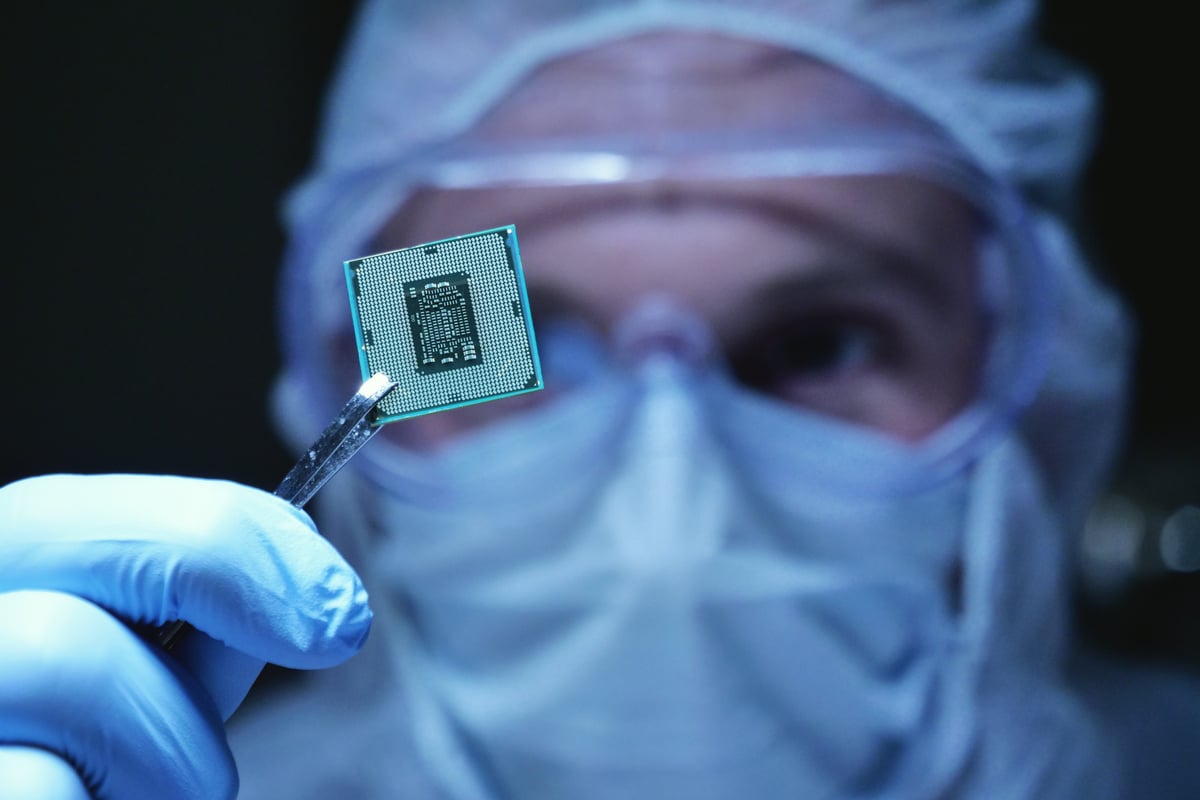
Semiconductor Stocks Lead AI Investment Surge


- Surging Market Demand: Taiwan Semiconductor expects the AI chip market to grow at a mid-to-high 50% CAGR from 2024 to 2029, planning to invest between $52 billion and $56 billion in capital expenditures in 2023 to meet rising demand, thereby solidifying its leadership in the AI sector.
- Memory Chip Outlook: Micron Technology anticipates the high-bandwidth memory market will expand from $35 billion to $100 billion between 2025 and 2028; despite price cooling due to Google's TurboQuant algorithm, the sustained demand for memory chips highlights its long-term investment value.
- Custom Chip Innovation: Broadcom focuses on designing custom AI chips, which are expected to generate over $100 billion in annual revenue by 2027, benefiting from the increasing demand for specific workloads in the AI industry, showcasing significant growth potential.
- GPU Market Leadership: Nvidia is projected to see a 71% revenue increase this year and 30% next year, with its stock trading at a forward P/E of only 20.2, close to the S&P 500's 20.4, indicating a rare investment opportunity that investors should not overlook.
See More

AI Global Summit at WMF 2026 to Feature Leading Companies
- Global Participation: The WMF 2026 event, scheduled for June 24-26 in Bologna, Italy, will feature the AI Global Summit, bringing together leading companies like NVIDIA, Anthropic, and OpenAI to discuss AI applications and governance, thereby advancing industry development.
- Policy and Investment Dialogue: According to founder Cosmano Lombardo, artificial intelligence has become a political and technological priority, and the summit aims to foster broad discussions among businesses, institutions, and the research community to drive targeted investments and clear regulations.
- Diverse Agenda Setting: The summit will include 13 thematic stages covering areas such as AI for Future, Robotics, and AI Commerce, with experts from Microsoft, LG Nova, and Google sharing insights to promote technological innovation.
- Exhibition Area Showcasing Cutting-edge Technologies: An expo area will complement the program, showcasing high-impact AI solutions from startups across over 90 countries, facilitating technology exchange and collaboration to address WMF's 14 Future Challenges.
See More

Two Under-the-Radar Dividend Kings Worth Buying


- Acquisition-Driven Growth: Northwest Natural has expanded its market presence by spending $427 million to acquire SiEnergy Natural Gas, adding over 90,000 customers in Dallas, Houston, and Austin, thereby enhancing its competitive position in the Northwest region.
- Stable Dividend Growth: With a 70-year streak of dividend increases, Northwest Natural offers a relatively high dividend yield of 3.69%, providing investors with a reliable cash flow despite competition from larger multi-state utilities.
- Strong Financial Performance: Marzetti reported $1.01 billion in revenue for Q2 of fiscal 2026, reflecting a 3.6% year-over-year increase, with earnings per share of $3.86, up 13.5% from the previous year, indicating successful brand expansion efforts.
- Debt-Free Advantage: Marzetti operates without debt, which is advantageous in the current high-interest-rate environment, and boasts a dividend yield of 2.9%, having raised its dividend by 5% in 2025, showcasing its financial stability and market competitiveness.
See More

Semiconductor Sector Seizes Growth Opportunities Amid AI Demand
- Surging Market Demand: Taiwan Semiconductor expects the AI chip market to grow at a mid- to high-50% CAGR from 2024 to 2029, planning to invest $52 billion to $56 billion in capital expenditures in 2023, thereby solidifying its leadership position in the AI competition.
- Memory Chip Demand: Micron Technology anticipates the high-bandwidth memory market will expand from $35 billion to $100 billion between 2025 and 2028, and despite price cooling due to Google's TurboQuant algorithm, the strong demand for memory indicates significant investment potential in the coming years.
- Custom Chip Innovation: Broadcom is set to benefit from the skyrocketing demand for custom AI chips, with projections indicating these chips could generate over $100 billion annually by the end of 2027, highlighting Broadcom's substantial growth potential with its $68 billion annual revenue.
- GPU Market Dominance: Nvidia's revenue is projected to rise by 71% this year and 30% next year, with its stock trading at a forward P/E of only 20.2, close to the S&P 500's 20.4, indicating a rare investment opportunity that investors should not overlook.
See More

Newmont Stock Surges Nearly 12% Amid Gold Price Fluctuations

- Stock Volatility: Since the beginning of the year, gold prices have shown significant fluctuations, with Newmont (NYSE: NEM) shares rising 11.7% since last Friday's close, indicating renewed investor interest in gold and reflecting a growing demand for safe-haven assets.
- Strong Cash Flow: Newmont achieved a record free cash flow of $7.3 billion in 2025, with nearly half returned to shareholders through dividends and buybacks, demonstrating the company's financial health and ability to attract more investor attention.
- Geopolitical Impact: Gold contracts have plunged over 10% since the onset of the Iran war, yet Newmont's underlying business remains robust, suggesting that as geopolitical tensions ease, investors are likely to refocus on gold and Newmont stock.
- Future Earnings Outlook: Newmont is set to report its first-quarter results on April 23, and while macroeconomic and geopolitical factors may sway stock prices, investors should concentrate on the earnings results to seize potential investment opportunities.
See More
Nvidia's Future Outlook Remains Bullish
- Strong Earnings Report: Nvidia reported total revenue of $215.9 billion for fiscal year 2026, marking a 65% year-over-year increase, which underscores the company's robust growth potential in the AI chip market and solidifies its market leadership.
- Surging Order Forecast: CEO Jensen Huang indicated that Nvidia expects approximately $1 trillion in purchase orders for its Blackwell and Vera Rubin chips by 2027, doubling last year's forecast of $500 billion, signaling sustained strong demand for AI chips.
- Future Revenue Expectations: Nvidia anticipates first-quarter revenue of $78 billion for fiscal year 2027, representing an almost 77% increase compared to the same period last year, reflecting strong growth potential in the Agentic AI applications sector, which will further drive demand for AI chips.
- High Market Valuation: Despite Nvidia's forward P/E ratio of 30, significantly above the average of 20.9 for the tech sector, investors believe the premium is justified given the company's outstanding financial results and its position in a rapidly growing market.
See More
Semiconductor Stocks Lead AI Investment Surge
- Surging Market Demand: Taiwan Semiconductor expects the AI chip market to grow at a mid-to-high 50% CAGR from 2024 to 2029, planning to invest between $52 billion and $56 billion in capital expenditures in 2023 to meet rising demand, thereby solidifying its leadership in the AI sector.
- Memory Chip Outlook: Micron Technology anticipates the high-bandwidth memory market will expand from $35 billion to $100 billion between 2025 and 2028; despite price cooling due to Google's TurboQuant algorithm, the sustained demand for memory chips highlights its long-term investment value.
- Custom Chip Innovation: Broadcom focuses on designing custom AI chips, which are expected to generate over $100 billion in annual revenue by 2027, benefiting from the increasing demand for specific workloads in the AI industry, showcasing significant growth potential.
- GPU Market Leadership: Nvidia is projected to see a 71% revenue increase this year and 30% next year, with its stock trading at a forward P/E of only 20.2, close to the S&P 500's 20.4, indicating a rare investment opportunity that investors should not overlook.
See More
AI Global Summit at WMF 2026 to Feature Leading Companies
- Global Participation: The WMF 2026 event, scheduled for June 24-26 in Bologna, Italy, will feature the AI Global Summit, bringing together leading companies like NVIDIA, Anthropic, and OpenAI to discuss AI applications and governance, thereby advancing industry development.
- Policy and Investment Dialogue: According to founder Cosmano Lombardo, artificial intelligence has become a political and technological priority, and the summit aims to foster broad discussions among businesses, institutions, and the research community to drive targeted investments and clear regulations.
- Diverse Agenda Setting: The summit will include 13 thematic stages covering areas such as AI for Future, Robotics, and AI Commerce, with experts from Microsoft, LG Nova, and Google sharing insights to promote technological innovation.
- Exhibition Area Showcasing Cutting-edge Technologies: An expo area will complement the program, showcasing high-impact AI solutions from startups across over 90 countries, facilitating technology exchange and collaboration to address WMF's 14 Future Challenges.
See More
Two Under-the-Radar Dividend Kings Worth Buying
- Acquisition-Driven Growth: Northwest Natural has expanded its market presence by spending $427 million to acquire SiEnergy Natural Gas, adding over 90,000 customers in Dallas, Houston, and Austin, thereby enhancing its competitive position in the Northwest region.
- Stable Dividend Growth: With a 70-year streak of dividend increases, Northwest Natural offers a relatively high dividend yield of 3.69%, providing investors with a reliable cash flow despite competition from larger multi-state utilities.
- Strong Financial Performance: Marzetti reported $1.01 billion in revenue for Q2 of fiscal 2026, reflecting a 3.6% year-over-year increase, with earnings per share of $3.86, up 13.5% from the previous year, indicating successful brand expansion efforts.
- Debt-Free Advantage: Marzetti operates without debt, which is advantageous in the current high-interest-rate environment, and boasts a dividend yield of 2.9%, having raised its dividend by 5% in 2025, showcasing its financial stability and market competitiveness.
See More
Semiconductor Sector Seizes Growth Opportunities Amid AI Demand
- Surging Market Demand: Taiwan Semiconductor expects the AI chip market to grow at a mid- to high-50% CAGR from 2024 to 2029, planning to invest $52 billion to $56 billion in capital expenditures in 2023, thereby solidifying its leadership position in the AI competition.
- Memory Chip Demand: Micron Technology anticipates the high-bandwidth memory market will expand from $35 billion to $100 billion between 2025 and 2028, and despite price cooling due to Google's TurboQuant algorithm, the strong demand for memory indicates significant investment potential in the coming years.
- Custom Chip Innovation: Broadcom is set to benefit from the skyrocketing demand for custom AI chips, with projections indicating these chips could generate over $100 billion annually by the end of 2027, highlighting Broadcom's substantial growth potential with its $68 billion annual revenue.
- GPU Market Dominance: Nvidia's revenue is projected to rise by 71% this year and 30% next year, with its stock trading at a forward P/E of only 20.2, close to the S&P 500's 20.4, indicating a rare investment opportunity that investors should not overlook.
See More
Newmont Stock Surges Nearly 12% Amid Gold Price Fluctuations
- Stock Volatility: Since the beginning of the year, gold prices have shown significant fluctuations, with Newmont (NYSE: NEM) shares rising 11.7% since last Friday's close, indicating renewed investor interest in gold and reflecting a growing demand for safe-haven assets.
- Strong Cash Flow: Newmont achieved a record free cash flow of $7.3 billion in 2025, with nearly half returned to shareholders through dividends and buybacks, demonstrating the company's financial health and ability to attract more investor attention.
- Geopolitical Impact: Gold contracts have plunged over 10% since the onset of the Iran war, yet Newmont's underlying business remains robust, suggesting that as geopolitical tensions ease, investors are likely to refocus on gold and Newmont stock.
- Future Earnings Outlook: Newmont is set to report its first-quarter results on April 23, and while macroeconomic and geopolitical factors may sway stock prices, investors should concentrate on the earnings results to seize potential investment opportunities.
See More