At Least 177 Killed in South Korean Plane Crash
Plane Crash Incident: A plane crash in Muan County, South Korea, resulted in at least 177 fatalities as it skidded off the runway while attempting to land.
Flight Details: The flight, operated by Jeju Air, was arriving from Bangkok with 175 passengers and six crew members on board when the accident occurred shortly after 9 a.m. local time.
Trade with 70% Backtested Accuracy
Analyst Views on BA

About BA
About the author

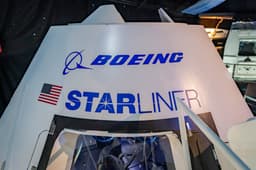
Boeing Faces Increased Cash Flow Pressure Amid Debt and Development Costs

- Cash Flow Challenges: Boeing's consolidated debt reached $54.1 billion by the end of 2025, while cash and marketable securities totaled $29.4 billion, resulting in a net debt of $24.7 billion, with a cash burn of $1.9 billion in 2025, indicating significant pressure on the company to manage debt repayment and new aircraft development.
- New Aircraft Development Costs: The former CEO indicated that developing a new narrowbody aircraft would cost approximately $50 billion, which will further strain Boeing's financial resources, particularly given the current cash flow constraints.
- Rising Capital Expenditures: Boeing's capital spending surged to $4 billion in 2025, up from $2.9 billion in 2024, driven partly by the need to ensure timely delivery of fixed-price development programs, which adds additional pressure on cash flow.
- 737 MAX Production Outlook: Despite cash flow pressures, the ramp-up in 737 MAX production is expected to enhance profitability and cash flow, with management guiding for free cash flow between $1 billion and $3 billion next year, indicating potential growth amidst challenges.
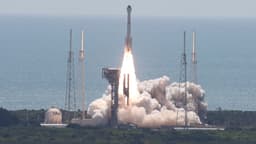
United Launch Alliance Rocket Experiences Issue During Mission

- Rocket Issue Investigation: United Launch Alliance is reviewing data after a problem occurred with its Vulcan rocket during a U.S. Space Force mission, although the main booster, upper stage, and payload operated normally, the incident could impact future launch reliability.
- Launch History Overview: Since its debut in January 2024, Vulcan has completed four flights, yet its rollout has been hampered by technical challenges and schedule delays, particularly highlighted by a small explosion of a side-mounted booster during its second mission in October 2024.
- Leadership Changes: Interim CEO John Elbon took over after longtime CEO Tory Bruno departed in December, and he stated that previous issues have been addressed, asserting that the rocket is ready for regular service.
- Expansion Plans: ULA is building additional facilities and launch pads at Kennedy Space Center to increase flight cadence, facing pressure from competitors like SpaceX and Blue Origin, while needing to secure its market share.

HOWMET CEO PREDICTS 2026 MONTHLY PRODUCTION OF FORTY BOEING AIRCRAFT, INCLUDING SEVEN 787s, AND SIXTY A320s AND SIX A350s FOR AIRBUS
Expected Aircraft Production Rates: The CEO anticipates a build rate of 40 Boeing aircraft per month by 2026, with specific monthly targets for different models.
Boeing and Airbus Production Goals: Boeing aims for a production of 737 aircraft at 787 per month, while Airbus targets 60 A320 aircraft and 35 A350 aircraft per month.

Howmet Shares Surge as Earnings Highlight Sector Resilience.
- Strong Performance: Howmet Aerospace reported a successful quarter, indicating robust growth in the aerospace parts sector.
- Future Outlook: The positive results suggest that the aerospace industry has significant potential for expansion through 2026.
IMPACT OF ENGINE ARCHITECTURE SELECTION ON NEXT-GEN AIRBUS AND BOEING NARROWBODY JETS

Future of Aircraft Design: The evolution of aircraft architecture is set to influence the next generation of Airbus and Boeing narrow-body jets.
Implications for Aviation: Innovations in engineering and design will have significant implications for the efficiency and performance of future commercial aircraft.
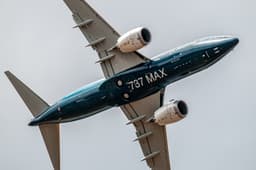
Boeing to Add Fourth 737 Max Assembly Line
- New Assembly Line: Boeing plans to bring a fourth assembly line for the 737 Max online in Everett, Washington, by mid-summer, aiming to enhance its monthly production capacity and solidify its market leadership.
- Production Increase Target: The company is moving from a production rate of 38 aircraft per month to 42, with an expected output increase of approximately 15% over the next 18 months, reflecting strong market demand and recovery in production capabilities.
- Key Milestone: Boeing's next production target is to reach 47 737 Max jets per month, which is seen as a crucial milestone in its recovery plan, indicating the company's confidence in future growth.
- Supply Chain Readiness: At the Pacific Northwest Aerospace Association conference, Boeing executive Katie Ringgold urged suppliers to prepare for upcoming increases in production, demonstrating the company's positive outlook on future market demand.
Boeing Faces Increased Cash Flow Pressure Amid Debt and Development Costs
- Cash Flow Challenges: Boeing's consolidated debt reached $54.1 billion by the end of 2025, while cash and marketable securities totaled $29.4 billion, resulting in a net debt of $24.7 billion, with a cash burn of $1.9 billion in 2025, indicating significant pressure on the company to manage debt repayment and new aircraft development.
- New Aircraft Development Costs: The former CEO indicated that developing a new narrowbody aircraft would cost approximately $50 billion, which will further strain Boeing's financial resources, particularly given the current cash flow constraints.
- Rising Capital Expenditures: Boeing's capital spending surged to $4 billion in 2025, up from $2.9 billion in 2024, driven partly by the need to ensure timely delivery of fixed-price development programs, which adds additional pressure on cash flow.
- 737 MAX Production Outlook: Despite cash flow pressures, the ramp-up in 737 MAX production is expected to enhance profitability and cash flow, with management guiding for free cash flow between $1 billion and $3 billion next year, indicating potential growth amidst challenges.
United Launch Alliance Rocket Experiences Issue During Mission
- Rocket Issue Investigation: United Launch Alliance is reviewing data after a problem occurred with its Vulcan rocket during a U.S. Space Force mission, although the main booster, upper stage, and payload operated normally, the incident could impact future launch reliability.
- Launch History Overview: Since its debut in January 2024, Vulcan has completed four flights, yet its rollout has been hampered by technical challenges and schedule delays, particularly highlighted by a small explosion of a side-mounted booster during its second mission in October 2024.
- Leadership Changes: Interim CEO John Elbon took over after longtime CEO Tory Bruno departed in December, and he stated that previous issues have been addressed, asserting that the rocket is ready for regular service.
- Expansion Plans: ULA is building additional facilities and launch pads at Kennedy Space Center to increase flight cadence, facing pressure from competitors like SpaceX and Blue Origin, while needing to secure its market share.
HOWMET CEO PREDICTS 2026 MONTHLY PRODUCTION OF FORTY BOEING AIRCRAFT, INCLUDING SEVEN 787s, AND SIXTY A320s AND SIX A350s FOR AIRBUS
Expected Aircraft Production Rates: The CEO anticipates a build rate of 40 Boeing aircraft per month by 2026, with specific monthly targets for different models.
Boeing and Airbus Production Goals: Boeing aims for a production of 737 aircraft at 787 per month, while Airbus targets 60 A320 aircraft and 35 A350 aircraft per month.
Howmet Shares Surge as Earnings Highlight Sector Resilience.
- Strong Performance: Howmet Aerospace reported a successful quarter, indicating robust growth in the aerospace parts sector.
- Future Outlook: The positive results suggest that the aerospace industry has significant potential for expansion through 2026.
IMPACT OF ENGINE ARCHITECTURE SELECTION ON NEXT-GEN AIRBUS AND BOEING NARROWBODY JETS
Future of Aircraft Design: The evolution of aircraft architecture is set to influence the next generation of Airbus and Boeing narrow-body jets.
Implications for Aviation: Innovations in engineering and design will have significant implications for the efficiency and performance of future commercial aircraft.
Boeing to Add Fourth 737 Max Assembly Line
- New Assembly Line: Boeing plans to bring a fourth assembly line for the 737 Max online in Everett, Washington, by mid-summer, aiming to enhance its monthly production capacity and solidify its market leadership.
- Production Increase Target: The company is moving from a production rate of 38 aircraft per month to 42, with an expected output increase of approximately 15% over the next 18 months, reflecting strong market demand and recovery in production capabilities.
- Key Milestone: Boeing's next production target is to reach 47 737 Max jets per month, which is seen as a crucial milestone in its recovery plan, indicating the company's confidence in future growth.
- Supply Chain Readiness: At the Pacific Northwest Aerospace Association conference, Boeing executive Katie Ringgold urged suppliers to prepare for upcoming increases in production, demonstrating the company's positive outlook on future market demand.