Ark Invest ETFs Outperform S&P 500 in 2025
Written by Emily J. Thompson, Senior Investment Analyst
Updated: Jan 05 2026
0mins

Source: Benzinga
- Market Outperformance: Ark Invest's six main ETFs achieved significant gains in 2025, with the Autonomous Technology & Robotics ETF (ARKQ) rising 49.8%, far surpassing the S&P 500's 16.6%, highlighting its strong performance in the rapidly growing AI and robotics sectors.
- Portfolio Overlap: Both ARKQ and ARKX share nine of their top ten holdings, with Tesla comprising 11.3% of ARKQ and L3Harris 8.4% of ARKX, indicating a shared investment strategy focused on core technological advancements.
- Future Growth Potential: With SpaceX planning an IPO in 2026, the ARKX ETF could benefit from the investment surge in the space industry, further driving its performance, especially against the backdrop of potential revenue increases for defense companies.
- Industry Trends: The ongoing growth trends in AI, autonomous technology, and robotics may enable ARKQ to excel again in 2026, as investor interest in these sectors will likely support Ark Invest's future performance.
Trade with 70% Backtested Accuracy
Stop guessing "Should I Buy ACHR?" and start using high-conviction signals backed by rigorous historical data.
Sign up today to access powerful investing tools and make smarter, data-driven decisions.
Analyst Views on ACHR
Wall Street analysts forecast ACHR stock price to rise
6 Analyst Rating
4 Buy
2 Hold
0 Sell
Moderate Buy
Current: 6.550

Low
8.00
Averages
12.40
High
18.00
Current: 6.550
Low
8.00
Averages
12.40
High
18.00
About ACHR
Archer Aviation Inc. is an aerospace company. It is engaged in providing customers with advanced aircraft and related technologies and services in the United States and internationally in both the commercial and defense sectors. Its commercial line of business consists of the sale of its commercial aircraft (Archer Direct), such as Midnight, to aircraft operators as well as technologies and services related thereto, including commercial launch (certification, testing, training, demonstration, market survey and early trial operations), and maintenance and repair. Its defense line of business consists of the sale of aircraft and related technologies for defense applications. Its initial product is intended to be a hybrid-propulsion, vertical take-off and landing (VTOL) aircraft. Its Midnight aircraft is designed around its proprietary 12-tilt-6 distributed electric propulsion platform. It carries four passengers plus a pilot. The aircraft is purpose-built for air taxi operations.
About the author

Emily J. Thompson
Emily J. Thompson, a Chartered Financial Analyst (CFA) with 12 years in investment research, graduated with honors from the Wharton School. Specializing in industrial and technology stocks, she provides in-depth analysis for Intellectia’s earnings and market brief reports.

Archer Aviation to Launch U.S. Operations in 2026

- FAA Regulatory Progress: Archer Aviation is rapidly advancing through the FAA regulatory process, with U.S. operations expected to launch in 2026, providing early trial flight opportunities for commercialization, although it currently lacks a commercial license.
- Financial Condition Analysis: With a market cap of $4.6 billion and $1.8 billion in cash reserves, Archer still faces significant financial pressure as it burns between $500 million and $700 million annually, raising concerns about its future profitability.
- Strategic Partnerships: Archer has formed strategic alliances with prominent partners like United Airlines to establish an air taxi route between Manhattan and nearby airports, enhancing its market presence and laying the groundwork for future revenue growth.
- Market Outlook Challenges: Despite Archer's potential in the eVTOL sector, its lag behind Joby Aviation in regulatory timelines and the fact that it has only manufactured two eVTOLs raises investor caution regarding its future market value.
See More

ZenaTech Enters AI Data Center Construction Market with New Drone Software
- Market Opportunity: The AI data center construction boom is projected to drive the Drones as a Service (DaaS) market to approximately $20 billion to $26 billion over the next decade, with the overall drone services market expected to exceed $140 billion by 2035, indicating robust growth potential.
- Technological Innovation: ZenaTech's introduction of the ZenaWorx software, which employs LiDAR technology for 3D digital progress monitoring, aims to enhance accuracy and cost-effectiveness in construction processes, potentially significantly improving efficiency in AI data center projects.
- Industry Trends: The AI data center market is growing at a 30% CAGR, driving the adoption of drones across construction, logistics, and infrastructure projects, with forecasts suggesting the global drone services market will expand from $18 billion in 2024 to over $225 billion by 2034.
- Investment Outlook: As government and private sector investments in AI infrastructure continue to rise, the demand for DaaS is expected to grow, positioning ZenaTech favorably within the rapidly evolving drone industry.
See More

ZenaTech Enters AI Data Center Construction Market with New Drone Software
- Market Opportunity: The demand for AI data center construction is driving the Drones as a Service (DaaS) market, which is projected to grow to $20 billion to $26 billion over the next decade, while the overall drone services market could exceed $140 billion by 2035, indicating robust market potential.
- Technological Innovation: ZenaTech's introduction of the ZenaWorx software, which utilizes LiDAR technology for 3D digital progress monitoring, aims to enhance construction accuracy and cost-effectiveness, significantly improving management efficiency for AI data center projects.
- Customer Development: ZenaTech has identified a potential beta customer and is in negotiations to provide ZenaWorx services for their several hundred-acre AI data center construction project, further driving market penetration.
- Industry Outlook: With increasing investments from governments and private sectors in AI infrastructure, the application of drone services across construction, logistics, and industrial inspection is expected to expand, propelling rapid industry growth.
See More
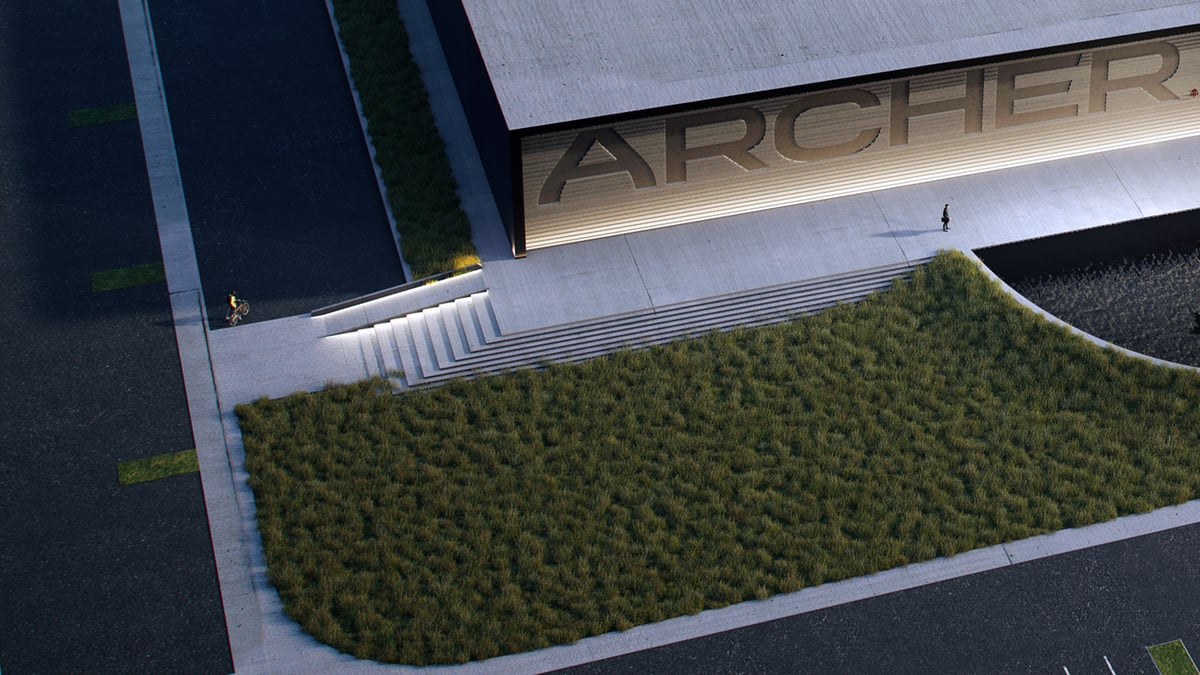
Archer Aviation: Future and Challenges of Flying Cars
- FAA Certification Progress: Archer Aviation has completed phase three of the FAA's four-step certification process, becoming the first eVTOL company to achieve this milestone, which allows it to conduct flight tests under FAA oversight and lays the groundwork for future commercial operations.
- Market Prospects and Partnerships: Archer is collaborating with partners in major states like New York, Texas, and Florida to advance eVTOL commercialization, aiming to initiate operations in the second half of 2026, although this timeline appears ambitious, the White House's support may expedite the process.
- Financial Challenges: Despite Archer's stock trading below $7, its market cap stands at $5 billion, while first-quarter revenue was only $1.6 million with a net loss of approximately $218 million, indicating a precarious financial situation.
- Future Challenges and Opportunities: Archer needs to establish an air taxi network and supporting infrastructure, but without commercial revenue, its $1.8 billion in liquidity could deplete quickly, prompting investors to carefully assess its future potential.
See More

Archer Aviation Makes Significant Progress in FAA Certification
- FAA Certification Progress: Archer Aviation recently completed phase three of the FAA's four-phase certification process, becoming the first eVTOL company to reach this milestone, which lays the groundwork for future aircraft testing and boosts investor confidence.
- Market Expansion Plans: Under the White House's eVTOL Integration Pilot Program, Archer aims to initiate operations in major states like New York, Texas, and Florida in the second half of 2026, showcasing the company's ambitious market aspirations despite the tight timeline.
- Financial Condition Overview: With a market cap of approximately $5 billion, Archer reported only $1.6 million in first-quarter revenue and a net loss of about $218 million, indicating significant financial strain and an urgent need for future funding given its quarterly cash burn of around $180 million.
- Future Challenges: Despite holding a patent for the Midnight aircraft, Archer faces the daunting task of establishing an air taxi network and necessary infrastructure, compounded by high operational costs and a lack of commercial revenue, leaving its future development fraught with uncertainty.
See More

Archer Aviation: Future of eVTOL Aircraft in Question
- Poor Market Performance: Since going public in 2021, Archer Aviation's stock has declined approximately 38%, currently trading around $6, reflecting a 25% drop in 2026, indicating a lack of competitiveness in the market.
- Strong Partnerships: Archer has formed strategic alliances with notable companies, including United Airlines and Abu Dhabi Aviation, resulting in a $6 billion backlog; however, the company's path to commercialization remains challenging.
- Government Support for Development: Under the U.S. government's eVTOL Integration Pilot Program, Archer has the opportunity to conduct early test flights, which could accelerate its commercialization process, with air taxi services expected to launch in the latter half of 2026, potentially generating revenue.
- Significant Financial Pressure: Archer burns approximately $500 million to $700 million in cash annually, lacks a commercial license, and trails competitor Joby Aviation on the regulatory timeline, making its current $4.6 billion market cap a concern for investors.
See More
Archer Aviation to Launch U.S. Operations in 2026
- FAA Regulatory Progress: Archer Aviation is rapidly advancing through the FAA regulatory process, with U.S. operations expected to launch in 2026, providing early trial flight opportunities for commercialization, although it currently lacks a commercial license.
- Financial Condition Analysis: With a market cap of $4.6 billion and $1.8 billion in cash reserves, Archer still faces significant financial pressure as it burns between $500 million and $700 million annually, raising concerns about its future profitability.
- Strategic Partnerships: Archer has formed strategic alliances with prominent partners like United Airlines to establish an air taxi route between Manhattan and nearby airports, enhancing its market presence and laying the groundwork for future revenue growth.
- Market Outlook Challenges: Despite Archer's potential in the eVTOL sector, its lag behind Joby Aviation in regulatory timelines and the fact that it has only manufactured two eVTOLs raises investor caution regarding its future market value.
See More
ZenaTech Enters AI Data Center Construction Market with New Drone Software
- Market Opportunity: The AI data center construction boom is projected to drive the Drones as a Service (DaaS) market to approximately $20 billion to $26 billion over the next decade, with the overall drone services market expected to exceed $140 billion by 2035, indicating robust growth potential.
- Technological Innovation: ZenaTech's introduction of the ZenaWorx software, which employs LiDAR technology for 3D digital progress monitoring, aims to enhance accuracy and cost-effectiveness in construction processes, potentially significantly improving efficiency in AI data center projects.
- Industry Trends: The AI data center market is growing at a 30% CAGR, driving the adoption of drones across construction, logistics, and infrastructure projects, with forecasts suggesting the global drone services market will expand from $18 billion in 2024 to over $225 billion by 2034.
- Investment Outlook: As government and private sector investments in AI infrastructure continue to rise, the demand for DaaS is expected to grow, positioning ZenaTech favorably within the rapidly evolving drone industry.
See More
ZenaTech Enters AI Data Center Construction Market with New Drone Software
- Market Opportunity: The demand for AI data center construction is driving the Drones as a Service (DaaS) market, which is projected to grow to $20 billion to $26 billion over the next decade, while the overall drone services market could exceed $140 billion by 2035, indicating robust market potential.
- Technological Innovation: ZenaTech's introduction of the ZenaWorx software, which utilizes LiDAR technology for 3D digital progress monitoring, aims to enhance construction accuracy and cost-effectiveness, significantly improving management efficiency for AI data center projects.
- Customer Development: ZenaTech has identified a potential beta customer and is in negotiations to provide ZenaWorx services for their several hundred-acre AI data center construction project, further driving market penetration.
- Industry Outlook: With increasing investments from governments and private sectors in AI infrastructure, the application of drone services across construction, logistics, and industrial inspection is expected to expand, propelling rapid industry growth.
See More
Archer Aviation: Future and Challenges of Flying Cars
- FAA Certification Progress: Archer Aviation has completed phase three of the FAA's four-step certification process, becoming the first eVTOL company to achieve this milestone, which allows it to conduct flight tests under FAA oversight and lays the groundwork for future commercial operations.
- Market Prospects and Partnerships: Archer is collaborating with partners in major states like New York, Texas, and Florida to advance eVTOL commercialization, aiming to initiate operations in the second half of 2026, although this timeline appears ambitious, the White House's support may expedite the process.
- Financial Challenges: Despite Archer's stock trading below $7, its market cap stands at $5 billion, while first-quarter revenue was only $1.6 million with a net loss of approximately $218 million, indicating a precarious financial situation.
- Future Challenges and Opportunities: Archer needs to establish an air taxi network and supporting infrastructure, but without commercial revenue, its $1.8 billion in liquidity could deplete quickly, prompting investors to carefully assess its future potential.
See More
Archer Aviation Makes Significant Progress in FAA Certification
- FAA Certification Progress: Archer Aviation recently completed phase three of the FAA's four-phase certification process, becoming the first eVTOL company to reach this milestone, which lays the groundwork for future aircraft testing and boosts investor confidence.
- Market Expansion Plans: Under the White House's eVTOL Integration Pilot Program, Archer aims to initiate operations in major states like New York, Texas, and Florida in the second half of 2026, showcasing the company's ambitious market aspirations despite the tight timeline.
- Financial Condition Overview: With a market cap of approximately $5 billion, Archer reported only $1.6 million in first-quarter revenue and a net loss of about $218 million, indicating significant financial strain and an urgent need for future funding given its quarterly cash burn of around $180 million.
- Future Challenges: Despite holding a patent for the Midnight aircraft, Archer faces the daunting task of establishing an air taxi network and necessary infrastructure, compounded by high operational costs and a lack of commercial revenue, leaving its future development fraught with uncertainty.
See More
Archer Aviation: Future of eVTOL Aircraft in Question
- Poor Market Performance: Since going public in 2021, Archer Aviation's stock has declined approximately 38%, currently trading around $6, reflecting a 25% drop in 2026, indicating a lack of competitiveness in the market.
- Strong Partnerships: Archer has formed strategic alliances with notable companies, including United Airlines and Abu Dhabi Aviation, resulting in a $6 billion backlog; however, the company's path to commercialization remains challenging.
- Government Support for Development: Under the U.S. government's eVTOL Integration Pilot Program, Archer has the opportunity to conduct early test flights, which could accelerate its commercialization process, with air taxi services expected to launch in the latter half of 2026, potentially generating revenue.
- Significant Financial Pressure: Archer burns approximately $500 million to $700 million in cash annually, lacks a commercial license, and trails competitor Joby Aviation on the regulatory timeline, making its current $4.6 billion market cap a concern for investors.
See More