Ginkgo Bioworks Shares Drop After Q3 Estimates Fall Short, Maintains FY2025 Forecast Below Market Expectations
Financial Performance: Ginkgo Bioworks reported a loss of $1.45 per share for Q3, exceeding estimates of $1.24, and a significant increase in losses compared to the previous year. Quarterly sales were $38.8 million, slightly below the $38.9 million estimate and down 56.39% from $89 million last year.
Revenue Breakdown: Total revenue for the third quarter was $39 million, a 56% decline from the previous year, largely due to a $45 million non-cash revenue from a terminated deal. Cell Engineering revenue also fell 61% to $29 million, but excluding the non-cash revenue, the decline was minimal.
Adjusted EBITDA: The company's adjusted EBITDA was negative $56 million, worsening from negative $20 million in the same quarter last year, primarily due to the release of non-cash deferred revenue in the prior year.
Stock Performance: Following the financial results, Ginkgo Bioworks shares dropped 21.95% to $8.82, while the company maintained its fiscal year 2025 revenue outlook between $167 million and $187 million, aligning closely with analyst expectations of $177.1 million.
Trade with 70% Backtested Accuracy
Analyst Views on DNA

About DNA
About the author


Roblox Reports Quarterly Earnings Exceeding Expectations


- Quarterly Losses in Line: Roblox reported a quarterly loss of $0.45 per share, aligning with analyst expectations, which indicates stability in financial management despite ongoing challenges.
- Revenue Beats Expectations: The quarterly revenue reached $2.22 billion, surpassing the analyst consensus estimate of $2.05 billion and significantly up from $1.36 billion in the same period last year, showcasing the company's success in user growth and monetization.
- Stock Price Surge: Roblox shares jumped 14.3% to $69.24 in pre-market trading, reflecting a positive market reaction to the earnings report, which may attract more investor interest.
- Market Dynamics Impact: The release of this earnings report could influence the stock performance of other related companies, particularly in the gaming and tech sectors, demonstrating market confidence in the industry.

Ginkgo Bioworks Partners with OpenAI to Cut Protein Synthesis Costs


- Cost Reduction: Ginkgo Bioworks' AI system, developed in collaboration with OpenAI, can lower costs in cell-free protein synthesis by 40%, significantly enhancing efficiency for scientists in clinical research.
- Rapid Production Capability: The system enables quick protein production without the need for living cells, catering to scientific research that requires fast clinical results, thus meeting the market demand for efficient biosynthesis.
- Rich Experimental Data: The system conducted over 36,000 CFPS reactions across 580 automated plates, generating nearly 150,000 experimental data points, providing a robust foundation for future research.
- Technological Innovation: By integrating OpenAI's GPT-5 large language model with Ginkgo's cloud laboratory infrastructure, this partnership marks the first time a frontier model has interfaced with an autonomous lab, paving the way for large-scale experimentation.
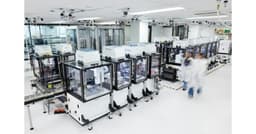
Ginkgo Bioworks and OpenAI Collaborate on Autonomous Biological Experiments
- Significant Cost Reduction: The AI system developed by Ginkgo Bioworks in collaboration with OpenAI successfully reduced cell-free protein synthesis reaction costs by 40%, from $698 per gram to $422, significantly enhancing the economic viability of experiments and promoting sustainable development in biological research.
- Expanded Experimental Scale: The system executed over 580 384-well plates, tested 36,000 reaction compositions, and generated nearly 150,000 experimental data points over six months, showcasing the potential of AI in large-scale experimentation to accelerate scientific discovery.
- Innovation in Autonomous Labs: By integrating OpenAI's GPT-5 model with Ginkgo's cloud laboratory infrastructure, the system achieved a closed-loop workflow for experiment design, execution, and analysis, reducing human intervention and enhancing experimental efficiency and accuracy.
- Enhanced Scientific Transparency: The AI-generated lab records provided clear documentation of analyses and observations, ensuring transparency and scientific rigor in the experimental process, thereby offering reliable references for future research.

Ginkgo and OpenAI Collaborate on Autonomous Lab Breakthrough
- Cost Reduction: Ginkgo's autonomous lab, utilizing GPT-5 technology, achieved a 40% reduction in cell-free protein synthesis reaction costs, decreasing from $698 to $422 per gram, significantly enhancing experimental economics and expected to facilitate more experiments.
- Experimental Scale: The lab executed over 36,000 experimental conditions within six months, generating nearly 150,000 experimental data points, showcasing the immense potential of AI in scientific experimentation with minimal human intervention.
- Technological Innovation: By integrating OpenAI's GPT-5 with Ginkgo's cloud lab infrastructure, a closed-loop workflow was established, automating experiment design, execution, and data analysis, thereby improving the efficiency and accuracy of scientific research.
- Market Potential: Ginkgo is now selling AI-enhanced reaction mixes in its reagent store, indicating the commercial viability of AI-driven scientific research, which could lead to significant transformations in the field of biological research.
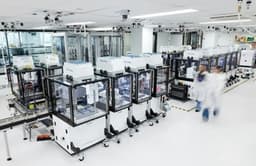
Ginkgo and OpenAI Achieve 40% Cost Reduction in Experiments
- Cost Reduction: Ginkgo's collaboration with OpenAI has led to a 40% reduction in reaction costs for cell-free protein synthesis, decreasing from $698 to $422 per gram, significantly enhancing experimental economics and promoting sustainable scientific research.
- Scale of Experiments: The autonomous lab executed over 36,000 experimental conditions within six months, generating nearly 150,000 experimental data points, showcasing the potential of AI in large-scale experimentation to accelerate scientific discovery.
- Technological Innovation: By integrating OpenAI's GPT-5 model with Ginkgo's cloud laboratory infrastructure, the system autonomously designed and executed experiments with minimal human involvement, marking a significant advancement in laboratory automation.
- Market Potential: Ginkgo is now selling the AI-enhanced reaction mix in its reagent store, indicating the commercial viability of AI-driven scientific research, which may attract increased attention and investment from research institutions and companies.
Ginkgo Bioworks CEO Jason Kelly to Present at 44th Annual J.P. Morgan Healthcare Conference
- Conference Schedule: Ginkgo Bioworks Co-Founder and CEO Jason Kelly is set to present at the 44th Annual J.P. Morgan Healthcare Conference on January 15, 2026, showcasing the company's latest advancements in bioengineering.
- Investor Relations: Detailed information and presentation slides will be posted on the company's investor relations website, aimed at enhancing communication with investors and increasing transparency to attract potential investors.
- Technological Innovation: Ginkgo Bioworks offers customizable R&D solutions, including protein engineering and cell-free systems, which help partners accelerate innovation and drive advancements in therapeutics, diagnostics, and manufacturing, highlighting the company's leadership in biotechnology.
- Biosecurity Strategy: Ginkgo Biosecurity is building next-generation infrastructure and technologies to address various biological threats, indicating the company's strategic importance and market demand in the global biosecurity sector.
Roblox Reports Quarterly Earnings Exceeding Expectations
- Quarterly Losses in Line: Roblox reported a quarterly loss of $0.45 per share, aligning with analyst expectations, which indicates stability in financial management despite ongoing challenges.
- Revenue Beats Expectations: The quarterly revenue reached $2.22 billion, surpassing the analyst consensus estimate of $2.05 billion and significantly up from $1.36 billion in the same period last year, showcasing the company's success in user growth and monetization.
- Stock Price Surge: Roblox shares jumped 14.3% to $69.24 in pre-market trading, reflecting a positive market reaction to the earnings report, which may attract more investor interest.
- Market Dynamics Impact: The release of this earnings report could influence the stock performance of other related companies, particularly in the gaming and tech sectors, demonstrating market confidence in the industry.
Ginkgo Bioworks Partners with OpenAI to Cut Protein Synthesis Costs
- Cost Reduction: Ginkgo Bioworks' AI system, developed in collaboration with OpenAI, can lower costs in cell-free protein synthesis by 40%, significantly enhancing efficiency for scientists in clinical research.
- Rapid Production Capability: The system enables quick protein production without the need for living cells, catering to scientific research that requires fast clinical results, thus meeting the market demand for efficient biosynthesis.
- Rich Experimental Data: The system conducted over 36,000 CFPS reactions across 580 automated plates, generating nearly 150,000 experimental data points, providing a robust foundation for future research.
- Technological Innovation: By integrating OpenAI's GPT-5 large language model with Ginkgo's cloud laboratory infrastructure, this partnership marks the first time a frontier model has interfaced with an autonomous lab, paving the way for large-scale experimentation.
Ginkgo Bioworks and OpenAI Collaborate on Autonomous Biological Experiments
- Significant Cost Reduction: The AI system developed by Ginkgo Bioworks in collaboration with OpenAI successfully reduced cell-free protein synthesis reaction costs by 40%, from $698 per gram to $422, significantly enhancing the economic viability of experiments and promoting sustainable development in biological research.
- Expanded Experimental Scale: The system executed over 580 384-well plates, tested 36,000 reaction compositions, and generated nearly 150,000 experimental data points over six months, showcasing the potential of AI in large-scale experimentation to accelerate scientific discovery.
- Innovation in Autonomous Labs: By integrating OpenAI's GPT-5 model with Ginkgo's cloud laboratory infrastructure, the system achieved a closed-loop workflow for experiment design, execution, and analysis, reducing human intervention and enhancing experimental efficiency and accuracy.
- Enhanced Scientific Transparency: The AI-generated lab records provided clear documentation of analyses and observations, ensuring transparency and scientific rigor in the experimental process, thereby offering reliable references for future research.
Ginkgo and OpenAI Collaborate on Autonomous Lab Breakthrough
- Cost Reduction: Ginkgo's autonomous lab, utilizing GPT-5 technology, achieved a 40% reduction in cell-free protein synthesis reaction costs, decreasing from $698 to $422 per gram, significantly enhancing experimental economics and expected to facilitate more experiments.
- Experimental Scale: The lab executed over 36,000 experimental conditions within six months, generating nearly 150,000 experimental data points, showcasing the immense potential of AI in scientific experimentation with minimal human intervention.
- Technological Innovation: By integrating OpenAI's GPT-5 with Ginkgo's cloud lab infrastructure, a closed-loop workflow was established, automating experiment design, execution, and data analysis, thereby improving the efficiency and accuracy of scientific research.
- Market Potential: Ginkgo is now selling AI-enhanced reaction mixes in its reagent store, indicating the commercial viability of AI-driven scientific research, which could lead to significant transformations in the field of biological research.
Ginkgo and OpenAI Achieve 40% Cost Reduction in Experiments
- Cost Reduction: Ginkgo's collaboration with OpenAI has led to a 40% reduction in reaction costs for cell-free protein synthesis, decreasing from $698 to $422 per gram, significantly enhancing experimental economics and promoting sustainable scientific research.
- Scale of Experiments: The autonomous lab executed over 36,000 experimental conditions within six months, generating nearly 150,000 experimental data points, showcasing the potential of AI in large-scale experimentation to accelerate scientific discovery.
- Technological Innovation: By integrating OpenAI's GPT-5 model with Ginkgo's cloud laboratory infrastructure, the system autonomously designed and executed experiments with minimal human involvement, marking a significant advancement in laboratory automation.
- Market Potential: Ginkgo is now selling the AI-enhanced reaction mix in its reagent store, indicating the commercial viability of AI-driven scientific research, which may attract increased attention and investment from research institutions and companies.
Ginkgo Bioworks CEO Jason Kelly to Present at 44th Annual J.P. Morgan Healthcare Conference
- Conference Schedule: Ginkgo Bioworks Co-Founder and CEO Jason Kelly is set to present at the 44th Annual J.P. Morgan Healthcare Conference on January 15, 2026, showcasing the company's latest advancements in bioengineering.
- Investor Relations: Detailed information and presentation slides will be posted on the company's investor relations website, aimed at enhancing communication with investors and increasing transparency to attract potential investors.
- Technological Innovation: Ginkgo Bioworks offers customizable R&D solutions, including protein engineering and cell-free systems, which help partners accelerate innovation and drive advancements in therapeutics, diagnostics, and manufacturing, highlighting the company's leadership in biotechnology.
- Biosecurity Strategy: Ginkgo Biosecurity is building next-generation infrastructure and technologies to address various biological threats, indicating the company's strategic importance and market demand in the global biosecurity sector.