Drilling Tools International Corporation (DTI) Q1 2025 Earnings Call Transcript
Access earnings results, analyst expectations, report, slides, earnings call, and transcript.
Overview
The earnings call summary presents a mixed outlook. Financial performance shows growth, yet guidance is weak amidst market volatility and rig count decline. The share buyback is positive, but risks like pricing pressure and supply chain challenges persist. The Q&A reveals management's cautious stance on regional risks and growth expectations. Despite positive product development and cost management, the uncertain market conditions and weak guidance balance the sentiment, leading to a neutral prediction for stock price movement over the next two weeks.
Key Financial Performance
Revenue $42.9 million, up 16% year-over-year; growth attributed to effective management of commodity price volatility and increased tool rental revenue.
Adjusted EBITDA $10.8 million, up nearly 18% year-over-year; growth despite industry headwinds.
Operating Income $3.3 million; reflects operational efficiency amid a challenging market.
Adjusted Free Cash Flow $5.7 million; maintained despite market challenges.
Cash and Cash Equivalents $2.8 million; stable liquidity position.
Net Debt $52.1 million; reflects ongoing financial management.
Goodwill Impairment $1.9 million non-cash charge; due to purchase price accounting adjustments, does not affect operational performance.
Maintenance CapEx Approximately 10% of total revenue; slightly up in Q1 but has trended lower due to reduced rig count.
Annual Cost Reductions Estimated $6 million; part of a proactive cost reduction strategy.
You have reached the limit. Sign up to access full content
Get started
Operating Highlights
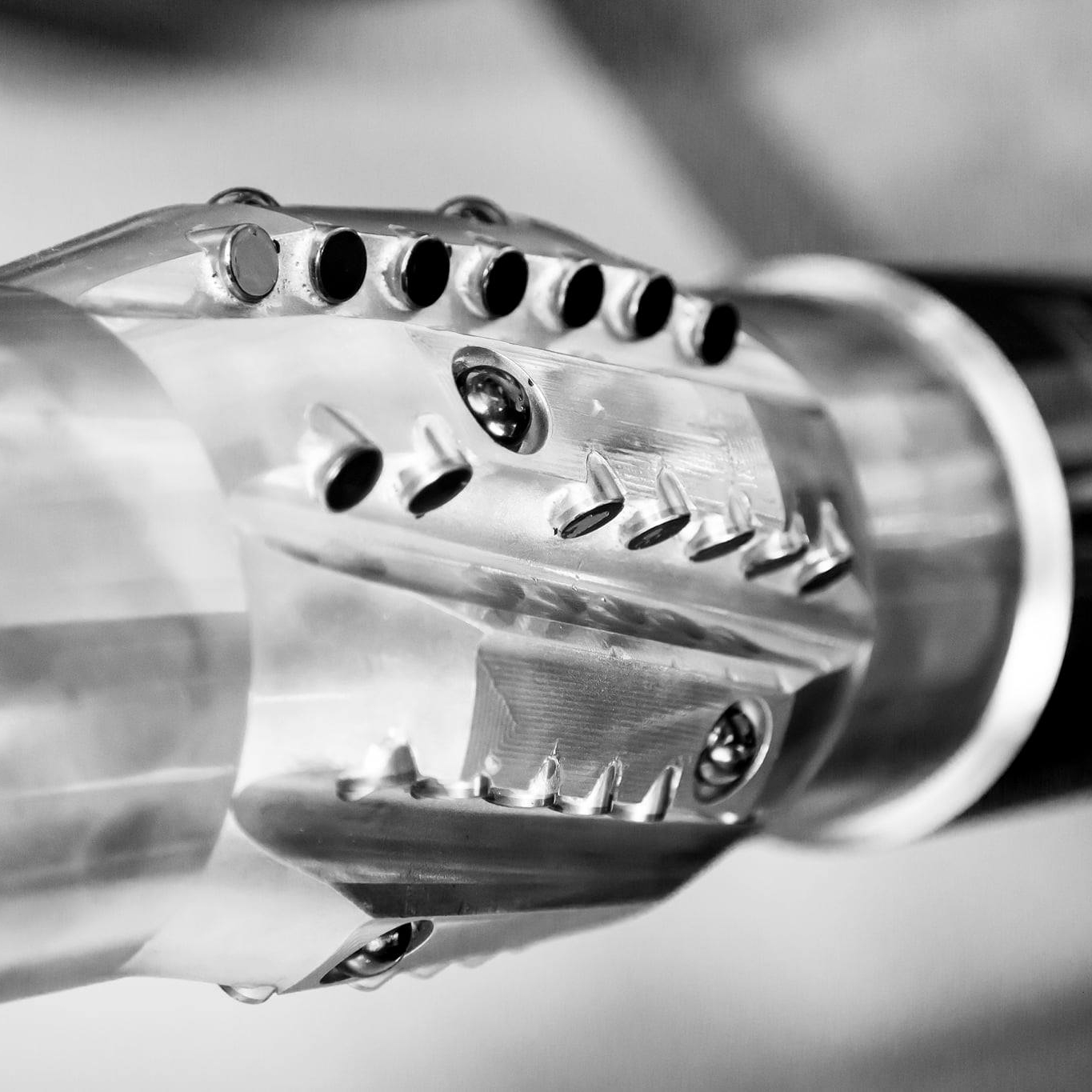
New Product Offerings: Expanded offering of rental tools including MechLOK Drill Pipe Swivels, the Rubblizer P&A Tool, Fixed Blade Stabilizers, Drill-N-Ream, and other BHA components.
Market Positioning: Despite a 6% global rig count decline, revenue increased by 16% year-over-year, validating the M&A strategy to strengthen the business model and diversify geographic footprint.
Geographic Expansion: The Eastern Hemisphere accounts for 11% of revenue, with expectations for growth to 18% as the year progresses.
Cost Reduction Initiatives: Implementation of a multi-level internal cost reduction program, Phase 1 expected to yield $6 million in annual savings.
Operational Efficiency: Maintenance CapEx for Q1 was approximately 10% of total revenue, trending lower due to a decline in rig count.
Strategic Shifts: Proactively adjusting annual revenue and EBITDA guidance due to anticipated rig count drop and market volatility.
Share Buyback Authorization: Board approved a share buyback authorization of up to $10 million, viewing the current stock price as undervalued.
You have reached the limit. Sign up to access full content
Get started
Risk or Challenges
Market Volatility: Increased volatility and uncertainty in the marketplace due to the impact of tariffs, a potential recession that could lower demand for hydrocarbons, and OPEC+’s decision to increase production.
Rig Count Decline: Anticipated drop in the U.S. rig count, which will challenge all service providers and impact order flow.
Tariff Risks: Potential negative impact on business due to recent tariff policies and ongoing negotiations.
Pricing Pressure: Ongoing pricing pressure affecting margins, driven by fears of oversupply and a slowdown in demand.
Cost Management: Need for proactive cost reduction measures to maintain profitability amidst declining activity levels.
Supply Chain Challenges: Dependence on a diverse supply chain to mitigate risks associated with tariffs and market fluctuations.
Economic Factors: Concerns regarding a potential recession impacting demand for hydrocarbons.
You have reached the limit. Sign up to access full content
Get started
Guidance & Outlook
Cost Reduction Program: DTI has initiated a two-phase strategy to manage costs, with Phase 1 expected to yield $6 million in annual cost reductions.
Share Buyback Authorization: The Board of Directors has approved a share buyback authorization of up to $10 million, viewing the current stock price as undervalued.
M&A Strategy: The company continues to pursue M&A strategies to strengthen its business model and diversify its geographic footprint.
Operational Agility: DTI is committed to maintaining operational agility to respond to market challenges and enhance shareholder value.
2025 Revenue Guidance: Full year 2025 revenue is expected to be in the range of $145 million to $165 million.
Adjusted EBITDA Guidance: Adjusted EBITDA for 2025 is projected to be between $32 million and $42 million.
Capital Expenditures Guidance: Gross capital expenditures are expected to be between $18 million and $23 million.
Adjusted Free Cash Flow Guidance: Adjusted free cash flow for 2025 is anticipated to range between $14 million and $19 million.
You have reached the limit. Sign up to access full content
Get started
Shareholder Return Plan
Share Buyback Authorization: The Board of Directors has unanimously approved a share buyback authorization of up to $10 million. This decision is based on the belief that the current stock price is undervalued, presenting a compelling return on investment opportunity.
You have reached the limit. Sign up to access full content
Get started
Key Q&A
Q:Can you talk a little bit about the fact that you can maintain pretty good free cash flow in this environment?
A:Part of that, I think, is two-pronged, obviously, focusing on the cost reductions to preserve as much of the EBITDA margins as we can obviously helps. And then, as we look at the activity and projected activity going forward and our CapEx spend, kind of making sure we coincide any purchases or defer same along the lines we did last year on future CapEx to make sure we preserve that ability to generate the free cash flow.
Q:Can you talk a little bit about what you’re seeing specifically in Saudi and otherwise in the Middle East?
A:Most of the Middle East is relatively flat, but the Saudi rig reduction in their offshore market, particularly the offshore market, was impactful to us because we have many, many sale -- product sales going into that market. But we’ve managed to pivot and see some consumption in their other areas.
Q:So you’re expecting, at least given the weakness, that this growth and these acquisitions are certainly going to help offset in a challenging 2025?
A:Right. We have some emerging products that are gaining ground.
Q:In terms of cadence to the guidance, does 2Q look similar to 1Q based on what you know right now?
A:I mean, yeah, I think, we’re looking at the rest of the year in totality and it’s hard to predict the combination of activity and pricing and so forth.
Q:Could you talk through what regions may be the most at risk in North America for a little bit of a pullback and what regions may hold up better than some others?
A:I would hate to lean into exactly which areas, whether it’s DJ or the Oklahoma oily basins, or if it’s Permian, Midland or Delaware Basin, there’s a lot of narratives and information out there on which ones have the strength to sustain lower oil prices.
Q:Could you comment on your CapEx program for this year on the growth side and the things that you’re spending money on?
A:Most of our focus on anything growth related in that category will be in new technology and new types of tools that have growth potential.
Q:Review of Unclear Management Responses
A:Management avoided giving a direct answer regarding which specific regions in North America may be most at risk for a pullback, stating they would 'hate to lean into exactly which areas'.
You have reached the limit. Sign up to access full content
Get started
Earnings Word Cloud
The most frequently occurring keywords in this quarter's earning call
America addition
America rental
America steel
BHA component
Blade Stabilizers
Casing Tools
Conference
Deep Casing
Directional Tool
Drilling Tools
Hemisphere Deep
Hemisphere segment
Projects Titan
RotoSteer product
Tool Rentals
Tools International
Tools product
ability cash
activity decline
authorization
buyback
charge
choppiness
commodity
cost reduction
disruption
face
goodwill
impairment
production
purchase price
reporting unit
sale Deep
stock price
volatility uncertainty
DTI Transcript
Drilling Tools International Corporation (DTI) Q3 2025 Earnings Call Transcript
Unknown11-7
The earnings call presents a mixed picture: Eastern Hemisphere revenue growth is strong, but there's a net loss and margin compression concerns. The Q&A highlights some optimism in Middle Eastern markets and effective mitigation of U.S. rig count declines. However, economic uncertainties and strategic relocations pose risks. Share buybacks and debt reduction are positives, yet the absence of year-over-year changes in key financials tempers enthusiasm. Overall, the sentiment is balanced, leading to a neutral stock price prediction.
Drilling Tools International Corporation (DTI) Q2 2025 Earnings Conference Call Transcript
Unknown8-14
The earnings call shows mixed signals: strong revenue growth and operational efficiency, but concerns about pricing pressures and margin compression in Q3 and Q4. The Q&A reveals temporary cost reductions and unclear guidance, especially on margins. Share buyback and M&A strategy are positives, but lack of specific guidance and pricing pressure concerns balance the sentiment. Thus, the stock price is likely to remain stable in the short term.
Drilling Tools International Corp. (NASDAQ:DTI) Q1 2025 Earnings Call Transcript
Unknown5-15
The earnings call presents a mixed picture: positive aspects include a 16% revenue increase, strong EBITDA growth, and a $10 million share buyback authorization. However, concerns about pricing pressure, potential margin impacts, and unclear guidance on North American risks suggest caution. The Q&A highlighted management's evasiveness on regional risks, which could unsettle investors. Despite optimistic guidance and cost reduction plans, the lack of clear direction in some responses tempers enthusiasm. Overall, the sentiment is balanced, resulting in a neutral stock price prediction over the next two weeks.
Drilling Tools International Corporation (DTI) Q1 2025 Earnings Call Transcript
Unknown5-14
The earnings call summary presents a mixed outlook. Financial performance shows growth, yet guidance is weak amidst market volatility and rig count decline. The share buyback is positive, but risks like pricing pressure and supply chain challenges persist. The Q&A reveals management's cautious stance on regional risks and growth expectations. Despite positive product development and cost management, the uncertain market conditions and weak guidance balance the sentiment, leading to a neutral prediction for stock price movement over the next two weeks.
DTI Report
Frequently Asked Questions
Where does this earnings call transcript come from?
All transcripts are sourced directly from the official live webcast or the company’s official investor relations website. We use the exact words spoken during the call with no paraphrasing of the core discussion.
How soon is the transcript available after the earnings call ends?
Full verbatim transcripts are typically published within 4–12 hours after the call ends. Same-day availability is guaranteed for all S&P 500 and most mid-cap companies.
Is the transcript edited or altered in any way?
No material content is ever changed or summarized in the “Full Transcript” section. We only correct obvious spoken typos (e.g., “um”, “ah”, repeated 10 times”, or clear misspoken ticker symbols) and add speaker names/titles for readability. Every substantive sentence remains 100% as spoken.
Why do some answers appear as “Unclear” or “Inaudible”?
When audio quality is poor or multiple speakers talk over each other, we mark the section instead of guessing. This ensures complete accuracy rather than introducing potential errors.
Who creates the AI Summary and Key Q&A highlights shown above the transcript?
They are generated by a specialized financial-language model trained exclusively on 15+ years of earnings transcripts. The model extracts financial figures, guidance, and tone with 97%+ accuracy and is regularly validated against human analysts. The full raw transcript always remains available for verification.