Nvidia (NVDA) Launches Vera Rubin Chip Production Six Months Early, Forecasts 155% Sales Growth
Written by Emily J. Thompson, Senior Investment Analyst
Updated: Jan 17 2026
0mins
Should l Buy NVDA?
Source: Fool
- Early Production: Nvidia announced that its next-generation AI chip, Vera Rubin, is now in full production six months ahead of schedule, which is expected to significantly reduce AI processing costs and enhance market competitiveness.
- Cost Advantage: The new architecture reduces AI token processing costs by up to 90% while using 75% fewer GPUs, further solidifying Nvidia's leading position in the semiconductor industry.
- Sales Outlook: Nvidia's backlog exceeds $500 billion, expected to be filled over the six quarters ending in early 2027, indicating strong market demand and future sales potential.
- Industry Leadership: Despite fierce competition, Nvidia is projected to achieve sales of $378 billion next year, representing a 155% growth, showcasing its robust advantage in the AI chip market.
Trade with 70% Backtested Accuracy
Stop guessing "Should I Buy NVDA?" and start using high-conviction signals backed by rigorous historical data.
Sign up today to access powerful investing tools and make smarter, data-driven decisions.
Analyst Views on NVDA
Wall Street analysts forecast NVDA stock price to rise
41 Analyst Rating
39 Buy
1 Hold
1 Sell
Strong Buy
Current: 175.750

Low
200.00
Averages
264.97
High
352.00
Current: 175.750
Low
200.00
Averages
264.97
High
352.00
About NVDA
NVIDIA Corporation is an artificial intelligence (AI) infrastructure company. The Company is engaged in accelerated computing to help solve the challenging computational problems. Its segments include Compute & Networking and Graphics. The Compute & Networking segment includes its Data Center accelerated computing and networking platforms and AI solutions and software, and automotive platforms and autonomous and electric vehicle solutions, including software. The Graphics segment includes GeForce GPUs for gaming and personal computers (PCs), and Quadro/NVIDIA RTX GPUs for enterprise workstation graphics. Its technology stack includes the foundational NVIDIA CUDA development platform that runs on all NVIDIA GPUs, as well as hundreds of domain-specific software libraries, frameworks, algorithms, software development kits (SDKs), and application programming interfaces (APIs). Its platforms address four markets, which include Data Center, Gaming, Professional Visualization, and Automotive.
About the author

Emily J. Thompson
Emily J. Thompson, a Chartered Financial Analyst (CFA) with 12 years in investment research, graduated with honors from the Wharton School. Specializing in industrial and technology stocks, she provides in-depth analysis for Intellectia’s earnings and market brief reports.
Nvidia's Earnings Report Shows Strong Growth

- Significant Revenue Growth: Nvidia's revenue in Q4 of fiscal 2026 surged 73% year-over-year to $68.1 billion, primarily driven by its data center segment, which generated $62.3 billion in revenue, up 75% year-over-year.
- Profitability Improvement: The company reported non-GAAP earnings per share of $1.62, an 82% increase year-over-year, while maintaining an impressive adjusted gross margin of 75.2%, showcasing its strong pricing power and production scale within its hardware ecosystem.
- Optimistic Future Outlook: Management anticipates first-quarter revenue for fiscal 2027 to be approximately $78 billion, indicating that the company's growth in the AI sector is still in its early stages, with the data center business expanding nearly 13 times since fiscal 2023.
- Valuation Outlook Analysis: Despite a current price-to-earnings ratio of about 36, the forward P/E ratio is expected to drop to 21 over the next four quarters, and if the company meets Wall Street's earnings expectations, the stock price could appreciate by 12% over the next year, reaching around $197.
See More

Nvidia Reopens Key AI Market in China Amid Risks
- Market Reopening: Nvidia has reopened its operations in China, one of the world's most crucial AI markets, presenting potential for revenue growth despite existing policy risks that complicate the narrative.
- Policy Risks: While the opportunities in the Chinese market are significant, uncertainties surrounding government regulations and market access could impact Nvidia's long-term strategic positioning in the region.
- Investment Opportunities: Analysts suggest that despite the high costs associated with re-entering the market, Nvidia could leverage technological innovation and adaptability to capture growth opportunities in China, enhancing its global competitiveness.
- Future Outlook: As demand for AI technology continues to rise in China, Nvidia's market strategy will need to be agile to navigate the complex policy landscape and maximize returns on its investments in the region.
See More
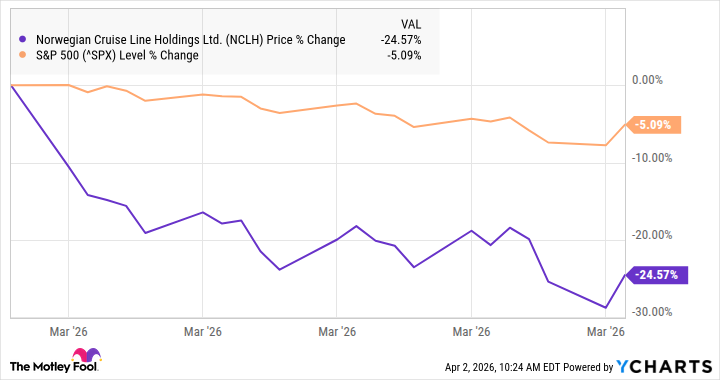
Norwegian Cruise Line Reports Disappointing Earnings, Stock Falls 24%


- Disappointing Earnings Report: Norwegian Cruise Line's fourth-quarter revenue rose 6% to $2.2 billion, falling short of market expectations of $2.34 billion, indicating management execution gaps that have eroded market confidence.
- Improved Profitability: Despite revenue misses, adjusted EBITDA increased by 11% to $2.73 billion, and adjusted earnings per share surged 46% to $0.28, exceeding expectations of $0.27, demonstrating effective cost control measures.
- Bleak Future Outlook: Norwegian anticipates flat net yields for 2026, with adjusted earnings per share projected at $2.38, below the consensus estimate of $2.60, highlighting ongoing fundamental challenges facing the company.
- Investor Attention: Activist investor Elliott Investment Management called for urgent board reforms, resulting in the appointment of five new board members, which, while not boosting stock prices immediately, may lay the groundwork for future improvements.
See More
Nvidia Projects $1 Trillion in Sales by 2027

- Surging Sales Projections: Nvidia CEO Jensen Huang announced at the 2026 GTC event that the company expects lifetime sales of its current-generation Blackwell chips and next-generation Vera Rubin chips to reach $1 trillion by the end of 2027, indicating significant future growth potential.
- Significant Revenue Growth: Analysts predict Nvidia's revenue for FY 2027 will hit $369 billion, a 71% year-over-year increase, with FY 2028 expected to reach $480 billion, reflecting strong demand and market share expansion in the AI sector.
- Market's Tepid Response: Despite Huang's robust sales forecast indicating strong growth potential, the market has reacted lukewarmly, with Nvidia's stock price declining since the announcement, suggesting investors may be underestimating the company's long-term growth prospects.
- Investment Opportunity Emerges: Currently, Nvidia's P/E ratio stands at 35, significantly higher than the S&P 500's 23.8, indicating that the market expects 2026 to be a strong year while overlooking Nvidia's long-term profitability in AI development, prompting investors to consider buying while the stock remains undervalued.
See More

Nvidia Projects Significant Growth Ahead
- Sales Projection Surge: Nvidia anticipates lifetime sales of its current-generation Blackwell chips and next-generation Vera Rubin chips to reach $1 trillion by the end of 2027, a significant increase from last year's $500 billion forecast, reflecting strong confidence in future market demand.
- Revenue Growth Expectations: Analysts project Nvidia's revenue for FY 2027 to hit $369 billion, a 71% year-over-year increase, with FY 2028 sales expected to reach $480 billion, indicating the company's sustained growth potential in the AI sector.
- Market Reaction Lagging: Despite Nvidia's stock trading at a 35 times earnings ratio, the market has not fully accounted for its long-term growth prospects, revealing investor caution regarding future AI spending and data center construction.
- Investment Opportunity Emerges: With the acceleration of AI data center construction, significant chip purchases from Nvidia are expected in 2027 or 2028, suggesting that investors should seize the current low stock price to potentially reap substantial returns in the future.
See More

American Express Stock Pullback Reveals Growth Potential

- Strong Earnings Growth: American Express reported a 10% revenue increase for 2025, reaching $72.2 billion, with adjusted earnings per share at $15.38, reflecting resilience and profitability amid macroeconomic pressures.
- Increased Shareholder Returns: The board approved a 16% increase in the quarterly dividend to $0.95 per share in March, resulting in a 1.3% dividend yield, indicating strong cash flow that supports future dividend growth.
- Aggressive Buyback Program: In 2025, American Express returned $7.6 billion to shareholders, with approximately $5.3 billion allocated for share repurchases, reducing the share count by about 2%, which directly boosts per-share earnings.
- Strong Pricing Power: By raising the annual fee of its flagship Platinum Card by nearly 30% and enhancing lifestyle benefits, the company successfully attracts younger consumers, demonstrating its pricing power and potential for future growth.
See More
Nvidia's Earnings Report Shows Strong Growth
- Significant Revenue Growth: Nvidia's revenue in Q4 of fiscal 2026 surged 73% year-over-year to $68.1 billion, primarily driven by its data center segment, which generated $62.3 billion in revenue, up 75% year-over-year.
- Profitability Improvement: The company reported non-GAAP earnings per share of $1.62, an 82% increase year-over-year, while maintaining an impressive adjusted gross margin of 75.2%, showcasing its strong pricing power and production scale within its hardware ecosystem.
- Optimistic Future Outlook: Management anticipates first-quarter revenue for fiscal 2027 to be approximately $78 billion, indicating that the company's growth in the AI sector is still in its early stages, with the data center business expanding nearly 13 times since fiscal 2023.
- Valuation Outlook Analysis: Despite a current price-to-earnings ratio of about 36, the forward P/E ratio is expected to drop to 21 over the next four quarters, and if the company meets Wall Street's earnings expectations, the stock price could appreciate by 12% over the next year, reaching around $197.
See More
Nvidia Reopens Key AI Market in China Amid Risks
- Market Reopening: Nvidia has reopened its operations in China, one of the world's most crucial AI markets, presenting potential for revenue growth despite existing policy risks that complicate the narrative.
- Policy Risks: While the opportunities in the Chinese market are significant, uncertainties surrounding government regulations and market access could impact Nvidia's long-term strategic positioning in the region.
- Investment Opportunities: Analysts suggest that despite the high costs associated with re-entering the market, Nvidia could leverage technological innovation and adaptability to capture growth opportunities in China, enhancing its global competitiveness.
- Future Outlook: As demand for AI technology continues to rise in China, Nvidia's market strategy will need to be agile to navigate the complex policy landscape and maximize returns on its investments in the region.
See More
Norwegian Cruise Line Reports Disappointing Earnings, Stock Falls 24%
- Disappointing Earnings Report: Norwegian Cruise Line's fourth-quarter revenue rose 6% to $2.2 billion, falling short of market expectations of $2.34 billion, indicating management execution gaps that have eroded market confidence.
- Improved Profitability: Despite revenue misses, adjusted EBITDA increased by 11% to $2.73 billion, and adjusted earnings per share surged 46% to $0.28, exceeding expectations of $0.27, demonstrating effective cost control measures.
- Bleak Future Outlook: Norwegian anticipates flat net yields for 2026, with adjusted earnings per share projected at $2.38, below the consensus estimate of $2.60, highlighting ongoing fundamental challenges facing the company.
- Investor Attention: Activist investor Elliott Investment Management called for urgent board reforms, resulting in the appointment of five new board members, which, while not boosting stock prices immediately, may lay the groundwork for future improvements.
See More
Nvidia Projects $1 Trillion in Sales by 2027
- Surging Sales Projections: Nvidia CEO Jensen Huang announced at the 2026 GTC event that the company expects lifetime sales of its current-generation Blackwell chips and next-generation Vera Rubin chips to reach $1 trillion by the end of 2027, indicating significant future growth potential.
- Significant Revenue Growth: Analysts predict Nvidia's revenue for FY 2027 will hit $369 billion, a 71% year-over-year increase, with FY 2028 expected to reach $480 billion, reflecting strong demand and market share expansion in the AI sector.
- Market's Tepid Response: Despite Huang's robust sales forecast indicating strong growth potential, the market has reacted lukewarmly, with Nvidia's stock price declining since the announcement, suggesting investors may be underestimating the company's long-term growth prospects.
- Investment Opportunity Emerges: Currently, Nvidia's P/E ratio stands at 35, significantly higher than the S&P 500's 23.8, indicating that the market expects 2026 to be a strong year while overlooking Nvidia's long-term profitability in AI development, prompting investors to consider buying while the stock remains undervalued.
See More
Nvidia Projects Significant Growth Ahead
- Sales Projection Surge: Nvidia anticipates lifetime sales of its current-generation Blackwell chips and next-generation Vera Rubin chips to reach $1 trillion by the end of 2027, a significant increase from last year's $500 billion forecast, reflecting strong confidence in future market demand.
- Revenue Growth Expectations: Analysts project Nvidia's revenue for FY 2027 to hit $369 billion, a 71% year-over-year increase, with FY 2028 sales expected to reach $480 billion, indicating the company's sustained growth potential in the AI sector.
- Market Reaction Lagging: Despite Nvidia's stock trading at a 35 times earnings ratio, the market has not fully accounted for its long-term growth prospects, revealing investor caution regarding future AI spending and data center construction.
- Investment Opportunity Emerges: With the acceleration of AI data center construction, significant chip purchases from Nvidia are expected in 2027 or 2028, suggesting that investors should seize the current low stock price to potentially reap substantial returns in the future.
See More
American Express Stock Pullback Reveals Growth Potential
- Strong Earnings Growth: American Express reported a 10% revenue increase for 2025, reaching $72.2 billion, with adjusted earnings per share at $15.38, reflecting resilience and profitability amid macroeconomic pressures.
- Increased Shareholder Returns: The board approved a 16% increase in the quarterly dividend to $0.95 per share in March, resulting in a 1.3% dividend yield, indicating strong cash flow that supports future dividend growth.
- Aggressive Buyback Program: In 2025, American Express returned $7.6 billion to shareholders, with approximately $5.3 billion allocated for share repurchases, reducing the share count by about 2%, which directly boosts per-share earnings.
- Strong Pricing Power: By raising the annual fee of its flagship Platinum Card by nearly 30% and enhancing lifestyle benefits, the company successfully attracts younger consumers, demonstrating its pricing power and potential for future growth.
See More