Amazon Positioned as Top Investment Prospect for 2026 with 12% Revenue Growth
Written by Emily J. Thompson, Senior Investment Analyst
Updated: Dec 26 2025
0mins
Should l Buy AMZN?
Source: Fool
- Discounted Stock Attracts Investors: As of early 2025, Amazon's stock has risen only about 6%, significantly trailing the S&P 500's 18% and Nasdaq's 22%, which may attract value investors looking for potential rebounds in the future.
- Strong Financial Performance: Despite its poor stock performance, Amazon is projected to achieve a 12% year-over-year revenue growth in 2025, with earnings per share increasing from $5.53 to $7.06, reflecting a nearly 28% growth and demonstrating robust sales and earnings performance.
- Future Growth Potential: Revenue growth is expected to accelerate, particularly driven by strong performances in cloud computing and advertising, which will enhance the company's overall profitability and market position.
- Adaptability and Evolution: Amazon showcases strong adaptability through initiatives like its partnership with Hertz, which not only expands its business scope but also strengthens its brand presence, illustrating its commitment to maintaining competitiveness in a rapidly changing market.
Trade with 70% Backtested Accuracy
Stop guessing "Should I Buy AMZN?" and start using high-conviction signals backed by rigorous historical data.
Sign up today to access powerful investing tools and make smarter, data-driven decisions.
Analyst Views on AMZN
Wall Street analysts forecast AMZN stock price to rise
44 Analyst Rating
41 Buy
3 Hold
0 Sell
Strong Buy
Current: 210.570

Low
175.00
Averages
280.01
High
325.00
Current: 210.570
Low
175.00
Averages
280.01
High
325.00
About AMZN
Amazon.com, Inc. provides a range of products and services to customers. The products offered through its stores include merchandise and content it has purchased for resale and products offered by third-party sellers. The Company’s segments include North America, International and Amazon Web Services (AWS). It serves consumers through its online and physical stores and focuses on selection, price, and convenience. Customers access its offerings through its websites, mobile apps, Alexa, devices, streaming, and physically visiting its stores. It also manufactures and sells electronic devices, including Kindle, Fire tablet, Fire TV, Echo, Ring, Blink, and eero, and develops and produces media content. It serves developers and enterprises of all sizes, including start-ups, government agencies, and academic institutions, through AWS, which offers a set of on-demand technology services, including compute, storage, database, analytics, and machine learning, and other services.
About the author

Emily J. Thompson
Emily J. Thompson, a Chartered Financial Analyst (CFA) with 12 years in investment research, graduated with honors from the Wharton School. Specializing in industrial and technology stocks, she provides in-depth analysis for Intellectia’s earnings and market brief reports.

Amazon Web Services Sees Significant Revenue Growth

- Accelerated Revenue Growth: Amazon Web Services (AWS) saw a 24% year-over-year revenue surge in Q4 2025, reaching $35.6 billion, significantly up from 20% growth in Q3, indicating strong enterprise demand for generative AI applications driving data infrastructure modernization.
- Substantial Capital Expenditure Increase: Management expects capital expenditures to reach $200 billion in 2026, sharply up from $131 billion in 2025, reflecting Amazon's ambitious goals in AI and a significant financial commitment to infrastructure development.
- Diversified Revenue Support: Although Amazon's trailing-12-month free cash flow fell to $11.2 billion, its operating cash flow increased by 20% year-over-year to $139.5 billion, demonstrating strong performance in high-margin segments like advertising and subscriptions, enabling self-funding for AI infrastructure investments.
- Market Risks and Opportunities: Despite risks of waning market appetite for AI software, Amazon's diversified business model and robust operating cash flow present an attractive long-term investment opportunity, allowing investors to capitalize on the current stock price pullback for future growth.
See More

Microsoft's 48th Anniversary: Stock Volatility and AI Impact

- Stock Performance: Since its IPO in 1986, Microsoft's stock has surged nearly 624,000% with dividend reinvestment, reflecting strong performance and investor confidence in the software sector.
- Cloud Growth: Microsoft's Azure cloud infrastructure service platform ranks second globally, with sales growth nearing 40%, indicating that the company's ongoing investments in high-growth areas are paying off.
- Cash Flow and Reinvestment: As of 2025, Microsoft holds approximately $89.5 billion in cash and short-term investments, generating $80.8 billion in net cash flow in the first half of fiscal 2026, enabling significant reinvestment and acquisitions.
- Price Discount: Despite a roughly one-third decline in Microsoft's stock since last October, its forward P/E ratio has dropped to 19.4, marking a 34% discount to its five-year average, presenting a potential buying opportunity for long-term investors.
See More

Bill Ackman's Investment Philosophy and AI Strategy

- Portfolio Concentration: As of December 31, 2025, Pershing Square's investments in Amazon, Alphabet, and Meta Platforms totaled $5.9 billion, representing nearly 40% of its portfolio, reflecting Ackman's strong confidence in these high-quality companies.
- Valuation Strategy: Ackman entered these positions during periods of weak market sentiment, initiating his investment in Alphabet in Q1 2023 at a forward P/E ratio of 16, followed by Amazon in April 2025 at 25, and Meta in Q4 2025 at 20, demonstrating his commitment to value investing.
- Capital Expenditure Plans: In 2026, Alphabet plans to spend $175 billion to $185 billion, while Amazon and Meta are set to invest $200 billion and $115 billion to $135 billion respectively; Ackman believes these investments will drive future earnings growth despite ongoing concerns about returns.
- AI Progress and Market Demand: Ackman praised the AI advancements of these companies, noting that Alphabet's AI Overviews has over 2 billion users, Amazon's cloud services thrive on strong AI demand, and Meta leverages AI to enhance user engagement and advertising effectiveness, showcasing their leadership in technological innovation.
See More

Microsoft's 48th Anniversary: Growth and Challenges for the Software Giant
- Stock Performance: Since its IPO in 1986, Microsoft's stock has skyrocketed nearly 624,000%, despite recent pressures on software stocks due to AI concerns, highlighting the immense long-term return potential of its investments.
- Cloud Growth: Microsoft's Azure cloud infrastructure service platform ranks second globally only to Amazon Web Services, with a sales growth rate nearing 40%, indicating successful integration of AI solutions that further solidifies its market position.
- Cash Flow Status: As of 2025, Microsoft holds approximately $89.5 billion in cash and short-term investments, generating $80.8 billion in net cash flow in the first six months of fiscal 2026, showcasing its robust financial health and reinvestment capacity.
- Valuation Discount: Despite a roughly one-third decline from its all-time high, Microsoft's forward P/E ratio has dropped to 19.4, representing a 34% discount to its average over the past five years, presenting a potential buying opportunity for investors.
See More
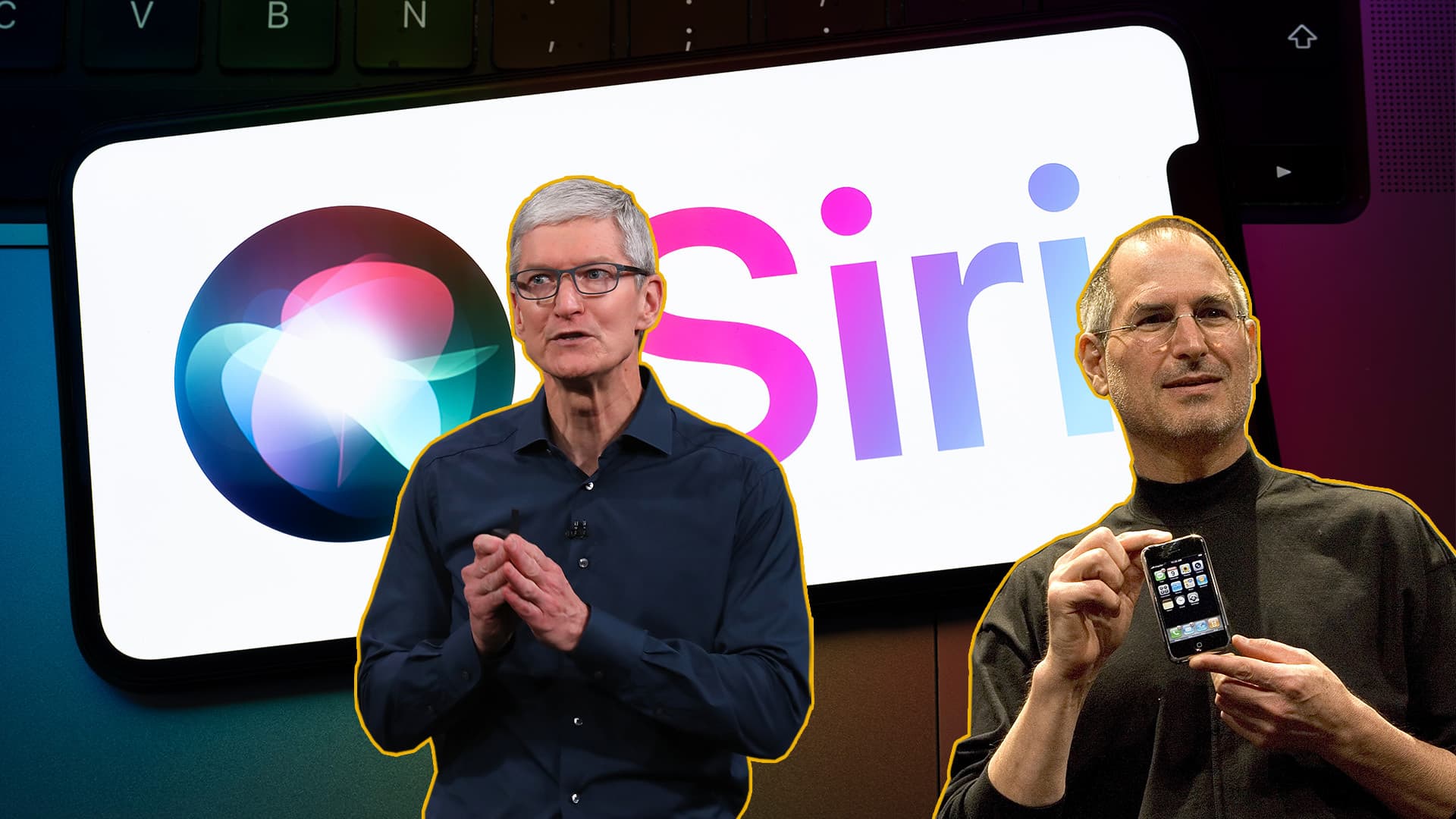
Apple Faces Challenges and Opportunities in the AI Era
- AI Strategy Shift: Apple has struck a multi-year deal with Google to utilize Gemini AI for a revamped Siri, which could impact user data privacy as Apple pays around $20 billion annually to maintain Google's default search engine status, necessitating careful management to avoid negative implications for its core business.
- Mixed Market Response: Apple's slow progress in AI updates has raised consumer skepticism, despite plans to launch Apple Intelligence in 2024 with features like image generation and text rewriting, potentially affecting its competitive edge in the market.
- Capital Expenditure Control: Unlike rivals such as Amazon and Microsoft, which are committing hundreds of billions annually to AI infrastructure, Apple has kept its capital expenditures in check, a strategy that reduces short-term risks but places it at a disadvantage in generative AI.
- Privacy and Technology Balance: CEO Tim Cook has emphasized that privacy is a
See More

Apple's Transformation Challenges in the AI Era
- Privacy vs. AI Dilemma: Apple has long championed privacy as a core principle, contrasting sharply with competitors that rely on advertising, but this strategy has placed it at a disadvantage during the initial wave of generative AI, potentially impacting its future competitiveness.
- Partnership with Google: Apple has struck a multi-year deal to utilize Google's Gemini AI technology for a revamped Siri, with Apple reportedly paying around $20 billion annually to Google as the default search engine, raising concerns about user data privacy in this new arrangement.
- Delayed AI Updates: The long-awaited AI update for Siri has faced delays, with Apple promising a launch by year-end, yet mixed consumer responses indicate a lack of competitive edge in the AI space, which could affect the long-term relevance of its products.
- Future of AI Hardware: As AI shifts towards edge computing, Apple is integrating AI-capable chips into its devices, aiming to process user queries locally, which could resolve privacy issues and reshape its market position in the AI era.
See More
Amazon Web Services Sees Significant Revenue Growth
- Accelerated Revenue Growth: Amazon Web Services (AWS) saw a 24% year-over-year revenue surge in Q4 2025, reaching $35.6 billion, significantly up from 20% growth in Q3, indicating strong enterprise demand for generative AI applications driving data infrastructure modernization.
- Substantial Capital Expenditure Increase: Management expects capital expenditures to reach $200 billion in 2026, sharply up from $131 billion in 2025, reflecting Amazon's ambitious goals in AI and a significant financial commitment to infrastructure development.
- Diversified Revenue Support: Although Amazon's trailing-12-month free cash flow fell to $11.2 billion, its operating cash flow increased by 20% year-over-year to $139.5 billion, demonstrating strong performance in high-margin segments like advertising and subscriptions, enabling self-funding for AI infrastructure investments.
- Market Risks and Opportunities: Despite risks of waning market appetite for AI software, Amazon's diversified business model and robust operating cash flow present an attractive long-term investment opportunity, allowing investors to capitalize on the current stock price pullback for future growth.
See More
Microsoft's 48th Anniversary: Stock Volatility and AI Impact
- Stock Performance: Since its IPO in 1986, Microsoft's stock has surged nearly 624,000% with dividend reinvestment, reflecting strong performance and investor confidence in the software sector.
- Cloud Growth: Microsoft's Azure cloud infrastructure service platform ranks second globally, with sales growth nearing 40%, indicating that the company's ongoing investments in high-growth areas are paying off.
- Cash Flow and Reinvestment: As of 2025, Microsoft holds approximately $89.5 billion in cash and short-term investments, generating $80.8 billion in net cash flow in the first half of fiscal 2026, enabling significant reinvestment and acquisitions.
- Price Discount: Despite a roughly one-third decline in Microsoft's stock since last October, its forward P/E ratio has dropped to 19.4, marking a 34% discount to its five-year average, presenting a potential buying opportunity for long-term investors.
See More
Bill Ackman's Investment Philosophy and AI Strategy
- Portfolio Concentration: As of December 31, 2025, Pershing Square's investments in Amazon, Alphabet, and Meta Platforms totaled $5.9 billion, representing nearly 40% of its portfolio, reflecting Ackman's strong confidence in these high-quality companies.
- Valuation Strategy: Ackman entered these positions during periods of weak market sentiment, initiating his investment in Alphabet in Q1 2023 at a forward P/E ratio of 16, followed by Amazon in April 2025 at 25, and Meta in Q4 2025 at 20, demonstrating his commitment to value investing.
- Capital Expenditure Plans: In 2026, Alphabet plans to spend $175 billion to $185 billion, while Amazon and Meta are set to invest $200 billion and $115 billion to $135 billion respectively; Ackman believes these investments will drive future earnings growth despite ongoing concerns about returns.
- AI Progress and Market Demand: Ackman praised the AI advancements of these companies, noting that Alphabet's AI Overviews has over 2 billion users, Amazon's cloud services thrive on strong AI demand, and Meta leverages AI to enhance user engagement and advertising effectiveness, showcasing their leadership in technological innovation.
See More
Microsoft's 48th Anniversary: Growth and Challenges for the Software Giant
- Stock Performance: Since its IPO in 1986, Microsoft's stock has skyrocketed nearly 624,000%, despite recent pressures on software stocks due to AI concerns, highlighting the immense long-term return potential of its investments.
- Cloud Growth: Microsoft's Azure cloud infrastructure service platform ranks second globally only to Amazon Web Services, with a sales growth rate nearing 40%, indicating successful integration of AI solutions that further solidifies its market position.
- Cash Flow Status: As of 2025, Microsoft holds approximately $89.5 billion in cash and short-term investments, generating $80.8 billion in net cash flow in the first six months of fiscal 2026, showcasing its robust financial health and reinvestment capacity.
- Valuation Discount: Despite a roughly one-third decline from its all-time high, Microsoft's forward P/E ratio has dropped to 19.4, representing a 34% discount to its average over the past five years, presenting a potential buying opportunity for investors.
See More
Apple Faces Challenges and Opportunities in the AI Era
- AI Strategy Shift: Apple has struck a multi-year deal with Google to utilize Gemini AI for a revamped Siri, which could impact user data privacy as Apple pays around $20 billion annually to maintain Google's default search engine status, necessitating careful management to avoid negative implications for its core business.
- Mixed Market Response: Apple's slow progress in AI updates has raised consumer skepticism, despite plans to launch Apple Intelligence in 2024 with features like image generation and text rewriting, potentially affecting its competitive edge in the market.
- Capital Expenditure Control: Unlike rivals such as Amazon and Microsoft, which are committing hundreds of billions annually to AI infrastructure, Apple has kept its capital expenditures in check, a strategy that reduces short-term risks but places it at a disadvantage in generative AI.
- Privacy and Technology Balance: CEO Tim Cook has emphasized that privacy is a
See More
Apple's Transformation Challenges in the AI Era
- Privacy vs. AI Dilemma: Apple has long championed privacy as a core principle, contrasting sharply with competitors that rely on advertising, but this strategy has placed it at a disadvantage during the initial wave of generative AI, potentially impacting its future competitiveness.
- Partnership with Google: Apple has struck a multi-year deal to utilize Google's Gemini AI technology for a revamped Siri, with Apple reportedly paying around $20 billion annually to Google as the default search engine, raising concerns about user data privacy in this new arrangement.
- Delayed AI Updates: The long-awaited AI update for Siri has faced delays, with Apple promising a launch by year-end, yet mixed consumer responses indicate a lack of competitive edge in the AI space, which could affect the long-term relevance of its products.
- Future of AI Hardware: As AI shifts towards edge computing, Apple is integrating AI-capable chips into its devices, aiming to process user queries locally, which could resolve privacy issues and reshape its market position in the AI era.
See More