Loading...

12/15 18:07
Loading...


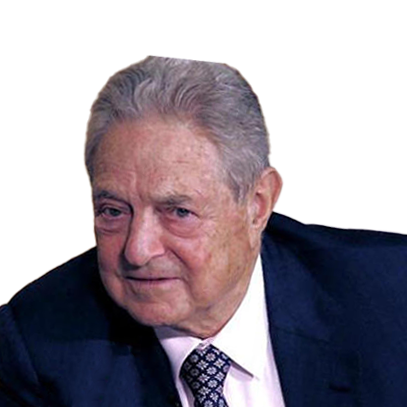

His basic theory of investing is that financial markets are chaotic. The prices of stocks, bonds and currencies depend on the human beings who buy and sell them, and those traders often act out of highly emotional reactions rather than coolly logical calculations. Opportunities can be found by carefully studying the value and the market prices of assets. He focuses on a theory of "reflexivity," which is based on the premise that individual investor biases affect market transactions and the economy.
This simulated portfolio Tracker is based on holdings disclosed in institutional 13F filings. We select the top 20 holdings and construct a portfolio weighted by their relative proportions. Holdings beyond the top 20 are excluded, as their impact on the portfolio is minimal. Focusing on the top 20 enhances practicality and reflects the institution's stock-picking ability. The portfolio is periodically rebalanced to align with updated 13F filings. Note that 13F disclosures typically have a 45-day delay (e.g., Q2 2025 data is disclosed by mid-August). Users should consider this lag when tracking the portfolio, though institutional holdings are generally long-term, emphasizing strategic rationale behind changes. This portfolio is for illustrative purposes only and does not constitute investment advice. All investment decisions are the user's responsibility. Investing involves risks, including potential loss of principal. Past performance is not indicative of future results.