

SpaceX IPO Sets Record with $1.77 Trillion Valuation
Written by Emily J. Thompson, Senior Investment Analyst
Updated: 52 minutes ago
0mins
Source: Fool
- IPO Overview: SpaceX is set to complete its initial public offering (IPO) on June 12, aiming to sell over 555 million shares at a fixed price of $135 each, resulting in a valuation of $1.77 trillion, marking the highest market capitalization for a public company at debut.
- Market Leadership: The company holds a dominant position in commercial launch services and satellite broadband, accounting for over 80% of U.S. rocket launches last year and capturing approximately 90% of the commercial launch market, underscoring its significant market influence.
- Revenue Growth and Profitability: Despite achieving a net profit of about $791 million in 2024, SpaceX reported a 33% revenue growth in 2025 to reach $18.7 billion, while also facing a net loss of $4.9 billion, indicating pressure on profitability amidst high operational costs.
- Future Growth Potential: While SpaceX's valuation reflects substantial future growth potential, high spending and market competition may challenge its profitability, prompting investors to carefully assess the associated risks and returns.
Trade with 70% Backtested Accuracy
Stop guessing "Should I Buy NVDA?" and start using high-conviction signals backed by rigorous historical data.
Sign up today to access powerful investing tools and make smarter, data-driven decisions.
Analyst Views on NVDA
Wall Street analysts forecast NVDA stock price to rise
41 Analyst Rating
39 Buy
1 Hold
1 Sell
Strong Buy
Current: 205.100

Low
200.00
Averages
264.97
High
352.00
Current: 205.100
Low
200.00
Averages
264.97
High
352.00
About NVDA
NVIDIA Corporation is an artificial intelligence (AI) infrastructure company. The Company is engaged in accelerated computing to help solve the challenging computational problems. Its segments include Compute & Networking and Graphics. The Compute & Networking segment includes its Data Center accelerated computing and networking platforms and AI solutions and software, and automotive platforms and autonomous and electric vehicle solutions, including software. The Graphics segment includes GeForce GPUs for gaming and personal computers (PCs), and Quadro/NVIDIA RTX GPUs for enterprise workstation graphics. Its technology stack includes the foundational NVIDIA CUDA development platform that runs on all NVIDIA GPUs, as well as hundreds of domain-specific software libraries, frameworks, algorithms, software development kits (SDKs), and application programming interfaces (APIs). Its platforms address four markets, which include Data Center, Gaming, Professional Visualization, and Automotive.
About the author

Emily J. Thompson
Emily J. Thompson, a Chartered Financial Analyst (CFA) with 12 years in investment research, graduated with honors from the Wharton School. Specializing in industrial and technology stocks, she provides in-depth analysis for Intellectia’s earnings and market brief reports.

SpaceX Plans to Build Orbital AI Data Centers Ahead of IPO

- Low Technical Challenge: Musk stated that building orbital AI data centers is not a difficult engineering challenge, as much of the required technology already exists within the Starlink satellite network, which could enhance investor confidence ahead of the company's IPO.
- Energy Efficiency: The proposed first AI satellite is expected to generate 150 kilowatts of peak power and 120 kilowatts of sustained computing power, comparable to a single Nvidia GB300 AI server rack's power consumption, showcasing SpaceX's advantages in energy management.
- Simplified Design: Unlike Starlink satellites, the AI satellites will have a simpler design without the need for large phased-array antennas, which will reduce production complexity and accelerate market deployment, further enhancing the company's competitiveness.
- Production Plans: SpaceX expects its AI satellite factory in Bastrop, Texas, to achieve meaningful production volumes by the end of next year, making the company's strategic positioning in the AI infrastructure sector clearer.
See More

Trump Meets AI Executives on Government Equity Stakes
- Government Equity Plan: Trump has held private meetings with executives from major AI companies like OpenAI to discuss the government acquiring voluntary equity stakes, which could significantly impact investment structures and market confidence in the AI sector.
- Legislative Proposal Impact: Senator Sanders has introduced legislation mandating the government to acquire 50% equity in AI companies, which, if passed, would profoundly affect companies like Microsoft and Nvidia, potentially constraining private value creation in the industry.
- IPO Uncertainty: OpenAI is anticipated to go public in 2026 with a valuation between $830 billion and $1 trillion, despite projecting $14 billion in losses, and the potential government equity stake could directly influence its IPO valuation.
- Increased Market Risk: Sanders' proposal has raised uncertainties for Microsoft, Nvidia, and Alphabet, as investors worry that government co-ownership could limit future monetization opportunities, thereby increasing short-term market risks.
See More
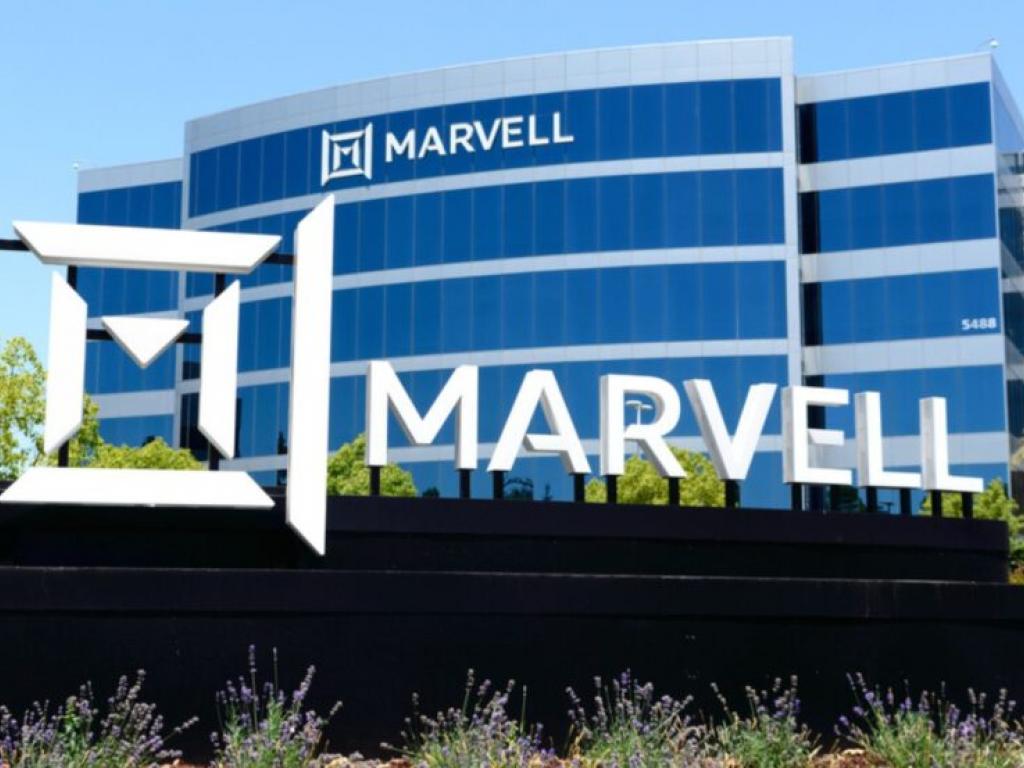
Marvell Technology Set to Join S&P 500 Index
- Stock Surge: Marvell Technology's shares jumped 9.84% on Monday to $25.93, reflecting strong market optimism regarding its inclusion in the S&P 500 index, which is expected to attract more investor interest.
- S&P 500 Changes: Marvell will replace Campbell's and Pool Corp in the S&P 500 on June 22, alongside electronics manufacturer Flex, marking a significant milestone in its industry standing and further solidifying its market influence.
- Investor Capital Influx: With Marvell's addition to the S&P 500, funds tracking the index will need to purchase its shares, leading to a surge in demand that could temporarily drive up the stock price, providing substantial returns for shareholders.
- Future Growth Potential: Marvell's high-speed optical networking and connectivity solutions have become crucial for AI factories, with Nvidia CEO Jensen Huang predicting the company could become the next trillion-dollar enterprise, highlighting its strategic importance in the tech sector.
See More

SpaceX IPO Sets Record with $1.77 Trillion Valuation
- IPO Overview: SpaceX is set to complete its initial public offering (IPO) on June 12, aiming to sell over 555 million shares at a fixed price of $135 each, resulting in a valuation of $1.77 trillion, marking the highest market capitalization for a public company at debut.
- Market Leadership: The company holds a dominant position in commercial launch services and satellite broadband, accounting for over 80% of U.S. rocket launches last year and capturing approximately 90% of the commercial launch market, underscoring its significant market influence.
- Revenue Growth and Profitability: Despite achieving a net profit of about $791 million in 2024, SpaceX reported a 33% revenue growth in 2025 to reach $18.7 billion, while also facing a net loss of $4.9 billion, indicating pressure on profitability amidst high operational costs.
- Future Growth Potential: While SpaceX's valuation reflects substantial future growth potential, high spending and market competition may challenge its profitability, prompting investors to carefully assess the associated risks and returns.
See More

Semiconductor Stocks Rebound as Nvidia CEO Speaks Out
- Market Sentiment Stabilizes: The semiconductor sector rebounded after a sharp selloff, driven by Nvidia CEO Jensen Huang's remarks framing the downturn as a chance to 'buy at a discount,' which helped stabilize sentiment and prevent further capital loss.
- Skyworks Solutions Surge: Skyworks Solutions (NASDAQ:SWKS) saw a 6.5% increase in stock price, reflecting market confidence in its future growth, although investors who bought shares five years ago would only see a return of $463.76, indicating a need for ongoing performance scrutiny.
- Impact of New Product Launch: Nvidia's announcement of the RTX Spark chip, co-developed with Microsoft, integrates a Blackwell GPU and Grace CPU, enabling powerful local AI model execution, which is expected to drive demand for related hardware and further stimulate growth in the semiconductor market.
- Optimistic Industry Outlook: With increasing demand for AI computing, the semiconductor sector has experienced significant market cap fluctuations, and participants are optimistic about future investment opportunities, particularly regarding the timing of purchasing high-quality stocks.
See More

Meta Considers Multibillion-Dollar Stock Sale to Fund AI Investments


- Potential Stock Sale: Meta is contemplating a sale of new stock worth tens of billions to fund its AI investments, although the company quickly dismissed the report as speculation, indicating that this could impact shareholder equity.
- Surging Capital Expenditures: Meta's capital expenditures are projected to reach $720 billion by 2025, with 2026 guidance raised to between $125 billion and $145 billion, reflecting a persistent demand for computing power, even as revenue growth lags behind spending increases.
- Increased Debt Burden: As of March 31, Meta's long-term debt stood at $59 billion, and the company completed a $25 billion senior notes offering in May, highlighting its growing reliance on debt financing, which may affect future financial flexibility.
- Share Buyback Suspension: Meta has paused its stock repurchase program, which has been in place since 2017, indicating pressure on capital allocation; a potential stock sale could dilute existing shareholders' stakes, but the urgent need for funding is evident in the current market context.
See More
SpaceX Plans to Build Orbital AI Data Centers Ahead of IPO
- Low Technical Challenge: Musk stated that building orbital AI data centers is not a difficult engineering challenge, as much of the required technology already exists within the Starlink satellite network, which could enhance investor confidence ahead of the company's IPO.
- Energy Efficiency: The proposed first AI satellite is expected to generate 150 kilowatts of peak power and 120 kilowatts of sustained computing power, comparable to a single Nvidia GB300 AI server rack's power consumption, showcasing SpaceX's advantages in energy management.
- Simplified Design: Unlike Starlink satellites, the AI satellites will have a simpler design without the need for large phased-array antennas, which will reduce production complexity and accelerate market deployment, further enhancing the company's competitiveness.
- Production Plans: SpaceX expects its AI satellite factory in Bastrop, Texas, to achieve meaningful production volumes by the end of next year, making the company's strategic positioning in the AI infrastructure sector clearer.
See More
Trump Meets AI Executives on Government Equity Stakes
- Government Equity Plan: Trump has held private meetings with executives from major AI companies like OpenAI to discuss the government acquiring voluntary equity stakes, which could significantly impact investment structures and market confidence in the AI sector.
- Legislative Proposal Impact: Senator Sanders has introduced legislation mandating the government to acquire 50% equity in AI companies, which, if passed, would profoundly affect companies like Microsoft and Nvidia, potentially constraining private value creation in the industry.
- IPO Uncertainty: OpenAI is anticipated to go public in 2026 with a valuation between $830 billion and $1 trillion, despite projecting $14 billion in losses, and the potential government equity stake could directly influence its IPO valuation.
- Increased Market Risk: Sanders' proposal has raised uncertainties for Microsoft, Nvidia, and Alphabet, as investors worry that government co-ownership could limit future monetization opportunities, thereby increasing short-term market risks.
See More
Marvell Technology Set to Join S&P 500 Index
- Stock Surge: Marvell Technology's shares jumped 9.84% on Monday to $25.93, reflecting strong market optimism regarding its inclusion in the S&P 500 index, which is expected to attract more investor interest.
- S&P 500 Changes: Marvell will replace Campbell's and Pool Corp in the S&P 500 on June 22, alongside electronics manufacturer Flex, marking a significant milestone in its industry standing and further solidifying its market influence.
- Investor Capital Influx: With Marvell's addition to the S&P 500, funds tracking the index will need to purchase its shares, leading to a surge in demand that could temporarily drive up the stock price, providing substantial returns for shareholders.
- Future Growth Potential: Marvell's high-speed optical networking and connectivity solutions have become crucial for AI factories, with Nvidia CEO Jensen Huang predicting the company could become the next trillion-dollar enterprise, highlighting its strategic importance in the tech sector.
See More
SpaceX IPO Sets Record with $1.77 Trillion Valuation
- IPO Overview: SpaceX is set to complete its initial public offering (IPO) on June 12, aiming to sell over 555 million shares at a fixed price of $135 each, resulting in a valuation of $1.77 trillion, marking the highest market capitalization for a public company at debut.
- Market Leadership: The company holds a dominant position in commercial launch services and satellite broadband, accounting for over 80% of U.S. rocket launches last year and capturing approximately 90% of the commercial launch market, underscoring its significant market influence.
- Revenue Growth and Profitability: Despite achieving a net profit of about $791 million in 2024, SpaceX reported a 33% revenue growth in 2025 to reach $18.7 billion, while also facing a net loss of $4.9 billion, indicating pressure on profitability amidst high operational costs.
- Future Growth Potential: While SpaceX's valuation reflects substantial future growth potential, high spending and market competition may challenge its profitability, prompting investors to carefully assess the associated risks and returns.
See More
Semiconductor Stocks Rebound as Nvidia CEO Speaks Out
- Market Sentiment Stabilizes: The semiconductor sector rebounded after a sharp selloff, driven by Nvidia CEO Jensen Huang's remarks framing the downturn as a chance to 'buy at a discount,' which helped stabilize sentiment and prevent further capital loss.
- Skyworks Solutions Surge: Skyworks Solutions (NASDAQ:SWKS) saw a 6.5% increase in stock price, reflecting market confidence in its future growth, although investors who bought shares five years ago would only see a return of $463.76, indicating a need for ongoing performance scrutiny.
- Impact of New Product Launch: Nvidia's announcement of the RTX Spark chip, co-developed with Microsoft, integrates a Blackwell GPU and Grace CPU, enabling powerful local AI model execution, which is expected to drive demand for related hardware and further stimulate growth in the semiconductor market.
- Optimistic Industry Outlook: With increasing demand for AI computing, the semiconductor sector has experienced significant market cap fluctuations, and participants are optimistic about future investment opportunities, particularly regarding the timing of purchasing high-quality stocks.
See More
Meta Considers Multibillion-Dollar Stock Sale to Fund AI Investments
- Potential Stock Sale: Meta is contemplating a sale of new stock worth tens of billions to fund its AI investments, although the company quickly dismissed the report as speculation, indicating that this could impact shareholder equity.
- Surging Capital Expenditures: Meta's capital expenditures are projected to reach $720 billion by 2025, with 2026 guidance raised to between $125 billion and $145 billion, reflecting a persistent demand for computing power, even as revenue growth lags behind spending increases.
- Increased Debt Burden: As of March 31, Meta's long-term debt stood at $59 billion, and the company completed a $25 billion senior notes offering in May, highlighting its growing reliance on debt financing, which may affect future financial flexibility.
- Share Buyback Suspension: Meta has paused its stock repurchase program, which has been in place since 2017, indicating pressure on capital allocation; a potential stock sale could dilute existing shareholders' stakes, but the urgent need for funding is evident in the current market context.
See More





