Nvidia, Meta, and Micron's AI Investment Prospects
Written by Emily J. Thompson, Senior Investment Analyst
Updated: 3 hours ago
0mins


Source: NASDAQ.COM
- Nvidia's Growth Potential: Nvidia is projected to achieve a 73% revenue growth in 2023, with global data center capital expenditures expected to reach $3 to $4 trillion by 2030, highlighting its strong growth potential in the AI sector and attracting ongoing investor interest.
- Meta's AI Strategy: Meta is developing a personal superintelligence platform and AI-enabled smart glasses, which, while still in progress, are supported by a 33% year-over-year increase in advertising revenue, providing stable funding for future product development and reducing investment risk.
- Micron's Market Advantage: Due to the memory chip shortage, Micron anticipates a 193% revenue increase in 2023 and will continue to benefit from rising AI computing demand in the coming years, solidifying its market position.
- Investor Focus: While Nvidia is seen as a leader in AI investments, analysts suggest that investors should also consider other potential stocks, reflecting a market demand for diversified portfolios and advising caution in stock selection.
Trade with 70% Backtested Accuracy
Stop guessing "Should I Buy NVDA?" and start using high-conviction signals backed by rigorous historical data.
Sign up today to access powerful investing tools and make smarter, data-driven decisions.
Analyst Views on NVDA
Wall Street analysts forecast NVDA stock price to rise
41 Analyst Rating
39 Buy
1 Hold
1 Sell
Strong Buy
Current: 219.510

Low
200.00
Averages
264.97
High
352.00
Current: 219.510
Low
200.00
Averages
264.97
High
352.00
About NVDA
NVIDIA Corporation is an artificial intelligence (AI) infrastructure company. The Company is engaged in accelerated computing to help solve the challenging computational problems. Its segments include Compute & Networking and Graphics. The Compute & Networking segment includes its Data Center accelerated computing and networking platforms and AI solutions and software, and automotive platforms and autonomous and electric vehicle solutions, including software. The Graphics segment includes GeForce GPUs for gaming and personal computers (PCs), and Quadro/NVIDIA RTX GPUs for enterprise workstation graphics. Its technology stack includes the foundational NVIDIA CUDA development platform that runs on all NVIDIA GPUs, as well as hundreds of domain-specific software libraries, frameworks, algorithms, software development kits (SDKs), and application programming interfaces (APIs). Its platforms address four markets, which include Data Center, Gaming, Professional Visualization, and Automotive.
About the author

Emily J. Thompson
Emily J. Thompson, a Chartered Financial Analyst (CFA) with 12 years in investment research, graduated with honors from the Wharton School. Specializing in industrial and technology stocks, she provides in-depth analysis for Intellectia’s earnings and market brief reports.
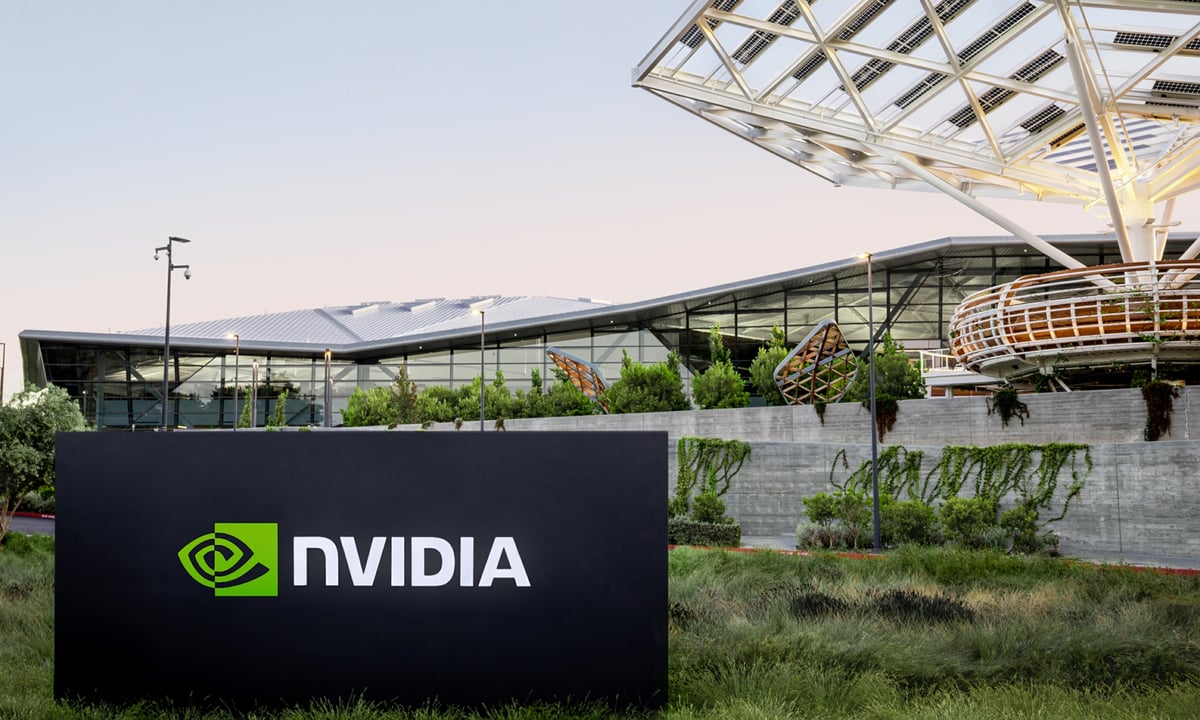
Nvidia Achieves $5 Trillion Market Capitalization

- Significant Revenue Growth: Nvidia reported $81.6 billion in revenue for Q1 fiscal 2027, marking an impressive 85% year-over-year increase, which surpasses last year's 69% growth rate, demonstrating strong demand and sustained market leadership in the AI chip sector.
- Profitability Surge: The company's non-GAAP earnings skyrocketed by 140% year-over-year to $1.87 per share, significantly exceeding last year's 33% growth, indicating Nvidia's ability to enhance profitability even in a highly competitive environment, thereby boosting investor confidence.
- Future Growth Expectations: Nvidia anticipates revenue of $91 billion for the current quarter, a remarkable 95% increase year-over-year, suggesting that the company is well-positioned to capitalize on the next phase of the AI computing cycle and expand its market share further.
- Infrastructure Spending Boom: AI infrastructure spending is projected to surge from $1 trillion in 2026 to between $3 trillion and $4 trillion by 2030, with Nvidia's data center revenue already at $75.2 billion, translating to an annual run rate of $300 billion, highlighting its substantial growth potential in this market.
See More

Analysis of Utility ETF Investment Strategies
- Utility ETF Overview: The Vanguard Utilities Index Fund ETF (VPU) offers broader mid and small-cap utility investment options at a 0.09% expense ratio for buy-and-hold income investors, having risen about 10% over the past year, indicating stable income potential.
- Liquidity Standard: The Utilities Select Sector SPDR Fund (XLU) is the default choice as it tracks the S&P 500 utilities sector, featuring 14% in NextEra Energy and about 7% in Southern and Duke Energy, with an expense ratio of 0.08% and a yield of approximately 2.6%, making it suitable for liquidity-focused investors.
- Low-Cost Option: The Fidelity MSCI Utilities Index ETF (FUTY) provides a low-cost option for Fidelity account holders with a 0.084% expense ratio and commission-free trading, also rising about 10% over the past year, though it has a smaller asset base and lower liquidity compared to the others.
- Investment Decision Tree: For investors prioritizing liquidity and institutional-quality execution, XLU is the standard; for long-term holders seeking broad utility exposure at the lowest cost, VPU is the pick, while FUTY is ideal for Fidelity clients looking for a permanent allocation.
See More

The Future Potential and Challenges of Quantum Computing

- Microsoft's Quantum Progress: Microsoft has made significant strides in quantum computing with the introduction of its Majorana 1 chip, which utilizes topological materials and is expected to address industrial-scale problems in just a few years, enhancing its application in quantum technology.
- IonQ's Milestone: IonQ achieved a remarkable 99.99% two-qubit gate fidelity, becoming the only quantum company to reach this accuracy level, marking a technological breakthrough that suggests it could scale up to millions of qubits by 2030.
- Market Outlook: Although the practical utility of quantum computing may still be years away, the advancements made by Microsoft and IonQ indicate that investors can expect significant commercial applications in the coming years, particularly in solving complex computational challenges.
- Investment Risks and Opportunities: IonQ, as a pure-play quantum computing company, is not yet profitable but its ongoing R&D investments and technological breakthroughs present potential high-return opportunities within a high-risk investment landscape.
See More

Nvidia, AMD, and Broadcom Compete in AI Market

- Nvidia's Market Leadership: Nvidia continues to dominate the large language model (LLM) training market, leveraging its CUDA software platform that has become the foundation for most AI code, ensuring a wide moat in AI infrastructure, with projected CPU revenues hitting $20 billion this year.
- AMD's Growth Potential: AMD has made significant strides in the inference market with chip designs that allow for higher memory configurations, expected to drive GPU demand through partnerships with Anthropic, while also holding a strong position in the data center CPU market, enhancing its competitive edge.
- Broadcom's Custom Chip Business: Broadcom leads in ASIC technology, having assisted Alphabet in developing TPUs, with expectations of exceeding $100 billion in custom chip revenue by fiscal 2027, indicating robust growth potential in its data center networking business.
- Investment Opportunities in AI Market: With the rapid growth of the AI market, Nvidia, AMD, and Broadcom all exhibit strong growth drivers, particularly AMD's opportunities in inference and agentic AI, which may attract investor attention.
See More

Significant Progress in Quantum Computing Led by Microsoft and IonQ
- Microsoft's Quantum Chip Innovation: Microsoft's introduction of the Majorana 1 chip, utilizing topological conductor materials, is expected to address industrial-scale problems in the coming years, with plans to fit one million qubits on a palm-sized chip, showcasing its strong potential in quantum computing.
- IonQ's Quantum System Milestone: IonQ achieved a remarkable 99.99% two-qubit gate fidelity, becoming the only quantum company to reach this accuracy, marking a significant breakthrough in tackling quantum computing error rates, with a goal of scaling up to millions of qubits by 2030.
- Market Investment Appeal: While IonQ is not yet profitable, its focus and technological advancements in quantum computing make it a high-risk, high-reward investment option, whereas Microsoft offers a blend of safety and growth due to its financial strength and innovation.
- Industry Outlook: Although the practical application of quantum computing may still take time, the advancements made by Microsoft and IonQ suggest that this technology could play a crucial role in solving major problems within the next few years, attracting the attention of many growth investors.
See More
Intensifying Competition in AI Infrastructure Market
- Market Leadership: Nvidia maintains its dominance in large language model (LLM) training with a market share of 74.15%, leveraging its CUDA software platform to solidify its competitive edge, and is projected to achieve $20 billion in CPU revenue this year, showcasing its comprehensive positioning in AI infrastructure.
- AMD's Rise: AMD is successfully entering the inference market through its chip design and improvements in ROCm software, with expectations of collaboration with Anthropic to drive growth using its latest GPUs, while also holding a significant position in the data center CPU market, indicating potential for substantial revenue growth.
- Broadcom's Custom Chip Business: Broadcom, leveraging its ASIC technology, has assisted Alphabet in developing TPUs and is expected to generate over $100 billion in ASIC revenue by fiscal 2027, highlighting its strong growth potential in both data center networking and custom chip markets.
- Investment Recommendation: Among the current AI stocks, Nvidia, AMD, and Broadcom all present investment value, particularly AMD with its enormous opportunities in inference and agentic AI markets, making it the top stock to buy, reflecting the market's strong preference for growth.
See More
Nvidia Achieves $5 Trillion Market Capitalization
- Significant Revenue Growth: Nvidia reported $81.6 billion in revenue for Q1 fiscal 2027, marking an impressive 85% year-over-year increase, which surpasses last year's 69% growth rate, demonstrating strong demand and sustained market leadership in the AI chip sector.
- Profitability Surge: The company's non-GAAP earnings skyrocketed by 140% year-over-year to $1.87 per share, significantly exceeding last year's 33% growth, indicating Nvidia's ability to enhance profitability even in a highly competitive environment, thereby boosting investor confidence.
- Future Growth Expectations: Nvidia anticipates revenue of $91 billion for the current quarter, a remarkable 95% increase year-over-year, suggesting that the company is well-positioned to capitalize on the next phase of the AI computing cycle and expand its market share further.
- Infrastructure Spending Boom: AI infrastructure spending is projected to surge from $1 trillion in 2026 to between $3 trillion and $4 trillion by 2030, with Nvidia's data center revenue already at $75.2 billion, translating to an annual run rate of $300 billion, highlighting its substantial growth potential in this market.
See More
Analysis of Utility ETF Investment Strategies
- Utility ETF Overview: The Vanguard Utilities Index Fund ETF (VPU) offers broader mid and small-cap utility investment options at a 0.09% expense ratio for buy-and-hold income investors, having risen about 10% over the past year, indicating stable income potential.
- Liquidity Standard: The Utilities Select Sector SPDR Fund (XLU) is the default choice as it tracks the S&P 500 utilities sector, featuring 14% in NextEra Energy and about 7% in Southern and Duke Energy, with an expense ratio of 0.08% and a yield of approximately 2.6%, making it suitable for liquidity-focused investors.
- Low-Cost Option: The Fidelity MSCI Utilities Index ETF (FUTY) provides a low-cost option for Fidelity account holders with a 0.084% expense ratio and commission-free trading, also rising about 10% over the past year, though it has a smaller asset base and lower liquidity compared to the others.
- Investment Decision Tree: For investors prioritizing liquidity and institutional-quality execution, XLU is the standard; for long-term holders seeking broad utility exposure at the lowest cost, VPU is the pick, while FUTY is ideal for Fidelity clients looking for a permanent allocation.
See More
The Future Potential and Challenges of Quantum Computing
- Microsoft's Quantum Progress: Microsoft has made significant strides in quantum computing with the introduction of its Majorana 1 chip, which utilizes topological materials and is expected to address industrial-scale problems in just a few years, enhancing its application in quantum technology.
- IonQ's Milestone: IonQ achieved a remarkable 99.99% two-qubit gate fidelity, becoming the only quantum company to reach this accuracy level, marking a technological breakthrough that suggests it could scale up to millions of qubits by 2030.
- Market Outlook: Although the practical utility of quantum computing may still be years away, the advancements made by Microsoft and IonQ indicate that investors can expect significant commercial applications in the coming years, particularly in solving complex computational challenges.
- Investment Risks and Opportunities: IonQ, as a pure-play quantum computing company, is not yet profitable but its ongoing R&D investments and technological breakthroughs present potential high-return opportunities within a high-risk investment landscape.
See More
Nvidia, AMD, and Broadcom Compete in AI Market
- Nvidia's Market Leadership: Nvidia continues to dominate the large language model (LLM) training market, leveraging its CUDA software platform that has become the foundation for most AI code, ensuring a wide moat in AI infrastructure, with projected CPU revenues hitting $20 billion this year.
- AMD's Growth Potential: AMD has made significant strides in the inference market with chip designs that allow for higher memory configurations, expected to drive GPU demand through partnerships with Anthropic, while also holding a strong position in the data center CPU market, enhancing its competitive edge.
- Broadcom's Custom Chip Business: Broadcom leads in ASIC technology, having assisted Alphabet in developing TPUs, with expectations of exceeding $100 billion in custom chip revenue by fiscal 2027, indicating robust growth potential in its data center networking business.
- Investment Opportunities in AI Market: With the rapid growth of the AI market, Nvidia, AMD, and Broadcom all exhibit strong growth drivers, particularly AMD's opportunities in inference and agentic AI, which may attract investor attention.
See More
Significant Progress in Quantum Computing Led by Microsoft and IonQ
- Microsoft's Quantum Chip Innovation: Microsoft's introduction of the Majorana 1 chip, utilizing topological conductor materials, is expected to address industrial-scale problems in the coming years, with plans to fit one million qubits on a palm-sized chip, showcasing its strong potential in quantum computing.
- IonQ's Quantum System Milestone: IonQ achieved a remarkable 99.99% two-qubit gate fidelity, becoming the only quantum company to reach this accuracy, marking a significant breakthrough in tackling quantum computing error rates, with a goal of scaling up to millions of qubits by 2030.
- Market Investment Appeal: While IonQ is not yet profitable, its focus and technological advancements in quantum computing make it a high-risk, high-reward investment option, whereas Microsoft offers a blend of safety and growth due to its financial strength and innovation.
- Industry Outlook: Although the practical application of quantum computing may still take time, the advancements made by Microsoft and IonQ suggest that this technology could play a crucial role in solving major problems within the next few years, attracting the attention of many growth investors.
See More
Intensifying Competition in AI Infrastructure Market
- Market Leadership: Nvidia maintains its dominance in large language model (LLM) training with a market share of 74.15%, leveraging its CUDA software platform to solidify its competitive edge, and is projected to achieve $20 billion in CPU revenue this year, showcasing its comprehensive positioning in AI infrastructure.
- AMD's Rise: AMD is successfully entering the inference market through its chip design and improvements in ROCm software, with expectations of collaboration with Anthropic to drive growth using its latest GPUs, while also holding a significant position in the data center CPU market, indicating potential for substantial revenue growth.
- Broadcom's Custom Chip Business: Broadcom, leveraging its ASIC technology, has assisted Alphabet in developing TPUs and is expected to generate over $100 billion in ASIC revenue by fiscal 2027, highlighting its strong growth potential in both data center networking and custom chip markets.
- Investment Recommendation: Among the current AI stocks, Nvidia, AMD, and Broadcom all present investment value, particularly AMD with its enormous opportunities in inference and agentic AI markets, making it the top stock to buy, reflecting the market's strong preference for growth.
See More