Alaska's Oil Industry Sees Renewed Investment
Written by Emily J. Thompson, Senior Investment Analyst
Updated: 42 minutes ago
0mins
Source: seekingalpha
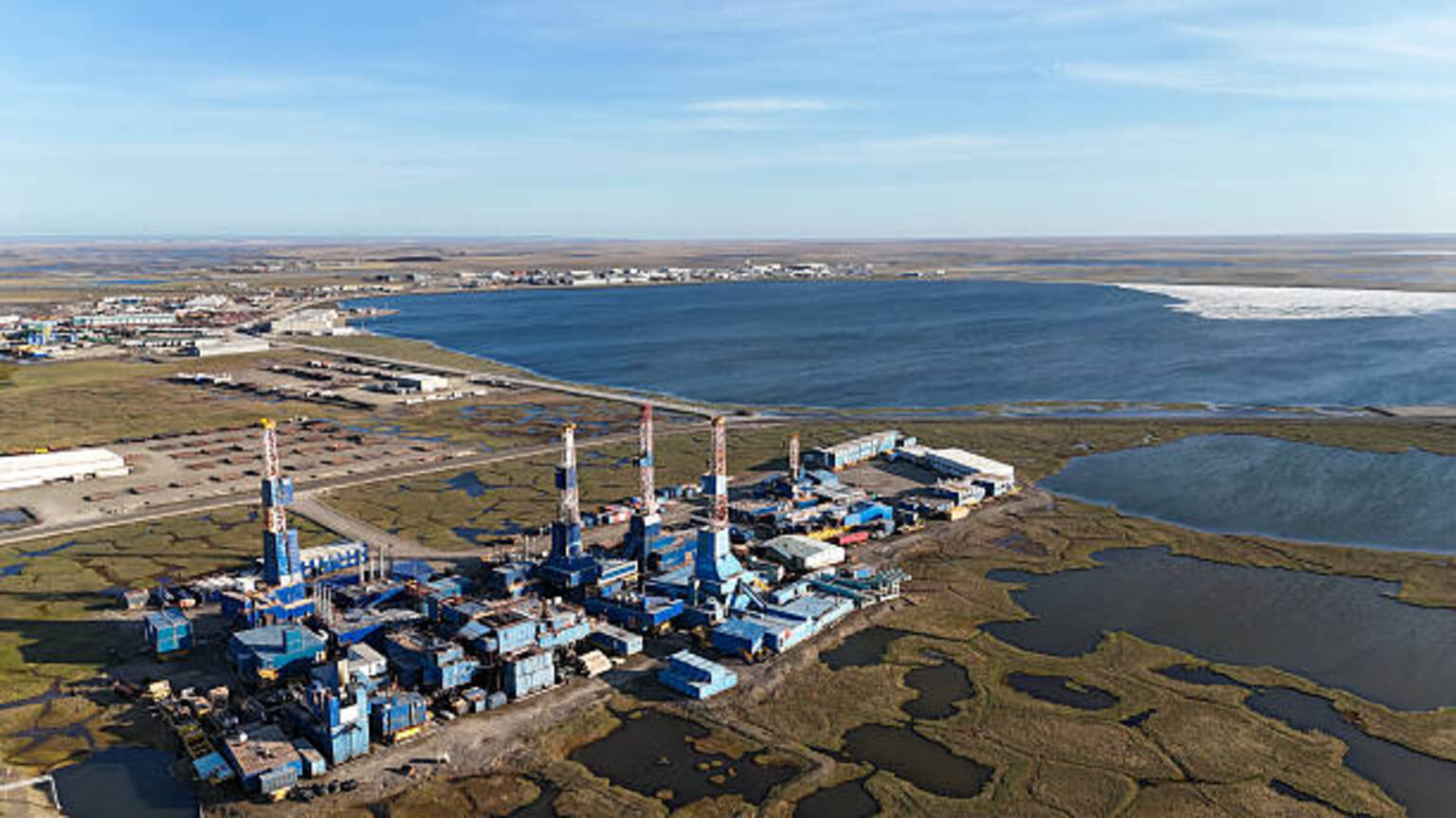
- Investment Revival: Alaska's oil industry is attracting renewed investment due to major discoveries in the Arctic and a more supportive regulatory environment, marking a significant recovery in North Slope oil production that is expected to enhance global energy supply capabilities.
- Resource Potential: The U.S. Geological Survey estimates that the National Petroleum Reserve-Alaska holds approximately 8.7 billion barrels of recoverable oil, prompting aggressive bidding from major oil companies like ConocoPhillips and ExxonMobil during federal lease sales, reflecting confidence in the region's geology and regulatory outlook.
- Long-Term Returns: Unlike rapidly declining shale wells, Alaska's conventional oil fields can sustain production for decades, supporting infrastructure investments and generating long-term cash flow, which attracts investor interest.
- Environmental Challenges: Despite the optimistic outlook for industry recovery, environmental groups and some indigenous communities express concerns about the potential impacts of expanded Arctic development, which could affect future permitting timelines and development costs.
Trade with 70% Backtested Accuracy
Stop guessing "Should I Buy XOM?" and start using high-conviction signals backed by rigorous historical data.
Sign up today to access powerful investing tools and make smarter, data-driven decisions.
Analyst Views on XOM
Wall Street analysts forecast XOM stock price to fall
19 Analyst Rating
12 Buy
7 Hold
0 Sell
Moderate Buy
Current: 155.290

Low
114.00
Averages
132.17
High
158.00
Current: 155.290
Low
114.00
Averages
132.17
High
158.00
About XOM
Exxon Mobil Corporation is an energy provider and chemical manufacturer. The Company’s principal business involves exploration for, and production of, crude oil and natural gas; the manufacture, trade, transport and sale of crude oil, natural gas, petroleum products, petrochemicals and a wide variety of specialty products; and pursuit of lower-emission and other new business opportunities, including carbon capture and storage, hydrogen, lower-emission fuels, Proxxima systems, carbon materials, and lithium. Its Upstream segment explores for and produces crude oil and natural gas. The Energy Products, Chemical Products, and Specialty Products segments manufacture and sell petroleum products and petrochemicals. Energy Products segment includes fuels, aromatics, and catalysts and licensing. Chemical Products segment consists of olefins, polyolefins, and intermediates. Specialty Products segment includes finished lubricants, basestocks and waxes, synthetics, and elastomers and resins.
About the author

Emily J. Thompson
Emily J. Thompson, a Chartered Financial Analyst (CFA) with 12 years in investment research, graduated with honors from the Wharton School. Specializing in industrial and technology stocks, she provides in-depth analysis for Intellectia’s earnings and market brief reports.
Alaska's Oil Industry Sees Renewed Investment

- Investment Revival: Alaska's oil industry is attracting renewed investment due to major discoveries in the Arctic and a more supportive regulatory environment, marking a significant recovery in North Slope oil production that is expected to enhance global energy supply capabilities.
- Resource Potential: The U.S. Geological Survey estimates that the National Petroleum Reserve-Alaska holds approximately 8.7 billion barrels of recoverable oil, prompting aggressive bidding from major oil companies like ConocoPhillips and ExxonMobil during federal lease sales, reflecting confidence in the region's geology and regulatory outlook.
- Long-Term Returns: Unlike rapidly declining shale wells, Alaska's conventional oil fields can sustain production for decades, supporting infrastructure investments and generating long-term cash flow, which attracts investor interest.
- Environmental Challenges: Despite the optimistic outlook for industry recovery, environmental groups and some indigenous communities express concerns about the potential impacts of expanded Arctic development, which could affect future permitting timelines and development costs.
See More

Exxon Mobil Shareholder Voting Recommendations

- Shareholder Voting Recommendations: Proxy advisory firms Glass Lewis and ISS have recommended that shareholders of Exxon Mobil (NYSE:XOM) and Chevron vote against certain board-related proposals, including Exxon’s redomicile to Texas, reflecting growing investor scrutiny on climate and human rights issues.
- Price Target Adjustment: Bernstein Research analyst Bob Brackett lowered Exxon Mobil's price target from $195 to $182 while maintaining an Outperform rating, indicating uncertainty in oil market scenarios but an expectation for a return to normalized conditions by mid-year.
- Market Position: Founded in 1870 and headquartered in Spring, Texas, Exxon Mobil is one of the world's largest integrated energy and chemical companies, involved in crude oil and natural gas exploration, refining, petrochemicals, fuels marketing, and specialty chemicals manufacturing.
- Investment Potential Analysis: While Exxon Mobil is recognized as a potential investment, analysts suggest that certain AI stocks may offer greater upside potential and lower downside risk, indicating a shift in market focus towards different investment opportunities.
See More

Direct Indexing Strategy Boosts Retirement Income Potential

- Income Potential: A 65-year-old couple can generate approximately $19,000 annually from a $700,000 investment portfolio using a direct indexing strategy, which combines dividends and tax-loss harvesting, highlighting the strategy's effectiveness and appeal.
- Dividend Composition: Supported by major dividend payers like Johnson & Johnson (JNJ), Procter & Gamble (PG), Coca-Cola (KO), Exxon Mobil (XOM), and Microsoft (MSFT), the dividend yield is around 2.0%, providing investors with a stable cash flow.
- Tax-Loss Harvesting Advantage: The direct indexing strategy allows for selling individual stocks that decline, utilizing harvested losses to offset capital gains, with expected annual increases in after-tax returns of 0.5% to 1.5%, further enhancing overall portfolio returns.
- Portfolio Flexibility: This strategy enables investors to manage their portfolios flexibly while maintaining market exposure, optimizing returns through market volatility, thereby achieving higher capital appreciation and income growth over the long term.
See More

US and Iran Near Agreement to Extend Ceasefire and Reopen Strait of Hormuz

- Ceasefire Extension: The US and Iran are nearing an agreement to extend the current ceasefire by 60 days, allowing commercial shipping to transit the Strait of Hormuz freely, which could alleviate global energy supply tensions caused by ongoing conflicts.
- Oil Export Resumption: The proposed deal would lift the blockade on Iranian ports and permit Tehran to sell oil unrestricted on international markets, likely having a positive impact on global oil prices and promoting market stability.
- Nuclear Negotiations: Iran has committed not to pursue nuclear weapons and will engage in talks to suspend uranium enrichment activities, a move that not only alleviates international concerns but may also pave the way for improved diplomatic relations in the future.
- Strategic Waterway Security: The Strait of Hormuz is a crucial energy transit route, and restoring normal shipping flows will significantly reduce inflation risks associated with traffic disruptions, thereby boosting confidence in global economic recovery.
See More

Occidental Petroleum Beats Q1 Earnings Estimates Significantly
- Earnings Beat: Occidental Petroleum reported Q1 earnings of $1.06 per share, significantly surpassing Wall Street's expectation of $0.59, although management acknowledged that better performance was possible, indicating potential in a high oil price environment.
- Oil Price Impact: With oil prices surging 85% in 2026, most of the increase occurred after March, resulting in Occidental only benefiting briefly from high prices in Q1, leading analysts to raise Q2 expectations to $1.58 per share.
- Hedging Challenges: Occidental's hedging strategy created headwinds in Q1, as it faced similar losses to Exxon and Chevron despite being less exposed to the Middle East, impacting short-term profitability.
- Strategic Restructuring: By selling its downstream business at the beginning of 2026, Occidental avoided the weak performance seen in refining operations, demonstrating effective strategic adjustments to optimize its business structure in a rising oil price environment.
See More

Impact of Rising Oil Prices on Oil Companies
- Oil Price Surge Context: The geopolitical conflict in the Middle East has driven oil prices up by 85% in 2026; however, major oil companies like Occidental Petroleum (OXY) have not fully benefited, reflecting the complex impacts of regional exposure, timing, and hedging activities.
- Occidental's Earnings Beat: Occidental Petroleum reported earnings of $1.06 per share in Q1, significantly exceeding Wall Street's expectation of $0.59, although management acknowledged that the company could have performed better, indicating market expectations for future performance.
- Hedging Activity Impact: Occidental's hedging strategy negatively impacted its Q1 results, despite lower exposure to the Middle East, leading to short-term earnings pressure; however, improvements are anticipated in Q2 as hedged shipments are delivered.
- Competitor Performance Variance: ExxonMobil (XOM) and Chevron (CVX) also faced hedging impacts in Q1, achieving earnings of $1.16 and $1.41 per share respectively, both surpassing expectations, but incurring hedging losses of $700 million and $2.9 billion, highlighting the differing strategies companies employ to navigate market volatility.
See More
Alaska's Oil Industry Sees Renewed Investment
- Investment Revival: Alaska's oil industry is attracting renewed investment due to major discoveries in the Arctic and a more supportive regulatory environment, marking a significant recovery in North Slope oil production that is expected to enhance global energy supply capabilities.
- Resource Potential: The U.S. Geological Survey estimates that the National Petroleum Reserve-Alaska holds approximately 8.7 billion barrels of recoverable oil, prompting aggressive bidding from major oil companies like ConocoPhillips and ExxonMobil during federal lease sales, reflecting confidence in the region's geology and regulatory outlook.
- Long-Term Returns: Unlike rapidly declining shale wells, Alaska's conventional oil fields can sustain production for decades, supporting infrastructure investments and generating long-term cash flow, which attracts investor interest.
- Environmental Challenges: Despite the optimistic outlook for industry recovery, environmental groups and some indigenous communities express concerns about the potential impacts of expanded Arctic development, which could affect future permitting timelines and development costs.
See More
Exxon Mobil Shareholder Voting Recommendations
- Shareholder Voting Recommendations: Proxy advisory firms Glass Lewis and ISS have recommended that shareholders of Exxon Mobil (NYSE:XOM) and Chevron vote against certain board-related proposals, including Exxon’s redomicile to Texas, reflecting growing investor scrutiny on climate and human rights issues.
- Price Target Adjustment: Bernstein Research analyst Bob Brackett lowered Exxon Mobil's price target from $195 to $182 while maintaining an Outperform rating, indicating uncertainty in oil market scenarios but an expectation for a return to normalized conditions by mid-year.
- Market Position: Founded in 1870 and headquartered in Spring, Texas, Exxon Mobil is one of the world's largest integrated energy and chemical companies, involved in crude oil and natural gas exploration, refining, petrochemicals, fuels marketing, and specialty chemicals manufacturing.
- Investment Potential Analysis: While Exxon Mobil is recognized as a potential investment, analysts suggest that certain AI stocks may offer greater upside potential and lower downside risk, indicating a shift in market focus towards different investment opportunities.
See More
Direct Indexing Strategy Boosts Retirement Income Potential
- Income Potential: A 65-year-old couple can generate approximately $19,000 annually from a $700,000 investment portfolio using a direct indexing strategy, which combines dividends and tax-loss harvesting, highlighting the strategy's effectiveness and appeal.
- Dividend Composition: Supported by major dividend payers like Johnson & Johnson (JNJ), Procter & Gamble (PG), Coca-Cola (KO), Exxon Mobil (XOM), and Microsoft (MSFT), the dividend yield is around 2.0%, providing investors with a stable cash flow.
- Tax-Loss Harvesting Advantage: The direct indexing strategy allows for selling individual stocks that decline, utilizing harvested losses to offset capital gains, with expected annual increases in after-tax returns of 0.5% to 1.5%, further enhancing overall portfolio returns.
- Portfolio Flexibility: This strategy enables investors to manage their portfolios flexibly while maintaining market exposure, optimizing returns through market volatility, thereby achieving higher capital appreciation and income growth over the long term.
See More
US and Iran Near Agreement to Extend Ceasefire and Reopen Strait of Hormuz
- Ceasefire Extension: The US and Iran are nearing an agreement to extend the current ceasefire by 60 days, allowing commercial shipping to transit the Strait of Hormuz freely, which could alleviate global energy supply tensions caused by ongoing conflicts.
- Oil Export Resumption: The proposed deal would lift the blockade on Iranian ports and permit Tehran to sell oil unrestricted on international markets, likely having a positive impact on global oil prices and promoting market stability.
- Nuclear Negotiations: Iran has committed not to pursue nuclear weapons and will engage in talks to suspend uranium enrichment activities, a move that not only alleviates international concerns but may also pave the way for improved diplomatic relations in the future.
- Strategic Waterway Security: The Strait of Hormuz is a crucial energy transit route, and restoring normal shipping flows will significantly reduce inflation risks associated with traffic disruptions, thereby boosting confidence in global economic recovery.
See More
Occidental Petroleum Beats Q1 Earnings Estimates Significantly
- Earnings Beat: Occidental Petroleum reported Q1 earnings of $1.06 per share, significantly surpassing Wall Street's expectation of $0.59, although management acknowledged that better performance was possible, indicating potential in a high oil price environment.
- Oil Price Impact: With oil prices surging 85% in 2026, most of the increase occurred after March, resulting in Occidental only benefiting briefly from high prices in Q1, leading analysts to raise Q2 expectations to $1.58 per share.
- Hedging Challenges: Occidental's hedging strategy created headwinds in Q1, as it faced similar losses to Exxon and Chevron despite being less exposed to the Middle East, impacting short-term profitability.
- Strategic Restructuring: By selling its downstream business at the beginning of 2026, Occidental avoided the weak performance seen in refining operations, demonstrating effective strategic adjustments to optimize its business structure in a rising oil price environment.
See More
Impact of Rising Oil Prices on Oil Companies
- Oil Price Surge Context: The geopolitical conflict in the Middle East has driven oil prices up by 85% in 2026; however, major oil companies like Occidental Petroleum (OXY) have not fully benefited, reflecting the complex impacts of regional exposure, timing, and hedging activities.
- Occidental's Earnings Beat: Occidental Petroleum reported earnings of $1.06 per share in Q1, significantly exceeding Wall Street's expectation of $0.59, although management acknowledged that the company could have performed better, indicating market expectations for future performance.
- Hedging Activity Impact: Occidental's hedging strategy negatively impacted its Q1 results, despite lower exposure to the Middle East, leading to short-term earnings pressure; however, improvements are anticipated in Q2 as hedged shipments are delivered.
- Competitor Performance Variance: ExxonMobil (XOM) and Chevron (CVX) also faced hedging impacts in Q1, achieving earnings of $1.16 and $1.41 per share respectively, both surpassing expectations, but incurring hedging losses of $700 million and $2.9 billion, highlighting the differing strategies companies employ to navigate market volatility.
See More